On this page · 9 sections
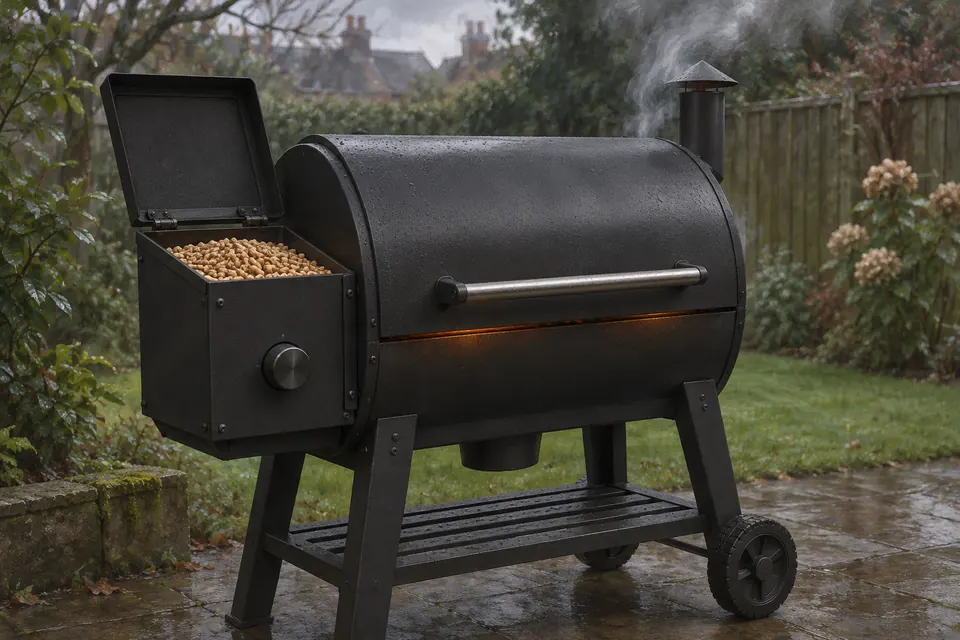
Think of a pellet grill as a fan oven that happens to burn wood. You set a temperature on a dial or an app, and a small computer feeds in fuel to hold it there, much as the thermostat on your kitchen oven switches the element on and off. The difference is that the fuel is compressed hardwood, so you get smoke as well as heat. The catch is that it relies on electricity from start to finish, which brings a few habits worth learning before the first cook.
How a pellet grill works
The main parts:
- Hopper: a box on the side that holds the pellets.
- Auger: a motor-driven screw that carries pellets from the hopper into the firepot.
- Firepot: a small metal cup under the cooking chamber where the pellets burn.
- Igniter: a hot rod that lights the first pellets at start-up.
- Fan: blows air into the firepot to keep the pellets burning and circulates heat.
- Controller: reads a temperature probe inside the grill and decides how fast to run the auger.
- Heat baffle and drip tray: sit over the firepot, spreading heat and catching fat.
When the grill is below your set temperature, the controller feeds more pellets; above it, fewer. Better controllers make lots of small adjustments and hold close to the setting. Simpler ones work in bigger steps and swing a bit more. Either way, the grill handles the fire and you handle the food.
The smoke is milder than from a charcoal or wood fire, because pellets burn hot and clean. Most cooks find the results very good, especially for chicken, pork and fish. People chasing the deepest smoke flavour tend to prefer charcoal; see offset vs kamado vs pellet for the comparison.
What it's like to cook on
Easy. You fill the hopper, switch on, set the temperature and wait for it to settle. Then you put the food on and mostly leave it. This is the type that makes a long overnight cook genuinely restful, with a probe thermometer alarm to wake you if anything goes wrong.
Your jobs are small: keep the hopper topped up, keep the firepot clean of ash, and keep the drip tray and grease channel clear. Grease build-up is a common cause of pellet grill fires, so a scrape and a fresh tray liner every few cooks is time well spent.
Start-up and shutdown
Follow the maker's start-up sequence, which usually means letting the igniter light the pellets with the lid open or closed as the manual says, then waiting for the grill to come up to temperature before the food goes on.
Shutdown matters more than people expect. Most pellet grills have a shutdown cycle: the auger stops, the fan keeps running for a while to burn off the pellets left in the firepot, and then the grill switches itself off. Don't just pull the plug or switch off at the wall at the end of a cook. Skipping the cycle leaves unburnt pellets smouldering in the firepot, which makes for a smoky, sooty next start and can cause a flare-up when you next light it.
Power cuts and interrupted cooks
If the power goes mid-cook, the auger and fan stop and the fire dies down and goes out. The grill cools, and depending on the controller, it may not restart on its own when the power comes back.
The usual advice, and what most manuals say, is:
- Don't simply switch it back on while it's still hot with pellets sitting in the firepot. A hot grill full of half-burnt pellets and smoke can flare up or burn back towards the hopper when the fan and igniter kick in.
- Let the grill cool, then empty the firepot of unburnt pellets and ash.
- Restart from cold, following the normal start-up sequence.
- Check the meat's temperature with a probe. If it's been sitting warm for a long time, the FSA guidance is the place to check what's safe.
A tripped RCD counts as a power cut too, and it's worth working out why it tripped before resetting it. Water in a connection is the usual suspect. If it trips again, stop and get a qualified electrician to look at it. If the power goes during an overnight cook, you may be finishing the meat in the oven, assuming the oven is back on too.
Before a long cook, read the bit of your manual about interrupted cooks while you're calm and the grill is cold. In the dark, in the rain, is a bad time to learn it.
Safe outdoor power
A pellet grill needs a socket for the whole cook. Use an outdoor-rated, weatherproof socket with RCD protection, and keep the plug and socket out of rain and run-off. If you must use an extension lead, it should be outdoor rated and fully unwound, not trailing through a back door. For a new outdoor socket, get a qualified electrician. Our guide to electric smokers goes through outdoor power in more detail, and all of it applies here.
Pellets and the damp British shed
Pellets are compressed sawdust, and they hate moisture. Damp pellets swell, crumble back into sawdust, burn badly and can jam the auger, which is a fiddly job to clear. In a British shed, where condensation drips off the roof on cold mornings and the floor is never quite dry, storage needs a bit of thought.
- Use sealed containers. A lidded plastic bin or a sealed metal bin is far better than a paper or thin plastic bag.
- Keep them off the floor. Concrete wicks moisture. A pallet or shelf helps.
- Empty the hopper between cooks in damp weather, and especially before leaving the grill for weeks over winter. Most hoppers have a clean-out chute that makes this quick.
- Check before you cook. Good pellets are hard, shiny and snap cleanly. Dull, soft or crumbly pellets and a lot of dust at the bottom of the bag are signs they belong in the bin, not the grill.
- Buy food-grade cooking pellets. Heating pellets for stoves are a different product and aren't meant for cooking food.
Our guide to wood pellets in the UK covers woods and blends, and the fuel calculator helps you work out how much to keep in stock.
What to check in the spec
The specs that matter are main grate area, temperature range, hopper size, warranty terms, the controller and a UK plug. We explain each one, and which numbers to ignore, in pellet grills compared on published specs.
Who should skip a pellet grill
Skip one if you have no safe outdoor socket, if you want the strongest charcoal or wood-smoke flavour, or if you mostly want to sear steaks. A kamado suits all three better. If you live somewhere with frequent power cuts, a charcoal smoker will be less stressful.
If a pellet grill still suits you, sort the outdoor socket first, buy two sealed bins for pellets, then start your shortlist.
FAQs
What happens to a pellet grill in a power cut?
The auger and fan stop and the fire goes out. Let the grill cool, clear the firepot, then restart from cold following the manual rather than switching straight back on.
Can I switch a pellet grill off at the wall?
Not at the end of a normal cook. Run the shutdown cycle so the pellets in the firepot burn off; switching off at the wall leaves them smouldering.
Can I leave pellets in the hopper?
For a day or two in dry weather, yes. In damp weather or over winter, empty the hopper, as pellets absorb moisture and can jam the auger.
Can I use heating pellets in a pellet grill?
No. Use food-grade cooking pellets. Heating pellets are made for stoves and aren't intended for cooking food.
Keep going
 Compare
Pellet grills compared
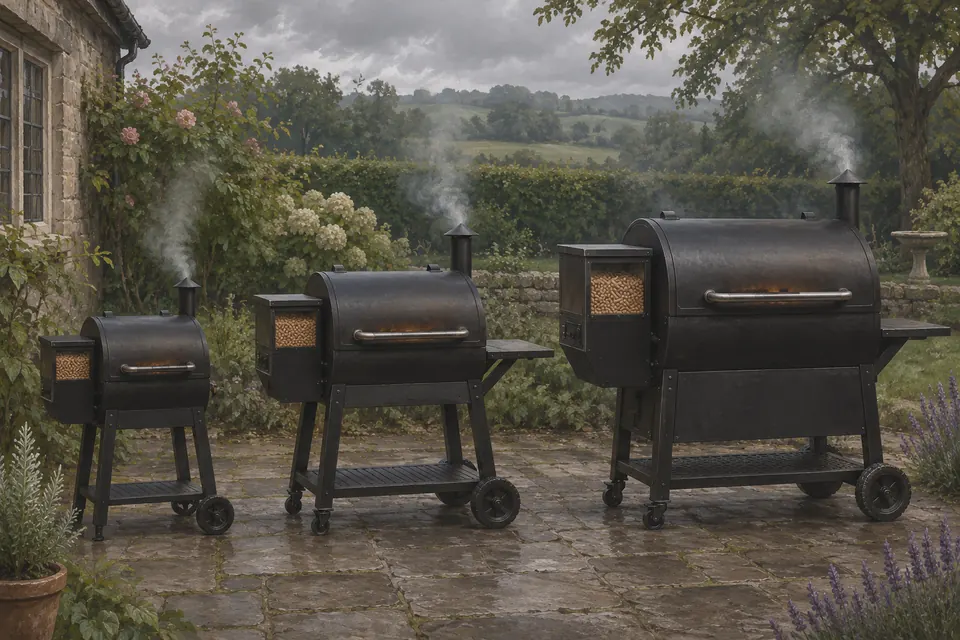
What to compare pellet grills on in the UK: cooking area, temperature range, hopper size and warranty from maker specs, and what to ignore.
Read the guide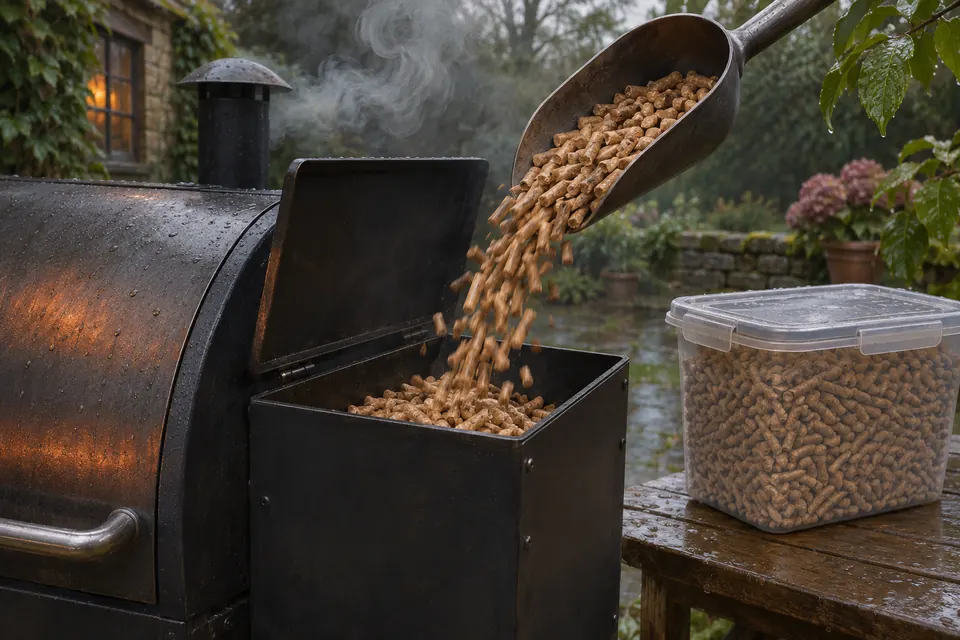 Fuel and wood
Wood pellets UK
Why heating pellets don't belong in a pellet grill, how to keep pellets dry in a damp British shed, and whether flavour blends or single-species pellets are worth it.
Read the guide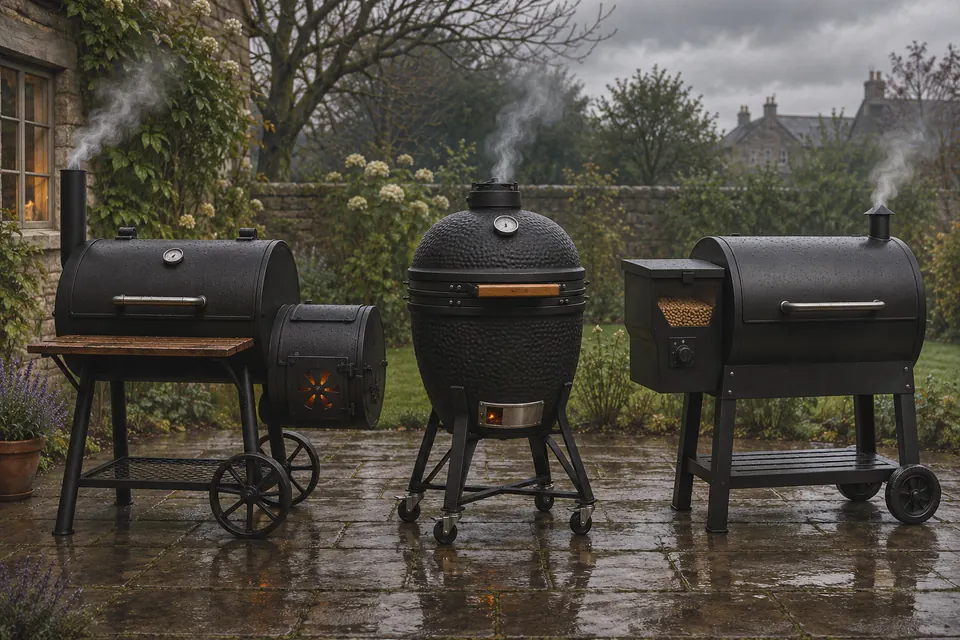 CompareCornerstone
Offset vs kamado vs pellet
The three big smoker types compared on effort, fuel, power needs and how they cope with British weather.
Read the guide