On this page · 8 sections
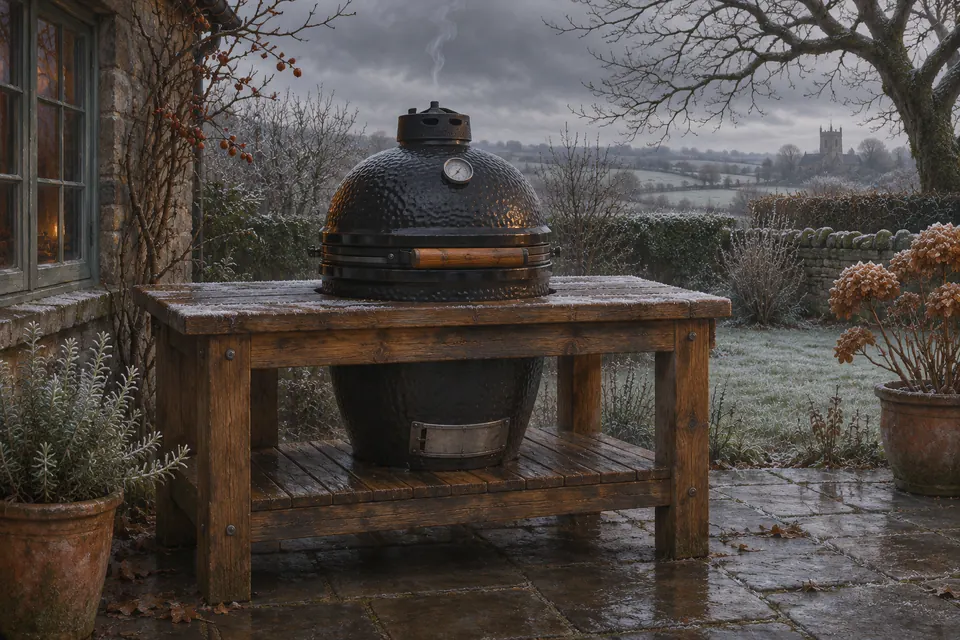
Kamados started life as clay cooking stoves in Japan, and the modern version is still, at heart, a pot with a lid and a fire in the bottom. What changed is the shape, the hinge and the vents. The result is a cooker with walls so thick that a frosty morning barely makes a difference to it, which in the UK is a selling point you'll appreciate around November.
How a kamado works
A kamado is an egg-shaped cooker, usually ceramic, sometimes insulated steel. The parts are simple:
- A firebox and fire grate at the bottom, holding a bed of lump charcoal.
- A bottom vent that lets air in.
- A top vent (often called a cap or daisy wheel) that lets air and smoke out.
- A heat deflector, a ceramic plate that sits between the fire and the food for indirect cooking.
- A cooking grate above that, and a heavy hinged lid with a felt or fibreglass gasket.
The thick walls are the clever bit. They soak up heat and give it back slowly, so the temperature inside stays steady even when the weather outside isn't. Because so little heat escapes, a kamado uses much less charcoal than a thin steel smoker, and one load of lump will often see you through a whole low-and-slow cook.
You control the temperature with the two vents. Open both for more air and more heat; close them down to slow the fire. Small moves only, then wait.
Setting up for low and slow
Fill the firebox with lump charcoal and bury three or four chunks of oak, beech, apple or cherry among it. Light a small patch on top, in one spot, using natural firelighters (never lighter fluid in a ceramic cooker, which can soak in). Let it catch with the lid open for ten minutes or so, then fit the heat deflector and grate, close the lid and set the vents low.
Now sneak up on your target temperature. Most recipes live somewhere around 110–135°C at the grate, and with a kamado you want to get there from below. The thick walls mean it's slow to cool, so if you overshoot to 180°C you'll be waiting a long time to come back down.
Set the vents for your target when the dome reads about 20°C below it. The ceramic carries on climbing for a while after you stop adding air.
Once it's settled, a kamado holds steady for hours with only occasional tweaks. That makes it one of the easier charcoal smokers for an overnight cook. Temperature control has more detail on vents.
It grills too
Take the deflector out, open the vents and a kamado gets very hot, which makes it excellent for steaks, pizza on a stone and anything needing a hard sear. Most people who pick one over a pellet grill do so for that reason. If you want one cooker for low and slow on Saturday and steaks on Sunday, this is the strongest all-rounder of the main types. Compare them side by side in offset vs kamado vs pellet.
What to look for in the spec
We compare kamados on maker specs and don't name models until those have been checked against the maker's UK page.
| Spec | Why it matters |
|---|---|
| Grate diameter | Sets how much fits; a round grate is less roomy than it looks for brisket |
| Body material | Ceramic is traditional; insulated steel is lighter and less likely to crack |
| Gasket type | A good seal is what lets you control the fire |
| Hinge and lid support | Lids are heavy; a spring-assisted hinge saves your back |
| Stand or cart | Wheels and a sturdy frame matter, because you won't carry it |
| Warranty | Check what's covered for the ceramic, the metal parts and the gasket separately |
| Included heat deflector | Essential for low and slow; some sell it as an extra |
Size is the one people get wrong. Round grates don't suit long, flat cuts like a whole brisket, and a small kamado that's perfect for a couple will feel cramped for a family barbecue. Check the grate size against what you actually cook.
Living with one in the UK
Weight. Ceramic kamados are heavy. Plan where it lives before it arrives, and don't plan to move it up and down garden steps. A cart with locking wheels on a flat patio is the setup to aim for.
Cold and rain. This is where kamados shine. The insulation means winter cooks need little more fuel than summer ones, and rain on the outside barely matters. Read smoking in winter for the rest.
Cracks. Ceramic can crack if it's knocked over, dropped or shocked by sudden temperature changes. Never pour water on a hot kamado to put it out. Close both vents and let it starve itself of air.
Mould. A closed kamado left damp for weeks can grow mould inside. It looks alarming and is dealt with by a hot burn with the lid closed, which clears it out, followed by a good scrape.
Gaskets. Felt gaskets wear and can char if you cook very hot a lot. They can be replaced, and a fresh one makes temperature control easier.
Safety notes
Open a hot kamado slowly. When the lid has been shut with the vents low, the fire is starved of oxygen; open it suddenly and the rush of air can cause a flare called a flashback. Lift the lid a few centimetres, pause for a few seconds, then open fully, especially when it's been running hot. Like any charcoal cooker, use it outdoors only, well away from fences and sheds, and never in a garage, tent or enclosed space.
Who should skip a kamado
Skip one if you need to move your cooker often, if you regularly cook for big crowds, or if your budget only stretches to a small, flimsy one. A kettle with the snake method or a bullet smoker is a better first step on a tight budget. And if you want to set a number and walk away entirely, a pellet grill asks even less.
If a kamado sounds right, measure the spot it'll live in, check the path from your front gate to the patio, then run the smoker picker to confirm the type before you shortlist.
FAQs
What charcoal should I use in a kamado?
Lump charcoal. It burns cleaner and leaves less ash than briquettes, which matters in a small firebox. Our charcoal guide covers what to look for.
Can I leave a kamado outside in winter?
Yes, under a breathable cover, with the vents closed and the ash cleared. Frost isn't the problem; damp inside and knocks are.
How long does a load of charcoal last?
A full load often lasts through a long low-and-slow cook, thanks to the insulation. Wind and how much you lift the lid make the biggest difference.
Is a ceramic kamado better than a steel one?
Ceramic holds heat superbly but is heavy and can crack. Insulated steel is lighter and tougher. Both work; it depends on whether yours will ever move.
Keep going
 CompareCornerstone
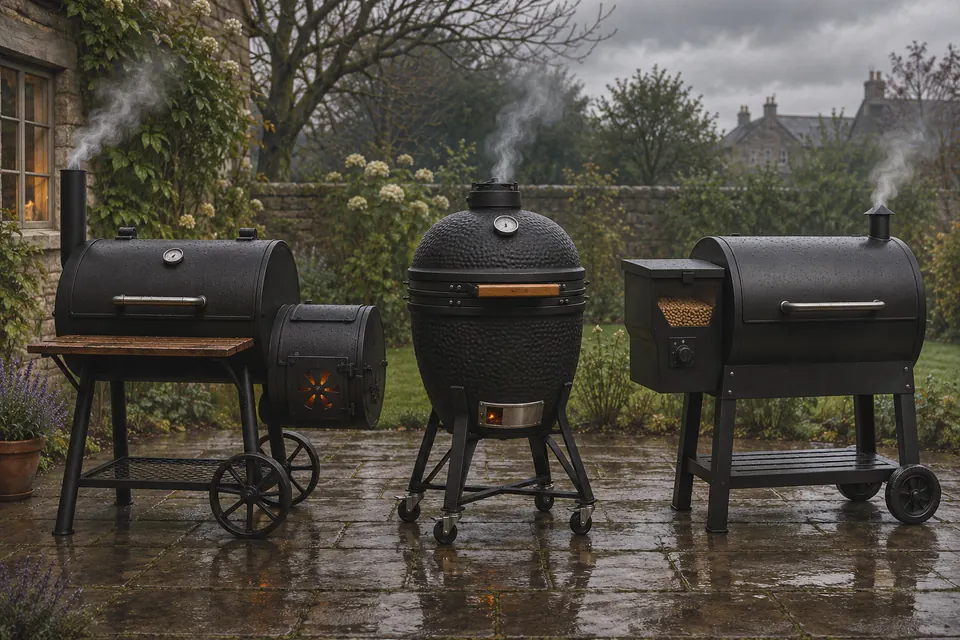
Offset vs kamado vs pellet
The three big smoker types compared on effort, fuel, power needs and how they cope with British weather.
Read the guide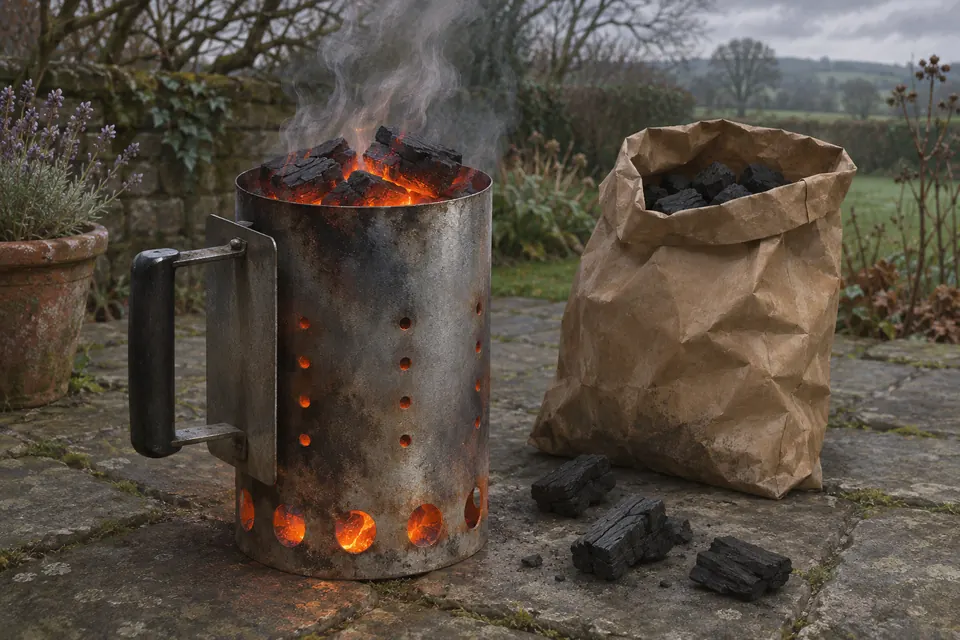 Fuel and wood
Charcoal for smoking
Lumpwood or briquettes for low-and-slow, what British-made charcoal offers, how to light it with a chimney starter, and why lighter fluid has no place in a smoker.
Read the guide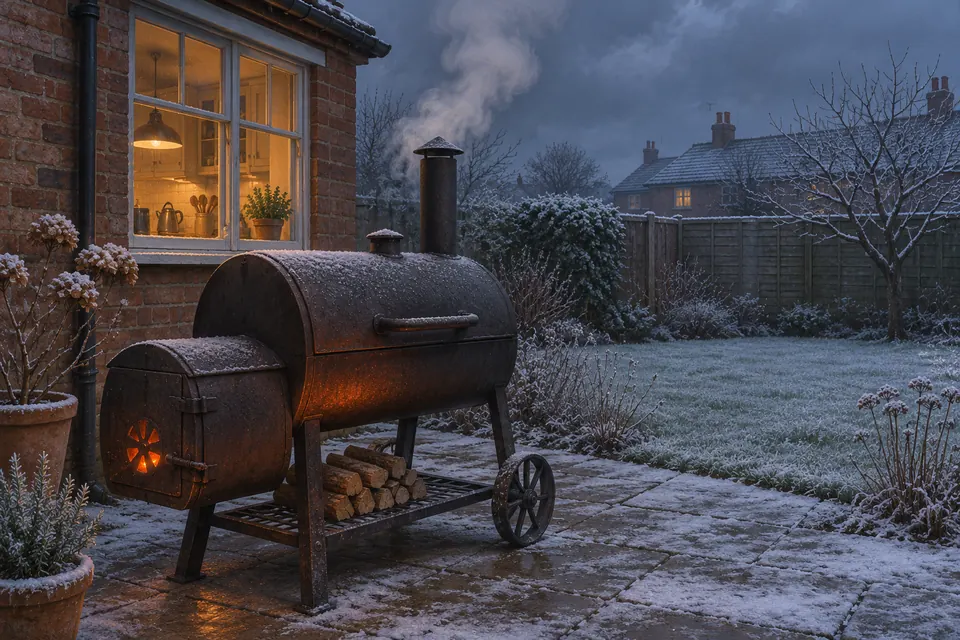 Weather and kit
Smoking in winter
How to keep a smoker running through a British winter: cold and wind, extra fuel, insulation blankets, dark evenings, and why it never goes in the garage.
Read the guide