On this page · 7 sections
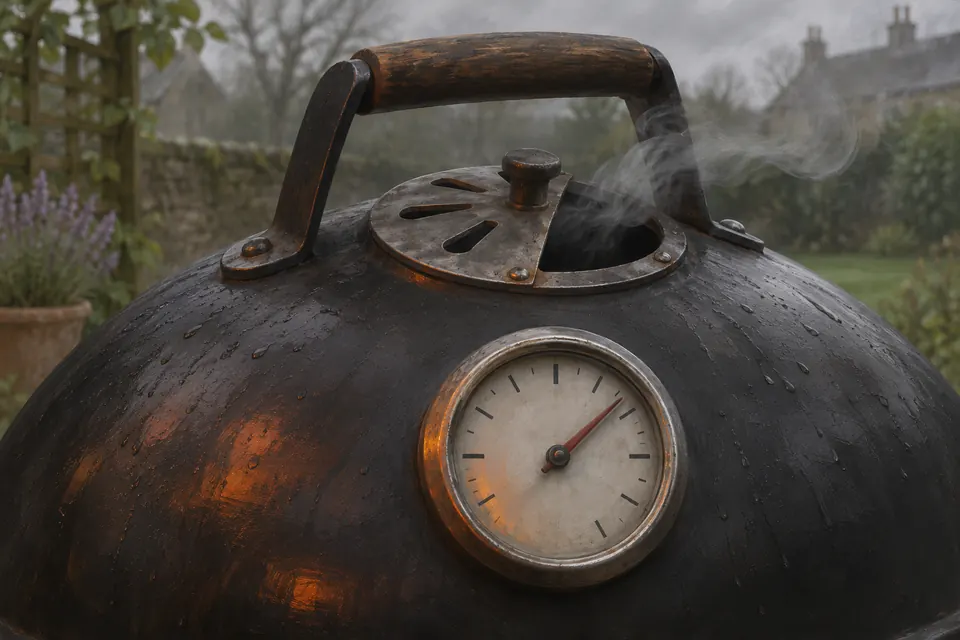
"Why does my smoker sit at 120°C for an hour, then shoot to 160°C the moment I go inside?" It's one of the most common questions from new smoker owners, and the answer is almost always the same. Something changed the airflow: a gust of wind, a vent nudged too far, a lid opened, fresh fuel catching. A charcoal fire burns as hard as its air supply lets it. Learn to manage the air and most temperature problems go away.
Intake vs exhaust
Every charcoal smoker has two kinds of vent, and they don't do the same job.
The intake (usually the bottom vent, or the firebox vent on an offset) lets oxygen in. More oxygen means a hotter, faster fire. This is your main control. Open it to raise the temperature, close it to bring it down.
The exhaust (the top vent or chimney) lets smoke and hot gases out. It also pulls fresh air through the smoker, so it affects the fire, but more gently. The usual advice is to leave the exhaust mostly or fully open and do your adjusting at the intake. A choked exhaust keeps stale smoke hanging around the food, which is where bitter, acrid flavours come from.
A few rules hold for almost every charcoal smoker:
- Make small changes. A quarter turn or a few millimetres, not half the vent.
- Then wait. Give it 15 to 20 minutes before judging. Ceramic kamados respond even more slowly.
- Approach your target from below. It's easy to open a vent and raise the temperature. It's hard to cool a fire that has got going, especially in a heavy ceramic cooker that holds its heat.
- Closing a vent fully kills the fire. Useful at the end of the cook. Not useful in the middle.
How you set up the fuel matters as much as the vents. A snake or minion layout lights a little fuel at a time, so there's never a big fire to tame. The charcoal snake method guide covers the kettle version. And for the low-and-slow band most recipes use, around 110–135°C at grate level, less fire is nearly always better than more.
Pellet and electric smokers
These do the vent work for you. A controller feeds pellets or switches an element to hold the temperature you set. You still need to keep the lid shut, keep the smoker out of the wind and give it time to come up to temperature, but the fiddling goes away. That's a big part of their appeal, and why some people should skip charcoal entirely. Our comparison of offset vs kamado vs pellet weighs that up.
Lid thermometers vs probes
The dial in the lid of most smokers measures the air near the top of the dome. Your food sits lower down, on a grate that may be nearer or further from the fire. The two readings can be well apart, and lid dials aren't always accurate to begin with.
Use a probe thermometer with a grate clip, placed near the meat but not touching it. Run the smoker to that reading. A second probe in the meat tells you how the cook is going without lifting the lid. Wireless and Bluetooth units let you watch from indoors, which is handy in February. Our guide to BBQ meat thermometers covers what to look for.
Before your first cook, boil a kettle and check each probe in a mug of just-boiled water. It won't be a perfect calibration, but it'll catch a probe that's badly off.
Every time you open the lid, heat and smoke pour out and the fire gets a gulp of air. The temperature drops, then often overshoots as the fire flares. Lift the lid only when you need to wrap, spritz or take the food off.
Wind and cold
In Britain, wind does more damage to a cook than rain. A breeze blowing across the intake forces extra air into the fire, so it burns faster and hotter, then fades when the gust drops. Wind also strips heat from the outside of the smoker, especially thin steel kettles and offsets, so the fire has to work harder just to stand still.
What helps:
- Position the smoker out of the wind, with the intake facing away from the prevailing direction.
- Use a windbreak that stands well clear of the smoker: a fence, hedge, garden wall or a freestanding screen. Keep a gap between them for air and safety.
- Allow more fuel. Cold, wet and windy days burn more. The smoker fuel calculator helps you plan.
- Expect slower recovery after opening the lid.
Never solve wind by enclosing the smoker. A charcoal or wood fire in a garage, shed, tent or a gazebo with the sides down can fill the space with carbon monoxide, which you can't see or smell. Our guide to smoking in the rain covers safe, open-sided shelter in detail, and smoking in winter covers the cold.
Fixing swings
| What's happening | Usual cause | Fix |
|---|---|---|
| Creeping up slowly | Too much air or too much lit fuel | Close the intake a little, wait 20 minutes |
| Sudden spike | Wind gust, lid opened, wood chunk flaring | Close the lid, leave it, then trim the intake if it holds high |
| Dropping slowly | Fuel running low, ash choking the fire | Check the fuel, clear ash if your smoker allows, open the intake a little |
| Won't get up to temperature | Not enough lit fuel, damp fuel, vents too closed | Add a few lit coals, open the intake, check the exhaust is open |
| Thick white smoke | Smothered fire or damp wood | Open the exhaust fully, add air, use drier wood |
Fan controllers: worth it?
A fan controller is a small box with a probe and a blower that clips onto the smoker's intake. You set a target, and it pushes air into the fire when the temperature drops and stops when it's reached. In effect it does what you would do with the vent, every few seconds, all day and night.
They're genuinely useful for some people. Long overnight cooks on a kamado or bullet smoker are the obvious case, as is anyone who'd rather sleep than check a vent at 3am. They also smooth out the effect of wind.
They're less worth it if you mostly cook ribs and chicken on a kettle in the afternoon, or if you own a pellet or electric smoker, which already has a controller built in. They need power outdoors, so treat the leads and plugs with the same care as any electrical kit in the rain. And they can't fix a leaky smoker: if air gets in through gaps around the lid or door, the fan loses control. Check what fittings are available for your smoker, and read the published specs and the maker's guidance rather than assuming a universal fit.
Your next cook is the time to practise: light a modest fire, settle the smoker on the low side of your target, and make one small vent change at a time, writing down what each one did.
FAQs
Should the top vent be open or closed on a smoker?
Mostly open. The top vent lets smoke out and draws fresh air through. Control the temperature with the bottom vent and close the top only to shut the fire down at the end.
Why does my smoker temperature keep dropping?
The usual reasons are fuel running out, ash building up and smothering the fire, wind cooling the smoker or the intake being too closed. Check the fuel first, then open the intake a little.
How long should I wait after adjusting the vents?
Around 15 to 20 minutes on a steel smoker, and longer on a ceramic kamado. Changing things again too soon is the main cause of swinging temperatures.
Is a temperature swing of a few degrees a problem?
No. Low-and-slow cooking is forgiving, and a smoker drifting a little either side of the target is normal. Worry about big swings or a fire that keeps fading, not the odd few degrees.
Keep going
 Technique
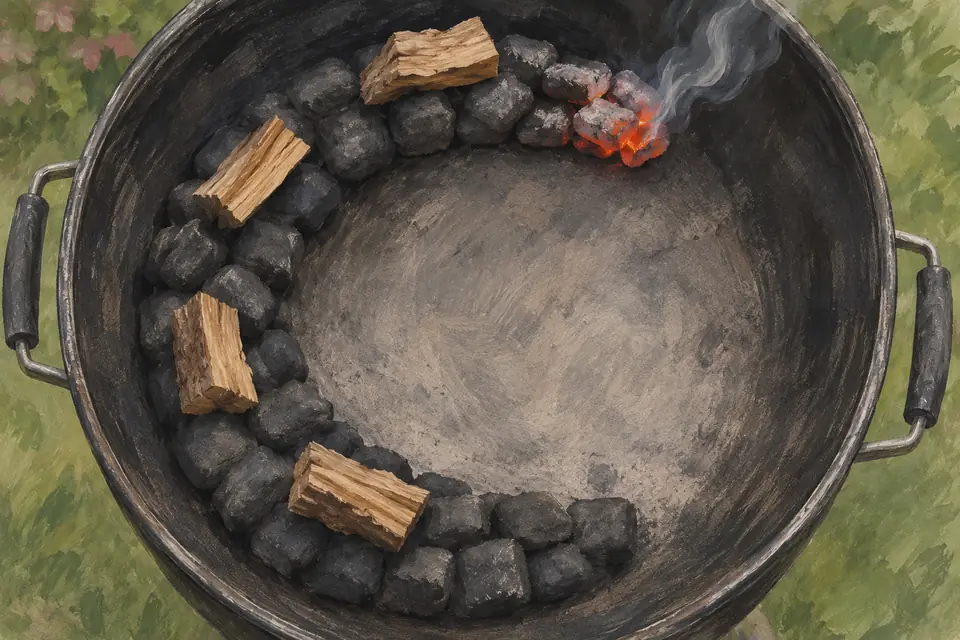
The charcoal snake method
Set up a charcoal snake for a low-and-slow cook on a kettle BBQ: briquette layout, where the wood goes, lighting, vents and topping up.
Read the guide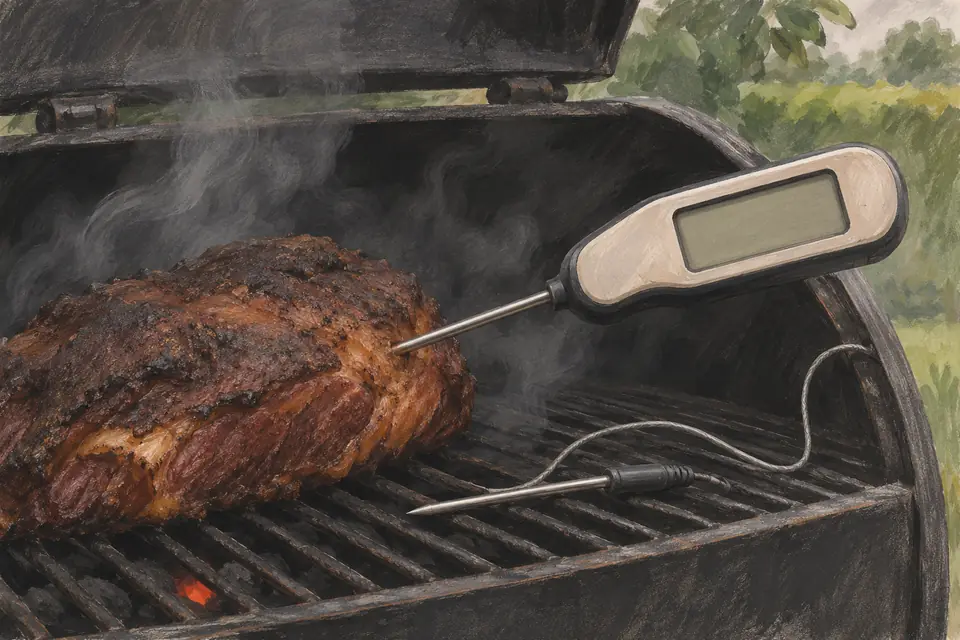 Weather and kit
BBQ meat thermometers
Instant-read, leave-in and wireless probes compared: how each works, which published specs matter, and how to check and care for one.
Read the guide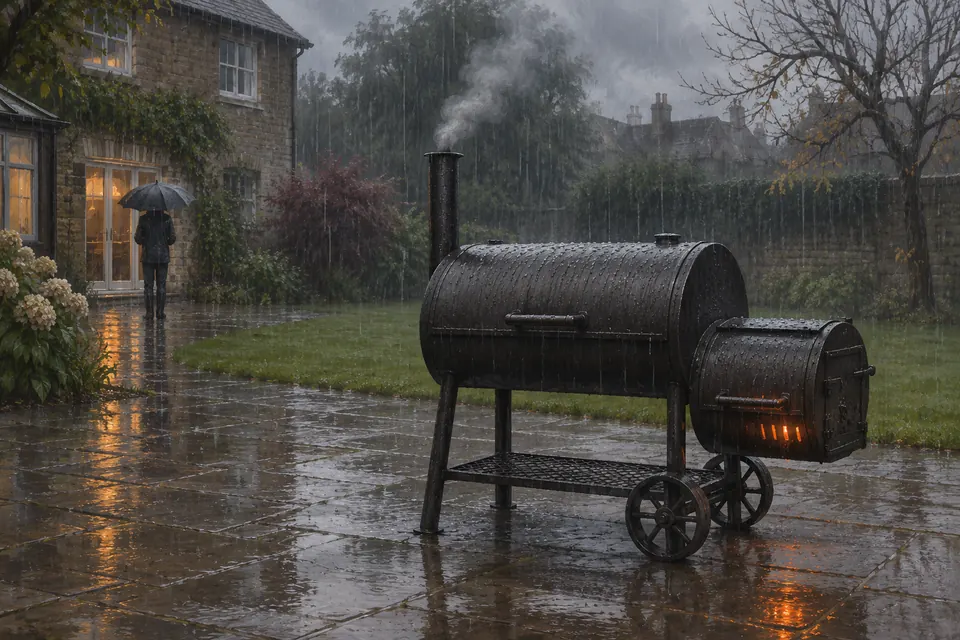 Weather and kitCornerstone
Smoking in the rain
How rain, wind and cold affect each type of smoker, how to shelter a cook safely without trapping smoke, and a wet-weather cook plan that works.
Read the guide