On this page · 9 sections
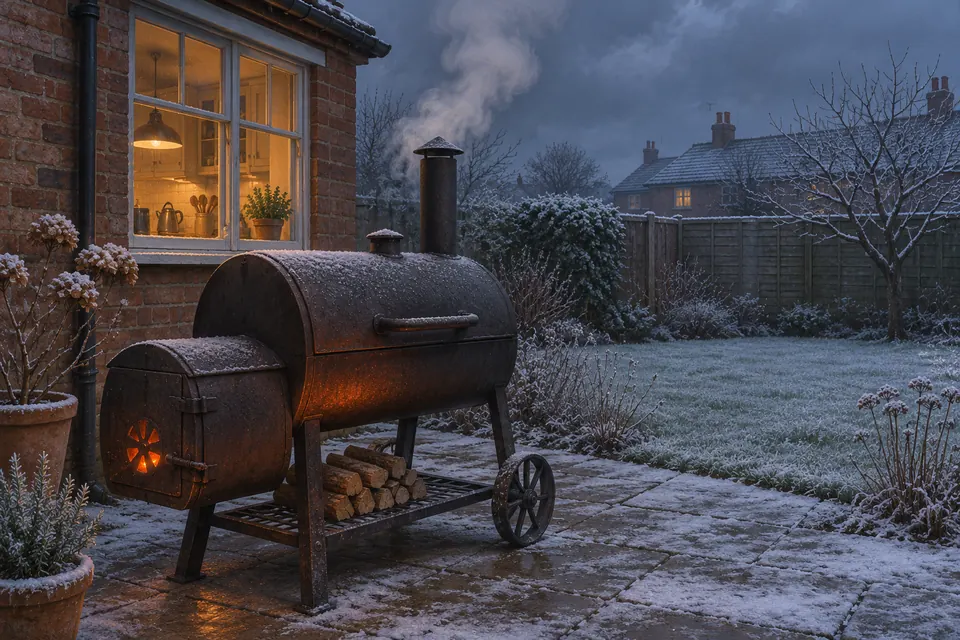
Smoking in December is the same job as smoking in July, just with a head torch, a bigger bag of charcoal and a lot more tea. The meat doesn't care what month it is. The smoker does, though, because every degree it holds is a degree it has to keep producing against cold air and wind. Plan for that and winter cooks are some of the most satisfying of the year.
What cold weather does to a smoker
A smoker is a box trying to stay hot in a garden trying to cool it down. In winter the garden is winning by more. Three things change:
- Fuel use goes up. The fire has to work harder to hold the same temperature, so you burn noticeably more charcoal, pellets or wood than on a mild day.
- Warm-up takes longer. Cold metal soaks up heat. A smoker that settles in 30 minutes in summer can take much longer on a frosty morning.
- Recovery is slower. Lift the lid in July and the temperature bounces back quickly. Lift it in January and you can lose a lot of heat for a long time.
Wind matters more than the thermometer. A still, frosty day is easier than a mild, blustery one, because wind strips heat off the outside of the smoker and can also make the fire burn unevenly by forcing air through the vents. Rain adds to all of it; our guide to smoking in the rain covers wet days.
How different smokers cope
| Smoker type | Winter behaviour |
|---|---|
| Ceramic kamado | Copes best. Thick walls hold heat and fuel use rises less than most |
| Insulated cabinet | Good, if well sealed |
| Bullet or kettle | Fine, but thin steel loses heat; uses more charcoal and needs shelter from wind |
| Thin-walled offset | Hardest work. Burns through a lot of wood and needs regular feeding |
| Pellet grill | Works, but burns more pellets and some struggle to hold the lowest settings in hard cold |
| Electric smoker | Can struggle to reach and hold temperature in very cold weather |
If you're choosing a smoker and know you'll be using it year round, this is one of the stronger arguments for a kamado. For everything else, the fixes below cover most of the gap.
Plan more fuel than you think
Running out of fuel mid-cook is bad in summer and worse in winter, when the shops shut early and the temperature drops the moment the fire falters. Use the fuel calculator for a rough figure based on your cook length, then add a generous margin for the cold. Keep fuel dry and indoors until you need it. Damp charcoal is hard to light and burns poorly, and damp pellets swell and can jam an auger. Our charcoal for smoking guide has more on storage.
Shelter from wind, not from air
Position the smoker where a wall, fence or hedge breaks the wind, ideally with the vents facing away from the prevailing breeze. Keep it on a stable, non-flammable surface and clear of anything that can catch, like fence panels, sheds and overhanging branches.
Then stop. Never move a smoker into a garage, shed, porch, conservatory or any enclosed space to get it out of the cold. Charcoal, wood and pellet smokers produce carbon monoxide, which you can't see or smell and which builds up quickly in a confined space. An open-sided gazebo can also trap fumes and catches fire more easily than people expect. The smoker stays outside, in the open, every time.
Insulation blankets: worth it, with caveats
Insulation blankets are fireproof jackets that wrap round the outside of a smoker to cut heat loss. On thin steel smokers they can make a real difference to fuel use and temperature stability in cold weather.
A few rules if you use one:
- Use one made for your type of smoker, from heat-resistant material, and follow the maker's guidance on how it fits.
- Never improvise one from moving blankets, duvets, old coats, cardboard or anything else that wasn't designed to sit against a hot smoker.
- Keep every vent and the chimney clear. A blanket that covers the vents will choke the fire and can trap heat where it shouldn't be.
- Don't wrap a firebox unless the blanket is specifically designed for it.
Kamados generally don't need one. For other smokers, it's a winter extra rather than an essential.
Keep the lid shut
This sounds obvious, but it's the biggest single difference you can make in cold weather. Each look costs more heat in winter, and the smoker takes longer to recover. A leave-in wireless probe means you can watch both the meat and the smoker temperature from indoors. Our guide to BBQ meat thermometers explains what to look for.
When you do need to adjust, make small vent changes and wait longer than usual to see what they do. Smoker temperature control is the same skill in winter, just slower.
Not sure how hard today's weather will hit your cook? Set the conditions below:
Dark evenings
In much of the UK it's dark by around four o'clock in December. That shapes the cook as much as the cold does.
- Start earlier, or choose shorter cooks. Ribs, chicken, salmon or a gammon fit into daylight more easily than an overnight brisket.
- Light the area properly. A head torch leaves both hands free. Set out a clear, trip-free path between the back door and the smoker.
- Lay out kit before dark. Gloves, tongs, foil, fuel and a tray for the meat, all in one place.
- Have an ash plan. Hot ash goes in a lidded metal bin, away from the house, never in a plastic bin or the garden waste.
A frosty lid can freeze to its gasket. Light the fire with the lid open, or warm it gently before forcing it, rather than tearing the seal.
After the cook
Close the vents to put the fire out and let everything cool completely before covering. Empty the ash once cold; wet winter ash turns into a corrosive paste that eats steel bowls. Our guide to cleaning and maintaining a smoker covers winter storage.
Before your next cold-weather cook, put your cook length into the fuel calculator, add a margin, and check you've got that much fuel stored somewhere dry.
FAQs
Can I use my smoker in freezing weather?
Yes. It will use more fuel and take longer to warm up, but it'll hold temperature if you shelter it from wind and keep the lid closed. Keep it outside in the open air.
Is it safe to put my smoker in the garage when it's cold?
No. Charcoal, wood and pellet smokers produce carbon monoxide, which can build up to dangerous levels in garages, sheds and other enclosed spaces. Always use a smoker outdoors in the open.
How much more fuel does a smoker use in winter?
It depends on the smoker, the temperature and especially the wind. Thin steel smokers use noticeably more; kamados much less. Start with the fuel calculator and add a generous margin.
Do I need an insulation blanket?
Not usually. It helps thin steel smokers in cold weather, but a sheltered spot and a closed lid do most of the work. If you use one, buy one designed for your smoker type and keep the vents clear.
Keep going
 Weather and kitCornerstone
Smoking in the rain
How rain, wind and cold affect each type of smoker, how to shelter a cook safely without trapping smoke, and a wet-weather cook plan that works.
Read the guide TechniqueCornerstone
Smoker temperature control
How to hold a steady smoker temperature with vents, fuel and placement, why the lid gauge lies, and what to do when the temperature drifts.
Read the guide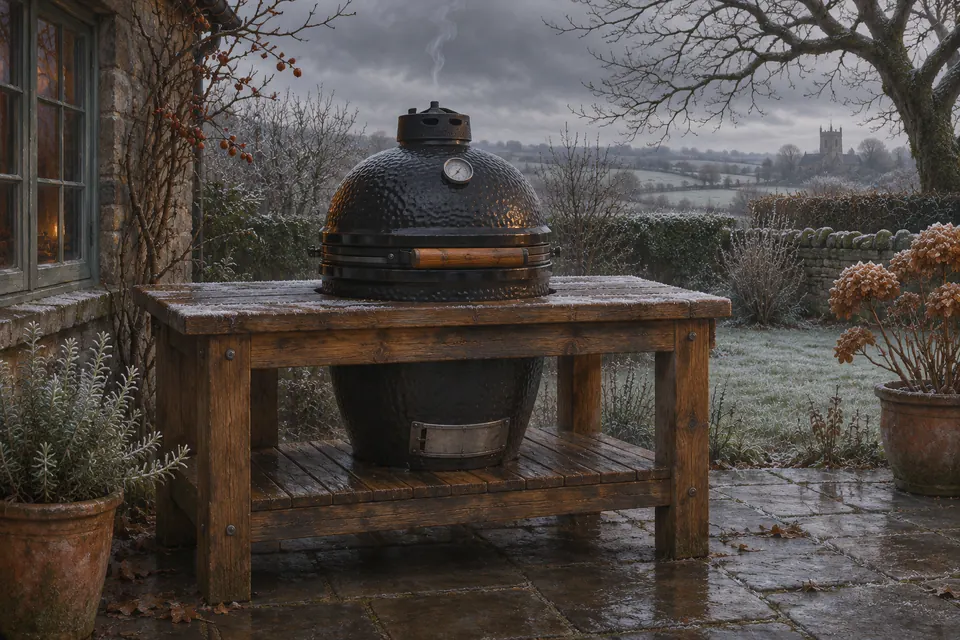 Choosing a smoker
Kamado smokers explained
How a kamado holds steady heat, setting one up for low and slow, what to check in the spec, and living with a heavy ceramic egg in a British garden.
Read the guide