On this page · 7 sections
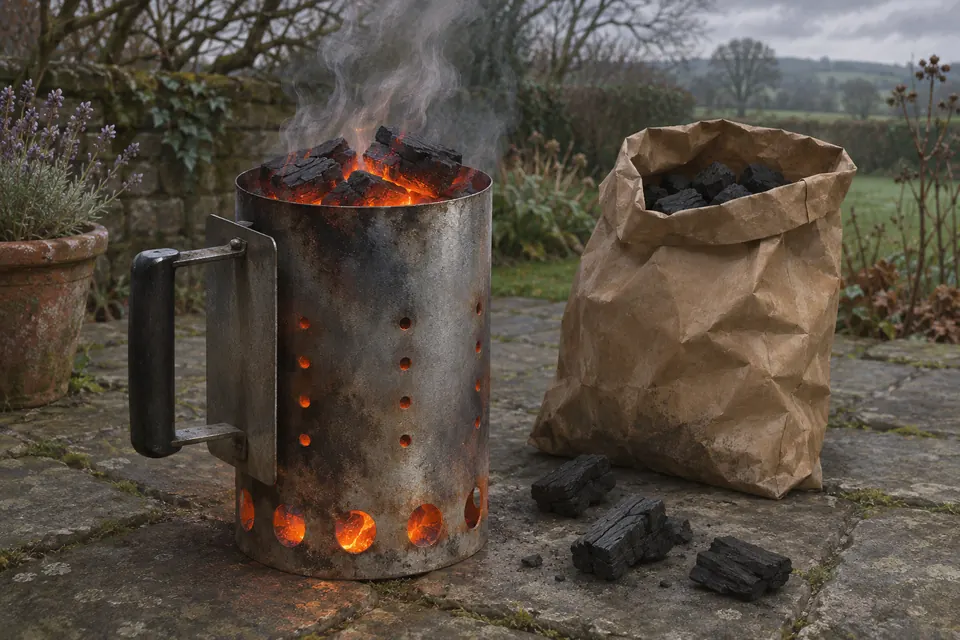
Lighter fluid doesn't all burn off. Believing it does ruins more first smokes than any choice of charcoal. On a hot grill you might get away with it; in a smoker, with the lid shut and the food sitting in that smoke for hours, a chemical taint is a real risk. So before lumpwood versus briquettes, the first rule of smoking fuel is how you light it: chimney starter, natural firelighters, nothing out of a squeezy bottle.
Lumpwood vs briquettes
Both are charcoal. The difference is in how they're made and how they burn.
Lumpwood is wood that's been heated with little oxygen until it's mostly carbon, then bagged in whatever shapes it came out as. It lights quickly, burns hot and leaves little ash. The irregular sizes make it a bit less predictable, and a bag often ends with a layer of dust and tiny pieces.
Briquettes are made from charcoal dust and fines pressed into uniform shapes with a binder, usually a starch. They take longer to light, burn at a steadier and slightly lower heat, and last longer. They produce more ash. Some cheap briquettes include fillers, and "instant light" versions are soaked in accelerant.
| Lumpwood | Briquettes | |
|---|---|---|
| Lighting | Fast | Slower |
| Heat | Hotter, more variable | Steadier, a bit cooler |
| Burn time | Shorter | Longer |
| Ash | Little | More, can choke a long cook |
| Consistency | Mixed sizes | Uniform |
| Suits | Kamados, shorter cooks, searing | Bullets, kettles, long low-and-slow cooks |
Which to use in which smoker
- Kettle and bullet smokers: briquettes are the easy choice for long cooks, especially laid out as a charcoal snake. They burn evenly along the line and hold temperature for hours. Lumpwood works but needs more attention. See smoking on a kettle BBQ.
- Kamados: lumpwood is the usual recommendation. Ceramic cookers are very efficient, so burn time isn't a problem, and lots of briquette ash can block the airflow through a kamado's small fire grate.
- Offsets: most cooks start the fire on a bed of charcoal and then run mainly on wood splits. Either charcoal type works for the base. More in offset smokers explained.
Mixing is fine. Plenty of cooks use a base of briquettes for stability and add lumpwood for a hotter start.
British-made charcoal
Charcoal sold in the UK comes from all over the world, and a lot of it is imported. British-made lumpwood is a smaller part of the market, but it has some genuine advantages that are worth knowing about in general terms:
- It's often made from coppiced or managed native woodland, such as oak, ash, beech and hazel, which is a sustainable way of producing wood.
- It tends to be fresher and drier when sold, so it often lights very quickly and burns hot and clean.
- The supply chain is short and easier to trace, which matters to some buyers given that some imported charcoal has been linked to deforestation.
The trade-offs: it's usually more expensive, often comes in smaller pieces, and burns faster, so it can suit kamados and kettles better than very long bullet cooks. Look for a recognised sustainability mark and a clear country of origin on any bag, British or imported. If the bag doesn't say where the wood came from, that's worth noticing.
Lighting it: the chimney starter
A chimney starter is a metal cylinder with a grate near the bottom and a handle. It's cheap, it lasts for years and it's the single most useful bit of charcoal kit.
- Put two natural firelighters (wood wool or wax-and-wood types) on the charcoal grate of the smoker, or on a heatproof surface.
- Fill the chimney with charcoal, to the amount you need, and set it over the lit firelighters.
- Wait. In around 15–20 minutes, flames will be licking through the top and the top coals will be greying at the edges.
- Tip it out carefully where you want it, using heat-resistant gloves. For a slow, long burn, tip a small amount onto unlit charcoal, as in the snake or minion methods.
For low-and-slow, you rarely need a full chimney. Light a quarter or a third and let it slowly light the rest. A full chimney poured into a kettle is a fast route to 200°C and a fire you can't bring back down.
Electric starters and blowtorches work too, if you prefer. What you shouldn't use is lighter fluid, instant-light charcoal, petrol, or any household accelerant. Beyond the taste, they're a real fire risk. Our guide to smoker temperature control covers what to do once the fire's going.
How much charcoal you'll need
That depends on the smoker, the weather and how long you're cooking. Wind and cold make a big difference in Britain; a thin-walled kettle on a breezy November day can burn noticeably more than in July. The smoker fuel calculator gives a working estimate from your cook length and smoker type. Buy more than it says, because the DIY store's charcoal shelf is famously bare by mid-July and closed on a Sunday evening.
Storing charcoal
Charcoal soaks up moisture. Damp charcoal is slow to light, spits and pops, and burns with more smoke. Keep bags off the ground, in a shed or garage, or in a lidded metal bin outside. Don't leave an open bag next to the smoker in the rain, and don't store it right next to firelighters or fuel cans.
Safety
Never use a charcoal smoker indoors, in a tent, garage, conservatory or any enclosed space. Burning charcoal produces carbon monoxide, which is invisible and can kill. That includes bringing a smoker into a garage "just to finish off" when it starts raining. See smoking in the rain for what to do instead.
Ash and used charcoal can hold live embers for many hours. Let it cool completely, then put it in a metal container, never a plastic bin or a garden waste sack.
Before your next cook, check how much charcoal you've got against the fuel calculator, and buy a chimney starter if you're still using lighter fluid. Pair the charcoal with the right wood using our smoking wood guide.
FAQs
Is lumpwood or briquette charcoal better for smoking?
Briquettes for long, steady cooks in bullets and kettles. Lumpwood for kamados and shorter, hotter cooks. Both work if you light them properly.
Can I use instant-light charcoal in a smoker?
It's better avoided. It's impregnated with accelerant that can taint food, especially with the lid closed for hours. Use plain charcoal and a chimney starter.
Is British charcoal worth the extra money?
If traceability and sustainable sourcing matter to you, often yes. It lights fast and burns clean. For very long cooks in a bullet, a good plain briquette may give a steadier burn for less money.
Can I reuse charcoal?
Yes. Close the vents after cooking to starve the fire, then sift out the unburnt pieces once cold and use them next time along with fresh charcoal.
Keep going
 Technique
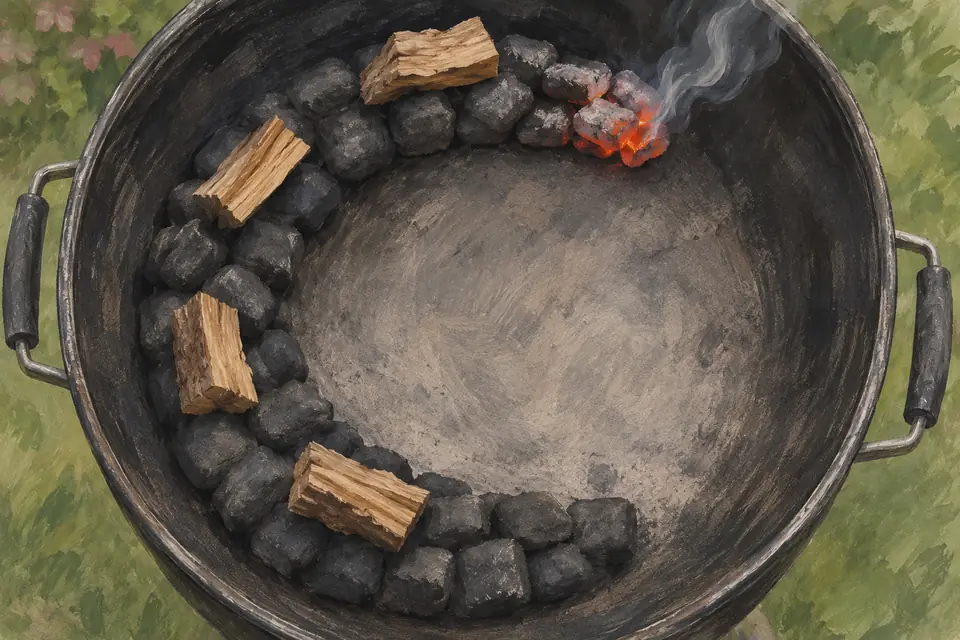
The charcoal snake method
Set up a charcoal snake for a low-and-slow cook on a kettle BBQ: briquette layout, where the wood goes, lighting, vents and topping up.
Read the guide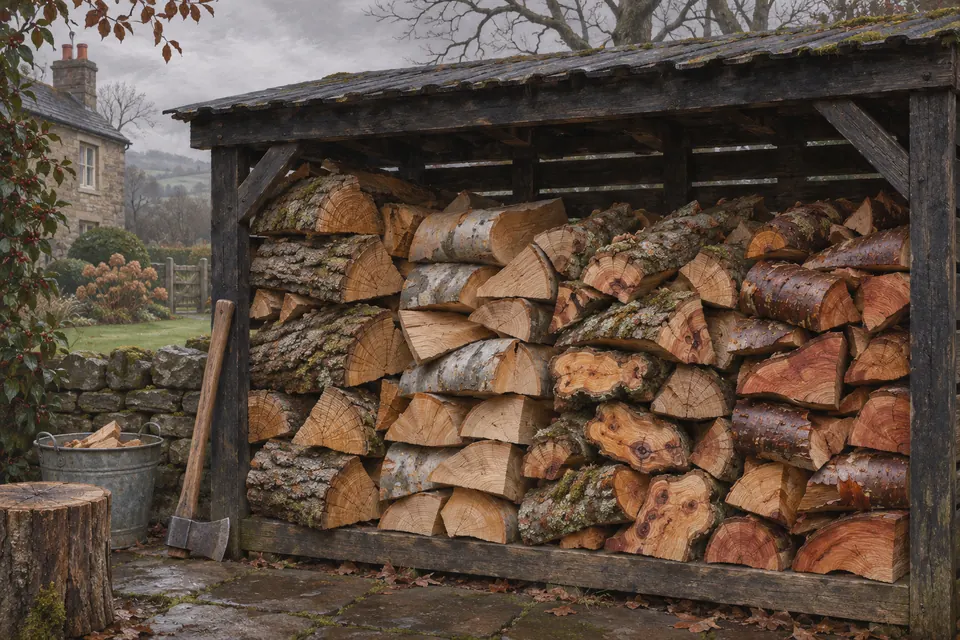 Fuel and woodCornerstone
Smoking wood in the UK
Which British woods suit which meats, chunks vs chips vs splits vs pellets, how dry the wood should be, what never to burn and how to store it.
Read the guide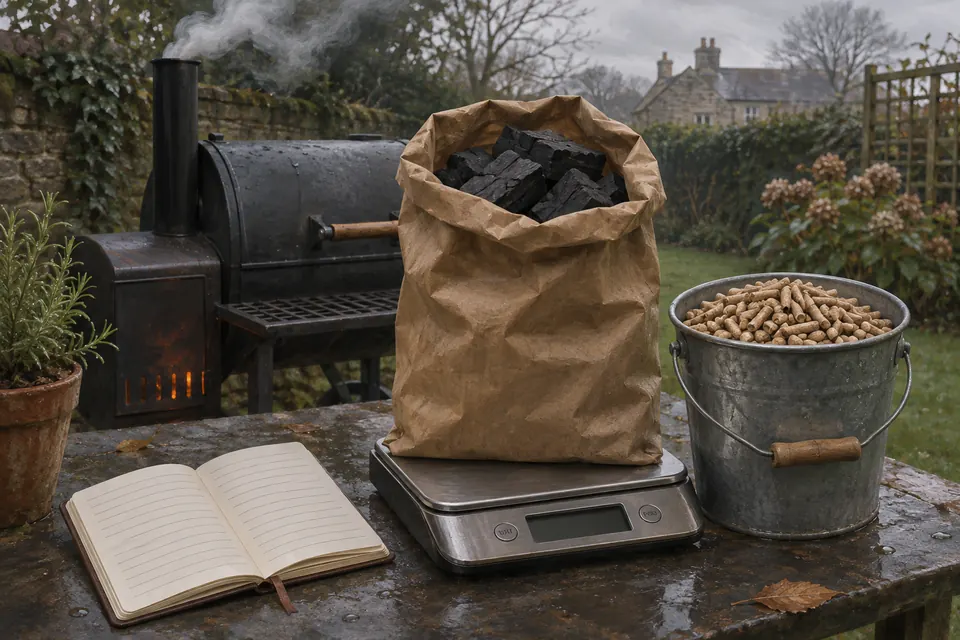 Tool
Smoker fuel calculator
Estimate how many kg of charcoal or pellets a cook will use, from cook length and burn rate.
Open the tool