On this page · 6 sections
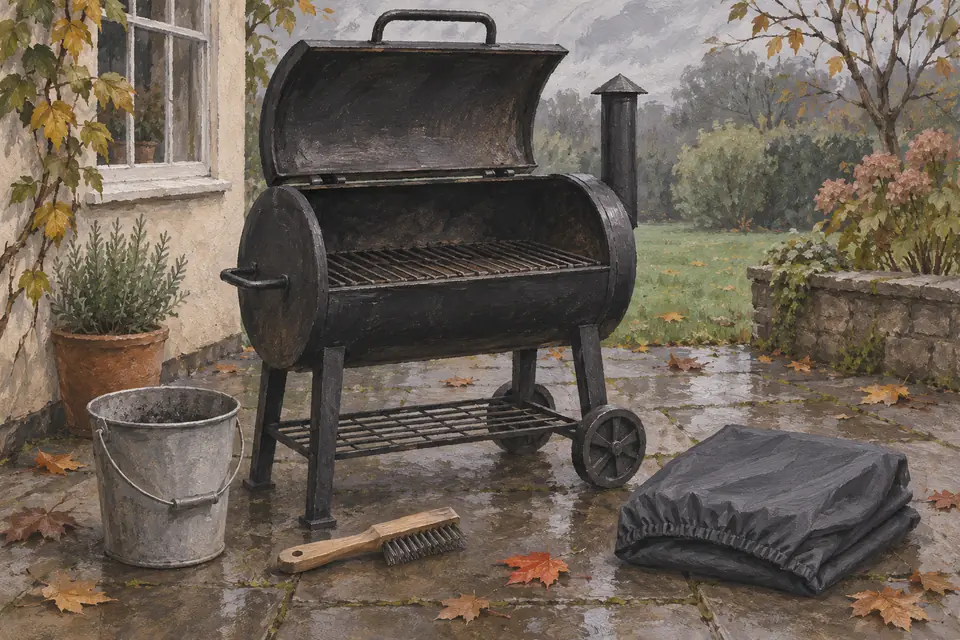
Nobody buys a smoker because they enjoy cleaning it. But more smokers die of neglect than wear: ash left sitting in the bowl over a wet winter, grease that builds up until it catches, a cover that traps condensation against bare steel for months. The good news is that the routine is short. Most of it happens in the ten minutes after a cook, while you're waiting for the meat to rest.
Why British weather is hard on smokers
Rain on its own isn't the main problem. Smokers are built to be outside. The trouble comes from moisture that can't get away. Damp air settles inside a closed cooker, condensation forms overnight, and anything left in there, ash especially, turns into a wet sludge. Wood and charcoal ash mixed with water is alkaline and corrosive, and it eats steel bowls and fireboxes far faster than rain ever could.
Long, damp winters with few dry days make this worse. A smoker that sits from October to April without being opened can come out of it with rusted grates, a soft spot in the firebox and a lid gasket that's gone mouldy. All of that is preventable.
After every cook
| Job | When | Why |
|---|---|---|
| Close vents to starve the fire | Straight after the cook | Saves leftover charcoal and cools the cooker safely |
| Scrape the grates | While still warm | Stuck-on fat comes off easily warm, needs chiselling cold |
| Empty the drip tray or grease bucket | Once cool | Built-up fat is the commonest cause of smoker fires |
| Empty the ash | Once completely cold | Damp ash corrodes steel |
| Cover the smoker | Only once completely cold | A hot smoker can melt or scorch the cover |
On charcoal smokers, sift the unburnt charcoal out and reuse it next time; it relights fine. Put ash in a metal bin or bucket, not a plastic one, even if it looks cold. Embers can hide in ash for many hours.
Line the drip tray with foil before the cook. Afterwards you lift out the fat in one go instead of scraping it out with a spatula and regretting your life choices.
Grease fires: prevention and what to do
Fat collects in drip trays, grease channels, the bottom of offset barrels and the grease buckets on pellet grills. Each cook adds a little more. Eventually it gets hot enough to ignite, often at the start of a hot cook or when the smoker is pushed up for crisping chicken skin. A small flare is a nuisance; a well-fed grease fire is a real hazard.
Prevention is easy: empty and scrape those areas regularly, and check them before any high-temperature cook.
If a grease fire starts:
- Never throw water on it. Water on burning fat spreads the fire violently.
- On a charcoal smoker or kamado, close the lid and all vents to starve it of air. Keep clear of the lid; on a kamado, opening it again too soon can cause a flashback of flame.
- On a pellet or electric smoker, follow the manufacturer's manual. Generally that means switching it off at the controller, keeping the lid closed and keeping clear. Don't unplug or move it while it's on fire.
- Keep a fire blanket or a suitable extinguisher nearby, and know how to use it before you need it.
- If the fire spreads beyond the smoker, get everyone away and call 999.
Smokers should sit on a non-flammable surface and well away from fences, sheds and overhanging branches. Our guide to smokers for small gardens covers placement in tighter spaces.
The proper clean, once or twice a year
Spring and autumn are the natural points: before the first cook of the season and before the smoker goes quiet for winter.
- Scrape the lid and walls. Black flakes peeling off the inside of the lid look like paint coming away. They're almost always carbonised grease and smoke. Scrape them off with a plastic or wooden scraper so they don't fall onto food. Don't scrub the inside back to bare metal; a light coating protects it.
- Wash the grates. Hot soapy water and a stiff brush, then dry and oil them. Cast iron grates need oiling every time they're washed, or they rust within days.
- Check the seals and gaskets. Replace any that are crumbling or mouldy. Leaky seals make temperature control much harder.
- Check vents, hinges and handles. A drop of high-temperature lubricant on a stiff vent saves wrestling it mid-cook.
- Touch up rust. Wire-brush the spot back, wipe it clean and use high-temperature BBQ paint on the outside of the body. Never paint cooking surfaces or the inside of the cook chamber.
By smoker type
- Kettles, bullets and offsets: mostly the routine above. Offsets collect fat and ash in the firebox and the bottom of the barrel, so check both. More in offset smokers explained.
- Kamados: don't clean the ceramic inside with water or detergent; it soaks in and can crack the ceramic when heated. Instead, run a hot burn-off with the lid closed to turn residue to ash, then brush it out. Check the gasket and the band bolts each spring.
- Pellet grills: vacuum the ash out of the firepot regularly, empty the grease bucket and keep the temperature probe clean so it reads accurately. Empty the hopper if the grill won't be used for a while, because pellets absorb damp and swell, which can jam the auger. Our wood pellets guide covers storage.
- Electric smokers: keep the electrics dry, plug into an outdoor socket protected by an RCD, and empty the wood chip tray after each use. Wipe the inside down when cool.
Covers and winter storage
A good cover is worth having, but it isn't a magic shield. A cheap, non-breathable cover on a smoker in a damp spot can actually make rust worse, because it traps condensation against the metal. Look for a breathable, fitted cover with ties or a drawstring, since a loose cover in a British gale ends up in the neighbour's garden.
For winter:
- Empty all ash and grease, then give it a quick clean.
- Oil the grates lightly.
- Leave the vents slightly open so air can move through.
- Lift the cover off on dry, breezy days to let it air.
- If you store it in a shed or garage, make sure it's completely cold and ash-free first, and that the space is ventilated.
Or just keep cooking. Smoking right through winter is very doable; see smoking in winter and smoking in the rain.
Next step: add a metal ash bucket, a scraper and a pack of drip-tray foil to your smoker kit list before the next cook.
FAQs
Should I clean my smoker after every use?
Do the quick jobs every time: grates, drip tray, and ash once it's cold. Leave the deep clean for once or twice a year. A smoker that's scrubbed back to bare metal after every cook loses its protective coating.
Is rust inside a smoker dangerous?
Light surface rust isn't a serious hazard, but it's not something you want flaking onto food. Brush it off, clean and oil the area, and run the smoker hot to re-season it. Heavy rust that's thinned the metal means the part needs replacing.
Can I leave my smoker outside all winter?
Yes, if it's clean, ash-free and covered with a breathable cover, and you air it on dry days. Damp ash left inside is the main thing that ruins smokers over winter.
What are the black flakes inside my smoker lid?
Usually carbonised grease and smoke residue, not paint. Scrape them off with a plastic scraper so they don't fall onto food.
Keep going
 Weather and kit
Smoking in winter
How to keep a smoker running through a British winter: cold and wind, extra fuel, insulation blankets, dark evenings, and why it never goes in the garage.
Read the guide Weather and kitCornerstone
Smoking in the rain
How rain, wind and cold affect each type of smoker, how to shelter a cook safely without trapping smoke, and a wet-weather cook plan that works.
Read the guide Weather and kit
Smoker kit list
The smoking kit that matters, the extras that make life easier and the gadgets you can skip, for anyone getting started with a smoker in the UK.
Read the guide