On this page · 5 sections
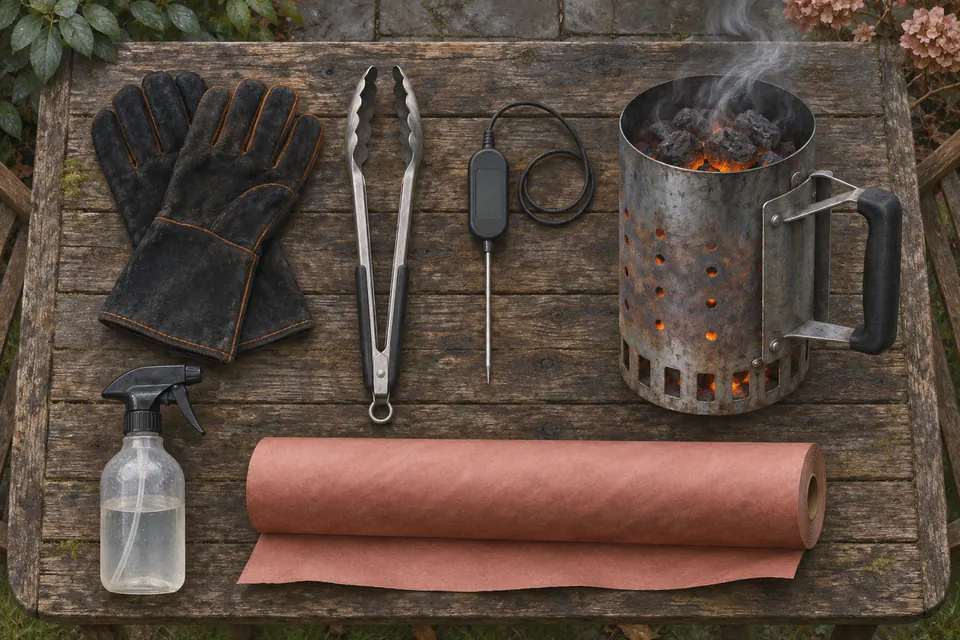
The first thing to buy after a smoker isn't a branded apron or a set of claws shaped like a bear. It's a decent thermometer. After that, the kit list is short, mostly cheap and largely available from any DIY store or the kitchen drawer. This page splits it into three piles: what you'll actually need, what makes life easier, and what you can leave on the shelf.
The short version
| Need | Nice to have | Skip |
|---|---|---|
| Probe thermometer | Wireless multi-probe thermometer | Wire bristle grill brush |
| Chimney starter | Fan temperature controller | Wood chip soaking tray |
| Heat-resistant gloves | Insulation blanket (for cold weather) | Lighter fluid |
| Long tongs | Rib rack | Novelty meat claws |
| Foil and/or butcher paper | Spray bottle | Beer can chicken stand |
| Lidded metal ash bin | Head torch | Gadget-of-the-month |
| Cool box and old towels | Meat injector | |
| Fuel and smoking wood | Large chopping board with a juice groove | |
| A cover |
What you actually need
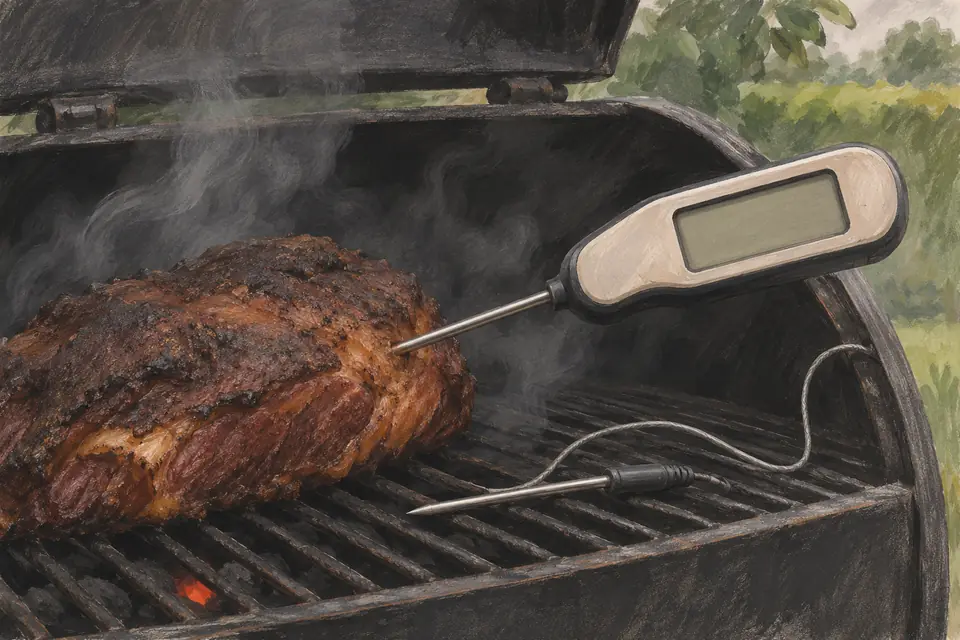
A probe thermometer. This is the one piece of kit that changes your results more than anything else. The lid thermometer on many smokers reads the air at the top of the dome, which can be quite different from the temperature where the meat sits. You need to know the internal temperature of the food, both for doneness and for safety. A quick instant-read probe is the minimum; a leave-in probe is better. Our BBQ meat thermometers guide explains the types.
A chimney starter. A metal tube that lights charcoal evenly with a bit of newspaper or a natural firelighter, no lighter fluid needed. If you have a charcoal smoker, it's essential. If you have a pellet grill or electric smoker, skip it.
Heat-resistant gloves. For moving grates, adjusting hot vents and handling the chimney. Purpose-made heat-resistant ones, not oven gloves with a hole in the thumb. A pair of nitrile gloves over cotton liners is handy for pulling hot meat.
Long tongs. Sturdy, long and not too springy. You'll use them for everything from turning ribs to moving lumps of charcoal.
Foil and butcher paper. For wrapping meat during the stall and for resting it afterwards. Foil is in every kitchen drawer; unwaxed butcher paper is a nice addition. Our guide to foil vs butcher paper explains when to use which.
A lidded metal ash bin. Ash from a smoker can stay hot for a very long time. It goes in a metal container with a lid, away from the house, never straight into a plastic wheelie bin. An old metal coal scuttle or galvanised bucket with a lid is perfect for ash (just don't cook with galvanised steel).
A cool box and old towels. The cheapest way to rest and hold big cuts for hours. Wrap the meat, wrap it in a towel, put it in a dry cool box. Done.
Fuel and wood. Enough charcoal or pellets for the whole cook plus a margin, and a few chunks of a suitable wood. The fuel calculator gives you a rough amount; our guides to charcoal for smoking and smoking wood in the UK cover what to buy.
A cover. British weather will rust an uncovered steel smoker faster than you'd like. Only put it on once everything is completely cold.
Nice to have
A wireless multi-probe thermometer. One probe in the meat, one at the grate, readings on your phone or a receiver indoors. It saves a lot of trips outside and means fewer lid lifts. For overnight cooks it's close to essential.
A fan temperature controller. For charcoal smokers, a small fan that feeds air to the fire to hold a set temperature. It makes a charcoal smoker behave a lot more like a pellet grill. Worth it if you do a lot of long cooks; not needed to get started.
An insulation blanket. Useful for thin steel smokers in cold weather. See smoking in winter for how to use one safely.
A rib rack. Stands racks of ribs on edge so more fit on a smaller grate. Very handy on a kettle or bullet.
A spray bottle. For spritzing meat with water, apple juice or diluted vinegar during long cooks. A cheap garden spray bottle does the job; keep one just for food.
A head torch. Winter evenings and overnight cooks. Both hands free.
A meat injector. For pushing brine or marinade deep into large cuts like turkey or pork shoulder. Optional, but useful for a big Christmas bird.
Before buying any accessory, ask whether you've needed it on the last three cooks. If not, it can wait.
What to skip
Wire bristle grill brushes. Bristles can break off, stick to the grate and end up in food. A scraper, a ball of foil held in tongs, or a bristle-free brush does the job without the risk.
Wood chip soaking trays. Soaking wood mainly makes it steam before it smokes, which delays things. Dry chunks on charcoal and dry chips in an electric smoker work better.
Lighter fluid. Unnecessary with a chimney starter, and it can leave a chemical taste in food.
Beer can chicken stands. The can heats unevenly, the bird cooks unevenly, and a spatchcocked chicken is better in every way.
Novelty gadgets. Bear claws, branded spatulas, rub shakers with built-in lights. If it costs more than a good thermometer, you probably don't need it yet.
If you haven't bought the smoker yet, our smoker buying checklist covers what to look for. If you have, add up your next cook in the fuel calculator and check the shed for enough charcoal.
FAQs
What's the single most important smoker accessory?
A good probe thermometer. It tells you when food is safely cooked and when big cuts are tender, and most lid thermometers aren't reliable enough on their own.
Do I need a fan temperature controller?
Not to start. It's very helpful on a charcoal smoker for long overnight cooks, but plenty of people never use one. Learn vent control first.
Do I need special gloves for smoking?
Yes, a pair of heat-resistant gloves for handling hot grates, vents and the chimney starter. Thin oven gloves aren't enough for hot charcoal and metal.
Is a cover worth it?
Yes, especially in the UK. A cover keeps rain off and slows rust, but only put it on when the smoker is completely cold.
Keep going
 Weather and kit
BBQ meat thermometers
Instant-read, leave-in and wireless probes compared: how each works, which published specs matter, and how to check and care for one.
Read the guide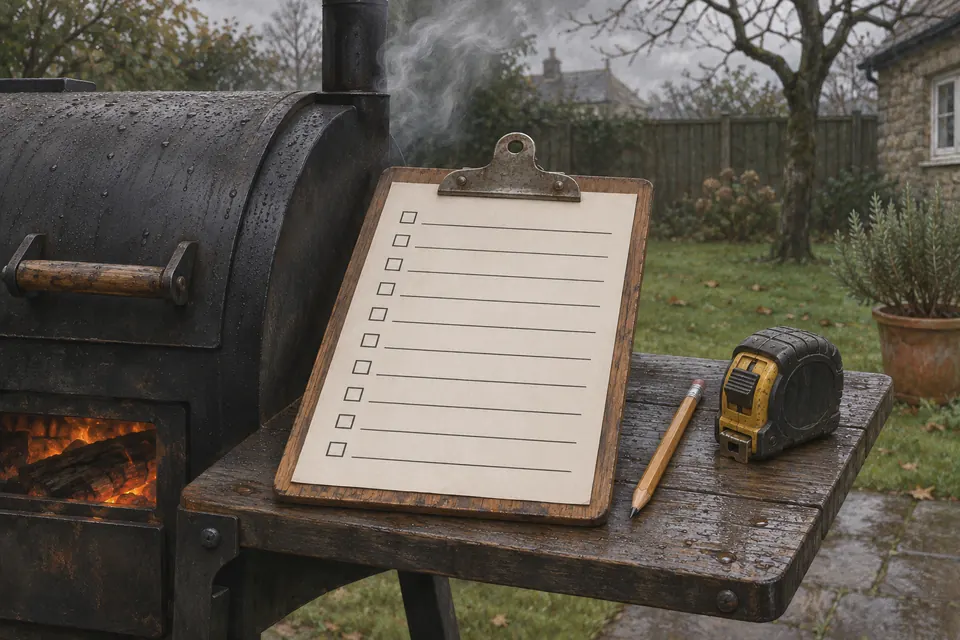 Choosing a smokerCornerstone
Smoker buying checklist
A printable-style checklist for buying a smoker in the UK: what to check on the spec sheet, what to check in the showroom, and the red flags to walk away from.
Read the guide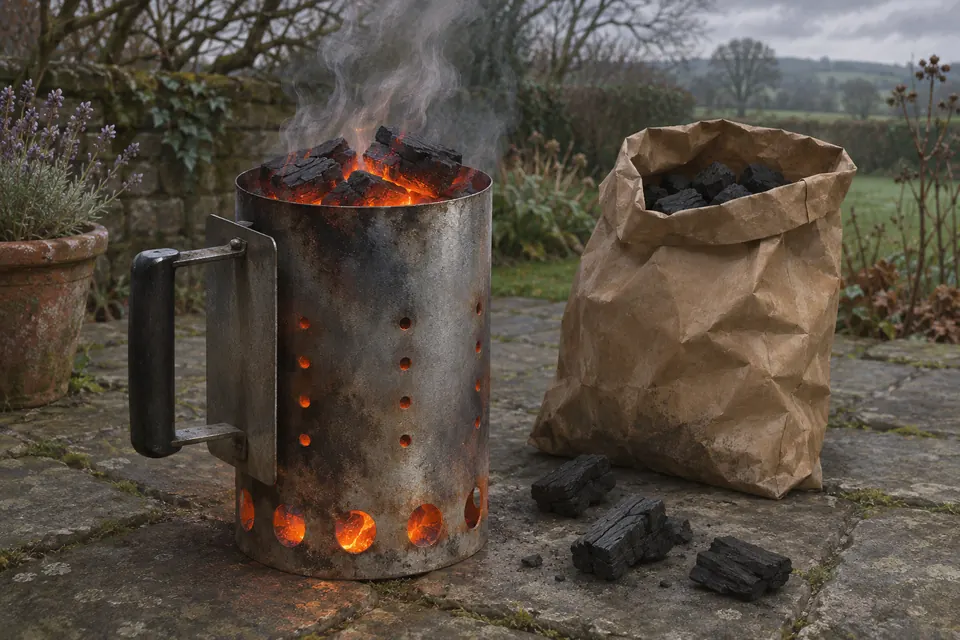 Fuel and wood
Charcoal for smoking
Lumpwood or briquettes for low-and-slow, what British-made charcoal offers, how to light it with a chimney starter, and why lighter fluid has no place in a smoker.
Read the guide