On this page · 9 sections
At a glance
- Ask for
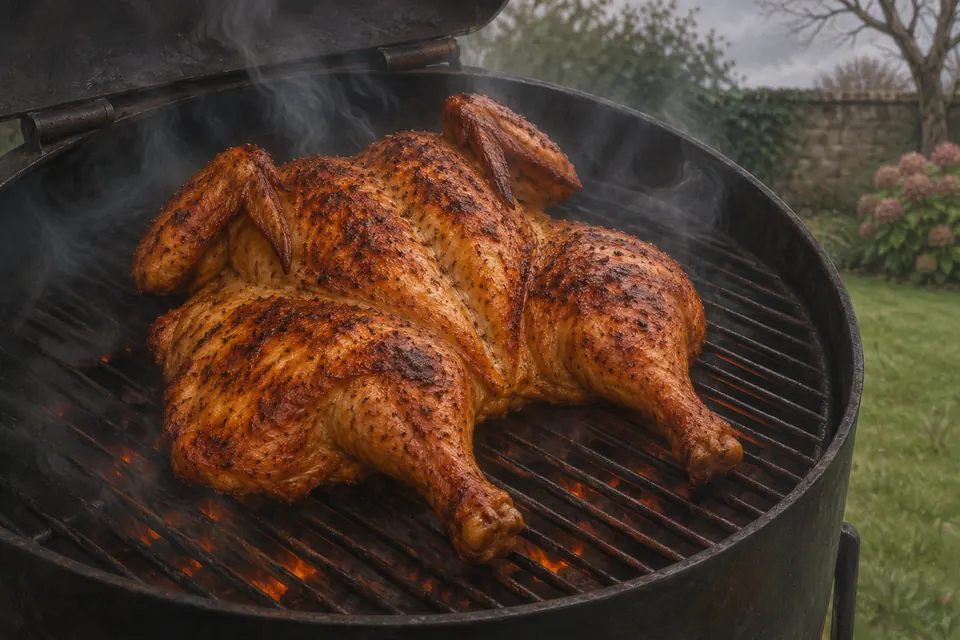
- Whole chicken, spatchcocked
- Smoker
- Around 150–175°C
- Time
- Around 1.5–2 h for a 1.5–2 kg bird
- Wood
- Apple, cherry or beech, one or two chunks
- Done when
- Safe temperature per FSA guidance
- Rest
- Around 10 minutes, loosely covered
The skin is where most smoked chickens let people down. The meat comes out juicy and pink-tinged from the smoke, everyone's pleased, and then they bite into something with the texture of a wet bath mat. It's fixable, and the fix is mostly a matter of temperature and a bit of planning the day before.
Why smoked chicken skin goes rubbery
Chicken skin is full of water and fat. To turn crisp, the water has to evaporate and the fat has to render out, and both need heat. At the low-and-slow temperatures used for pork shoulder or brisket, around 110–120°C, the meat cooks through long before the skin gets anywhere near crisp. The humidity inside a smoker, especially one with a water pan, makes it worse.
So chicken breaks the usual low-and-slow habit. You smoke it hotter, you dry the skin before it goes on, and you shape the bird so it cooks evenly and quickly.
Spatchcock the bird
Spatchcocking means cutting out the backbone and pressing the chicken flat. It sounds like butchery homework, but it takes about two minutes with decent kitchen scissors.
- Put the chicken breast side down, legs towards you.
- Cut along both sides of the backbone and lift it out. Keep it for stock.
- Turn the bird over and press firmly on the breastbone until it cracks and lies flat.
- Tuck the wing tips behind the breast so they don't burn.
A flat bird cooks far more evenly than a whole one. The legs sit nearer the heat and the breasts are less likely to dry out while you wait for the thighs. It also exposes all the skin to the heat, which is the whole point. Most butchers will spatchcock a chicken for you if you ask.
Don't wash the raw chicken first. The usual food safety advice is that it splashes bacteria round the sink and does nothing useful.
Dry brine, uncovered, overnight
Salt the chicken all over, including under the skin of the breast and thighs where you can get a finger in. Put it on a rack over a tray in the fridge, uncovered, overnight. The salt seasons the meat and the cold, dry air of the fridge dries the skin.
The brine calculator will give you a salt weight for a dry brine based on the bird's weight, which saves the guesswork. Some cooks mix a little baking powder in with the salt because it helps the skin brown and blister; use only a small amount, or it tastes metallic.
Wet brining works too, and makes very juicy meat, but it leaves the skin soggy. If you wet brine, dry the bird thoroughly and give it several hours uncovered in the fridge afterwards.
Add the rest of the rub just before cooking. Sugar-heavy pork rubs burn at chicken temperatures, so go lighter on sugar here. Paprika, garlic, pepper and a little thyme work well. Our rub ratios page has a base mix you can adapt.
Set the smoker hotter than usual
Aim for somewhere around 150–175°C at the grate. On a kettle or bullet that means more lit coals than usual and the vents more open. On a pellet grill or electric smoker, just set the dial.
| Smoker temperature | What happens to the skin | Rough time for a spatchcocked bird |
|---|---|---|
| Around 110–120°C | Smoky meat, rubbery skin | Around 3 hours or more |
| Around 135°C | Better, often still soft | Around 2–2.5 hours |
| Around 150–175°C | Golden, bite-through skin | Around 1.5–2 hours |
The times are rough and depend on the size of the bird. Use them to plan, and use a probe to decide when it's done.
If you have a water pan, leave it empty or take it out for chicken. You want dry heat. Our guide to smoker temperature control explains how to push a charcoal smoker up and keep it there.
Wood for chicken
Chicken soaks up smoke quickly and doesn't need much. One or two small chunks of apple, cherry or beech is enough. Oak is fine but can taste heavy on a small bird. Thick, heavy smoke turns chicken bitter quicker than almost anything else, so keep the wood modest and the fire burning clean. Our smoking wood guide has more on matching British woods to meat.
On the grate, and checking it's done
Lay the bird skin side up, legs towards the hotter side of the smoker if your smoker has one. Put a leave-in probe into the thickest part of the breast, and check the thigh separately with an instant-read thermometer towards the end, avoiding the bone.
Poultry must be cooked through. Check the FSA guidance for the safe internal temperature and make sure the thickest parts of both the breast and thigh reach it. The juices should run clear and there should be no pink meat near the bone. Smoked chicken can have a pinkish ring under the skin from the smoke, which is normal, but it's not a reason to skip the thermometer. If you don't have a decent one yet, read our guide to BBQ meat thermometers before the cook, not after.
If the meat is done but the skin still isn't crisp, move the bird directly over hot coals for a minute or two per side, skin side up first, then flip it briefly. Watch it closely; it goes from golden to charcoal fast.
Resting and carving
Rest the chicken for around ten minutes, loosely covered. Don't wrap it tightly in foil: the trapped steam undoes all the work on the skin. Carve the legs off first, then slice the breasts across the grain.
Kettle, bullet or offset?
Chicken is one of the few cooks where a kettle can beat a dedicated smoker, because it runs hot easily. Set it up for indirect heat and you're there; see smoking on a kettle BBQ. Bullet smokers need the water pan out. Offsets run hot at the firebox end, so put the legs that way.
Once you've got chicken right, a turkey is the same job on a bigger, slower scale, and our guide to smoked turkey for Christmas picks it up from there. For now, buy a bird, weigh out the salt, and get it in the fridge uncovered tonight.
FAQs
How long does a whole chicken take to smoke?
A spatchcocked chicken of around 1.5–2kg usually takes around one and a half to two hours at about 150–175°C. A whole, unspatchcocked bird takes longer and cooks less evenly. Always finish on temperature, not time.
Can I smoke a chicken at 110°C like pulled pork?
You can, and the meat will be very smoky, but the skin will be soft and rubbery. If you want low-temperature smoke flavour, start low for 30 to 45 minutes and then raise the heat to finish.
Is pink smoked chicken safe?
A thin pink ring under the skin can be a smoke ring and isn't a sign of undercooking on its own. The only reliable check is a thermometer reading in the thickest parts that meets the FSA guidance.
Should I brine chicken before smoking?
A dry brine gives the best balance of seasoned meat and crisp skin. Wet brining makes juicy meat but wet skin, so dry the bird well afterwards. The brine calculator works out the salt for either.
Keep going
 Cooks
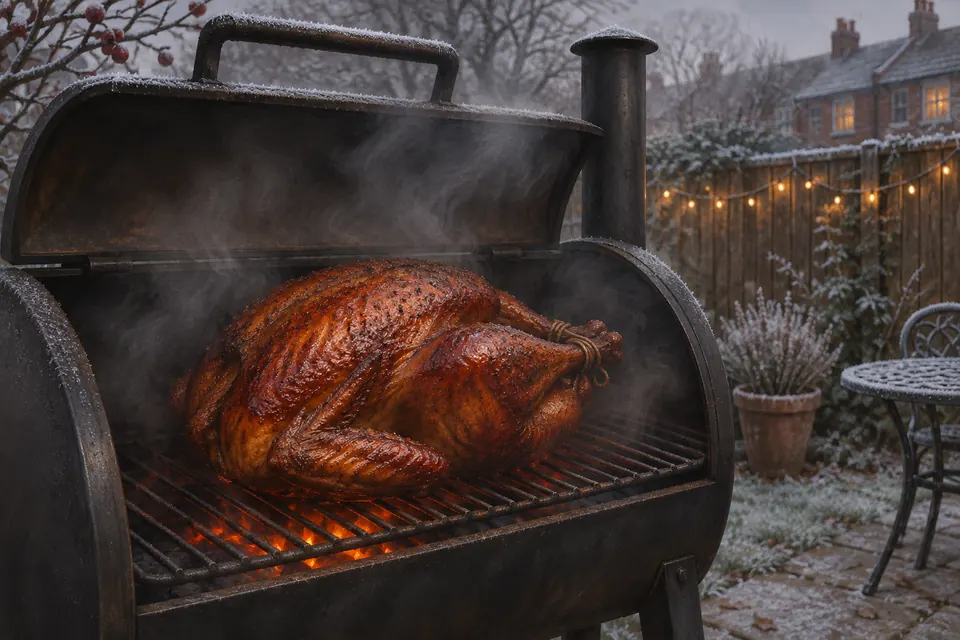
Smoked Christmas turkey
How to smoke a turkey for Christmas in the UK: crown vs whole bird, brining, cooking in cold weather, and freeing up the oven for everything else.
Read the guide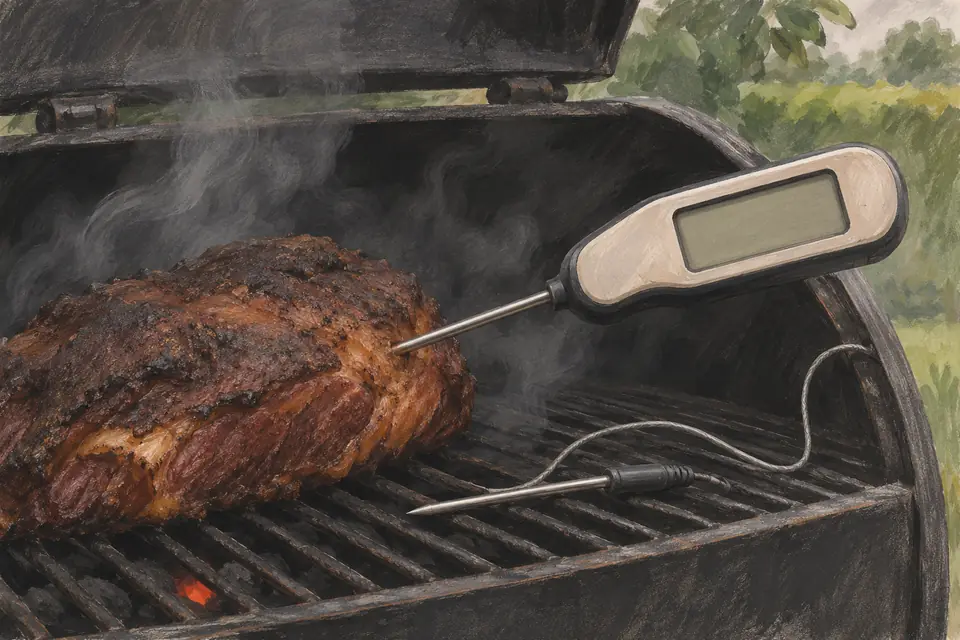 Weather and kit
BBQ meat thermometers
Instant-read, leave-in and wireless probes compared: how each works, which published specs matter, and how to check and care for one.
Read the guide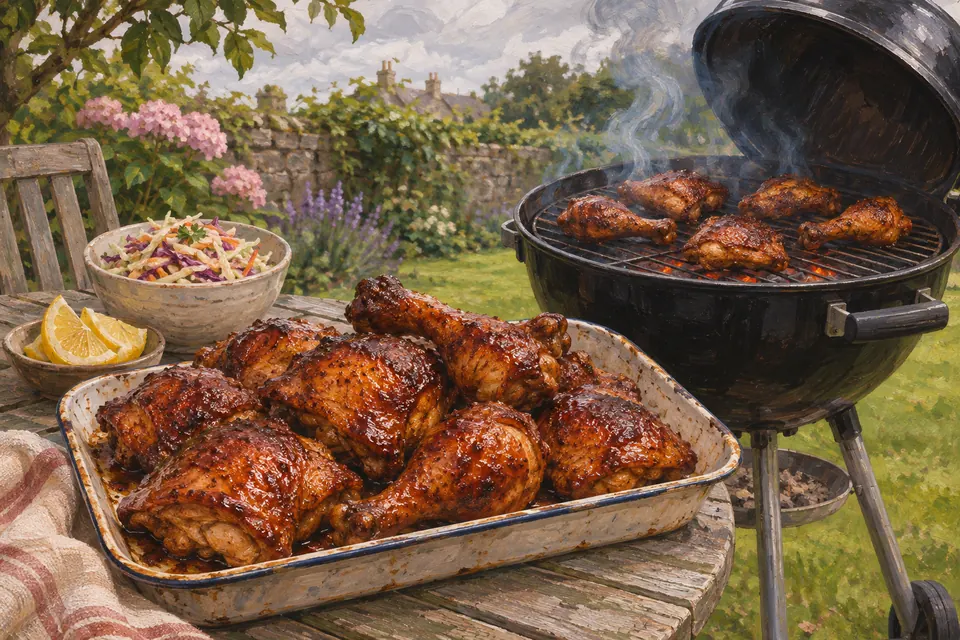 Cooks
Chicken thighs and drumsticks
How to smoke chicken thighs and drumsticks with crisp skin: why they're the most forgiving cook for beginners, dry brining, the right smoker temperature, timings and when they're done.
Read the guide