On this page · 6 sections
At a glance
- Ask for
- Bone-in pork shoulder, skin off
- Smoker
- Around 110–120°C
- Time
- Roughly 2.5–4 h per kg, plus rest
- Done when
- Probe slides in, around 90–95°C
- Rest
- At least 1 h wrapped in a cool box
It's 6am on a Saturday, the kettle's on, the garden is grey and damp, and there's a 4 kg pork shoulder sitting on the worktop with a coat of rub. If people are eating at 5pm, that shoulder should be on the smoker within the hour. Pulled pork isn't difficult, just slow, and the cook who starts early has a relaxed afternoon.
Which pork shoulder to ask for
American recipes ask for "Boston butt", which is the upper part of the shoulder, closer to the neck. British butchers usually cut the shoulder differently, so the name won't always land. Ask for one of these:
- Bone-in pork shoulder. The default. Often sold somewhere around 3–5 kg as a half shoulder, or bigger as a whole one. The bone helps you tell when it's done: it slides out clean when the meat is ready.
- Pork collar (sometimes called neck end or collar butt). Close to what the US calls the butt, very well marbled and quicker because it's smaller. A good choice for a smaller party.
- Hand of pork, or hand and spring. The lower part of the shoulder, roughly the US "picnic". Bonier and a little more sinewy, still very good pulled.
Ask for the skin off, or score and remove it yourself, because skin on a low-and-slow cook turns to leather rather than crackling. Keep a decent layer of fat. A boneless rolled shoulder works too, but untie it first or the inside barely sees any smoke. Our UK vs US BBQ cuts guide has the full translation table.
Time ranges
Most recipes put a bone-in pork shoulder at around 2.5 to 4 hours per kg at a smoker temperature of roughly 110–120°C. Run the smoker hotter, around 135°C or a bit above, and the cook shortens. That range is wide on purpose. A thick shoulder takes longer per kg than a flatter one, and the stall can last anything from half an hour to several.
| Cut | Rough weight | Cook at around 110–120°C | Plus rest |
|---|---|---|---|
| Pork collar | 1.5–2.5 kg | 4–9 hours | 1 hour or more |
| Half shoulder, bone in | 3–4 kg | 8–14 hours | 1–2 hours |
| Bigger shoulder, bone in | 4–5 kg | 10–18 hours | 1–2 hours |
To get a start time, put the weight and cook rate into the smoking time planner, take the slow end of the range and add your rest. Then add an hour for lighting the fire and letting it settle, because the clock starts when the meat goes on, not when you find the matches.
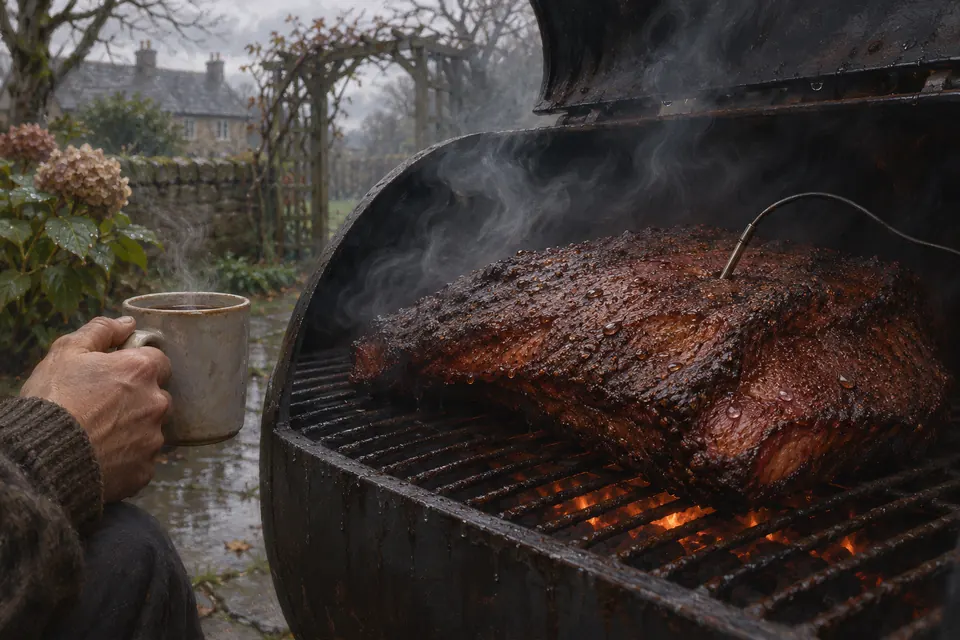
The stall is the part that throws people. Somewhere around 65–75°C internal, the temperature stops climbing because evaporation is cooling the surface as fast as the smoker heats it. You can wait it out for better bark, or wrap the shoulder in foil or butcher paper to push through. There's a full explanation in our guide to the stall. On a cold, windy day, wrapping is the better call.
Spritz less than you think. A spray of apple juice every hour feels productive, but every lid-lift drops the temperature and adds time. Once or twice after the bark sets is plenty.
Why shoulder is the forgiving first cook
Pork shoulder is loaded with fat and connective tissue. That's why it can survive a fire that runs a bit hot, a temperature drop when the rain comes in or a lid you opened once too often. Lean cuts punish those mistakes. Shoulder mostly shrugs them off.
It's also cheap at most UK butchers compared with brisket, and pulled pork hides a lot: a slightly uneven bark disappears once it's all mixed with the juices. If you're new to smoking, start here, then move on to ribs and brisket. Our guide on how to use a smoker uses shoulder as its first cook for exactly that reason.
Pulling temperature vs safe temperature
These are two different numbers, and mixing them up causes most of the confusion about pulled pork.
The safe temperature is the internal temperature at which the meat is safe to eat. That's set out in the FSA guidance, and pork shoulder reaches it long before it's tender. A shoulder that's merely safe will be sliceable, chewy and a bit disappointing.
The pulling temperature is about texture. Shoulder is full of collagen, which only breaks down into gelatine after a long time at high internal temperatures. Most cooks find shoulder pulls easily somewhere around 90–95°C internal. More useful than the number: a probe should slide in everywhere with no resistance, and if it's bone-in, the bone should wiggle and pull free.
So the safe temperature tells you when you can eat it. The pulling temperature tells you when you'd want to. A probe thermometer that stays in the meat throughout the cook takes the guesswork out of both. See our guide to BBQ meat thermometers.
Holding and reheating
Once the shoulder is done, wrap it (if it isn't already), wrap that in an old towel and put it in a dry cool box with the lid shut. A wrapped shoulder usually stays hot for a few hours this way. That rest also makes pulling easier and keeps the meat juicy, and it's your buffer if the cook ran fast. More on this in resting smoked meat.
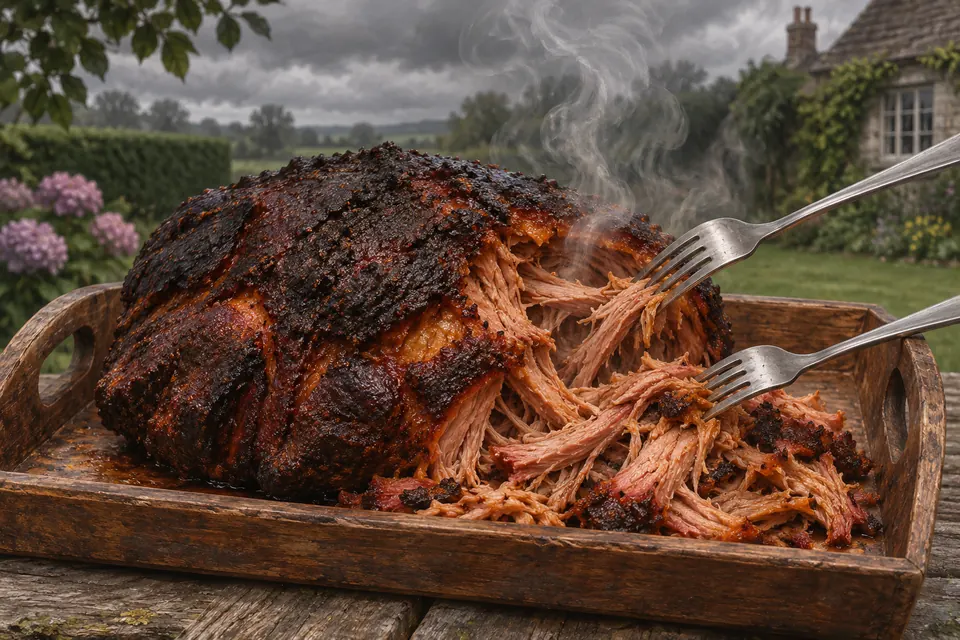
Pull the pork just before serving, with two forks or a pair of clean gloves, and mix the fat and juices from the wrap back through.
Leftover pulled pork reheats well. Add a splash of the saved juices or a little stock, cover it and warm it gently in the oven or in a pan, and follow the FSA guidance on reheating: it wants the food steaming hot all the way through. Cool leftovers quickly, get them in the fridge promptly and check the FSA guidance for how long they keep. Leftovers freeze well in portions with some of the juice.
For your first cook, weigh the shoulder when you buy it, choose a rub from our rub ratios guide, and run it through the planner the night before so you know when the alarm needs to go off.
FAQs
How long does a 3 kg pork shoulder take to smoke?
At around 110–120°C, a 3 kg bone-in shoulder usually takes something like 8 to 12 hours, plus at least an hour of resting. Allow more on a cold or windy day.
Should I wrap pulled pork?
You don't have to. Wrapping in foil or butcher paper once the bark has set speeds up the stall and keeps the meat moist, at the cost of a softer crust. Many cooks wrap on cold days and leave it unwrapped when time allows.
Can I smoke pork shoulder overnight?
Yes, and plenty of people do, but only with a smoker that holds temperature well for long periods and a thermometer with an alarm. Never leave a charcoal smoker burning near anything flammable, and keep it outdoors.
Why won't my pork pull?
It isn't done yet. If the meat resists the probe, give it more time; it doesn't matter what the clock or the thermometer says.
Can I finish pulled pork in the oven?
Yes. Once it has taken on plenty of smoke and the bark has set, wrap it and finish it in a low oven. It's a useful fallback if the weather turns or you run out of fuel.
Keep going
 TechniqueCornerstone
The stall explained
Why big cuts stop rising in temperature for hours mid-cook, the simple science behind it, and when to wait, wrap or turn the heat up.
Read the guide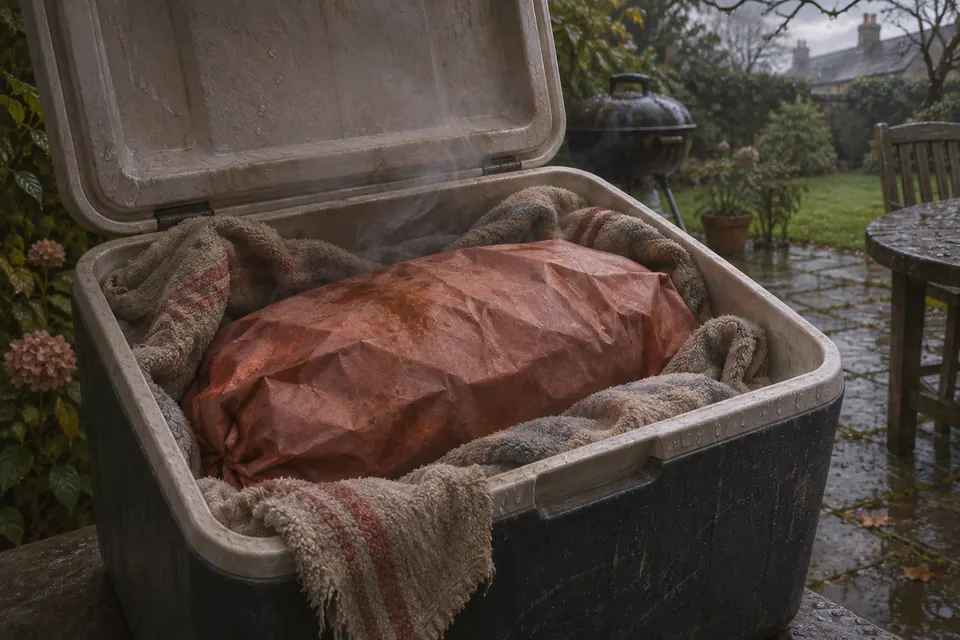 Technique
Resting smoked meat
How long to rest brisket, pork shoulder, ribs and chicken, how the cool box hold works, carryover cooking, and keeping hot food hot.
Read the guide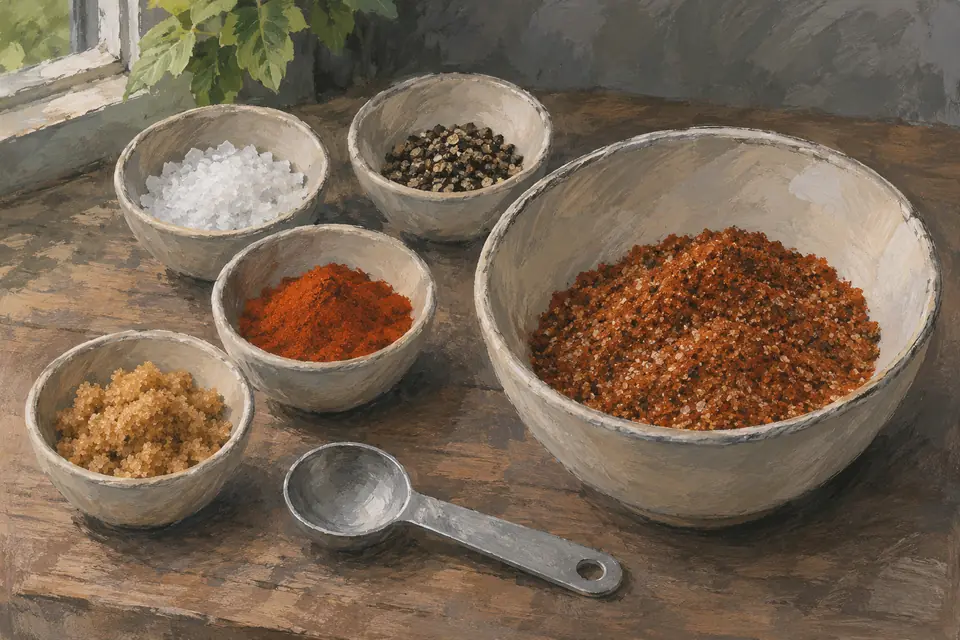 Technique
BBQ rub ratios
A simple base BBQ rub written as parts, why salt should be worked out first, how to scale it for any cut, and easy variations for beef, pork, chicken and lamb.
Read the guide