On this page · 7 sections
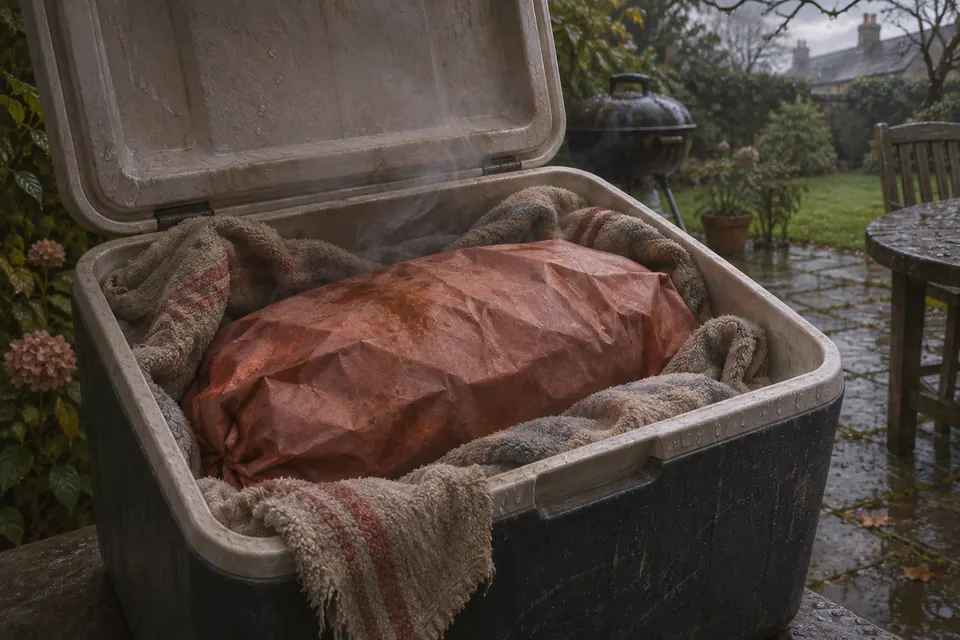
The commonest way to spoil a good brisket happens after it leaves the smoker. Someone hungry, usually the cook, slices into it straight away, juice runs all over the board, and the slices come out tight and a bit dry. An hour wrapped in a towel would have fixed most of that. Resting costs nothing, and it's also the most useful buffer in the whole cook.
Why resting helps
A big joint straight off the smoker is hottest at the surface and still evening out inside. The fibres near the outside are tight and the juices are thin and runny. Give it time and the temperature evens out, the meat relaxes, and the rendered fat and gelatine thicken slightly as it cools a touch. Slice or pull it then and more of that moisture stays in the meat rather than on the board.
There's also a practical reason. Brisket and pork shoulder don't finish on a timetable. The stall can add hours, or a cook can run fast. A long rest lets you aim to finish early and hold the meat hot until you're ready, instead of serving at 9pm or rushing the last stage.
Carryover cooking
Meat keeps cooking after it comes off the heat. The hot outside layers keep pushing heat inwards, so the internal temperature can climb a few more degrees while it rests.
On a low-and-slow cook at 110–135°C, carryover is usually small, because the gap between the surface and the centre isn't huge. On hotter cooks, like a chicken roasted hot on a kamado, it's bigger. Most cooks take poultry and hot-and-fast cuts off a little before their target and let the rest finish the job, but check the final temperature with a probe rather than assuming.
How long to rest each cut
| Cut | Typical rest | How |
|---|---|---|
| Brisket | At least 1 hour, often 2–3 or more | Wrapped, in a cool box with towels |
| Pork shoulder | 1–2 hours, longer is fine | Wrapped, in a cool box |
| Beef short ribs | 30 minutes to an hour | Wrapped, loosely or in a cool box |
| Spare ribs | 10–15 minutes | Loosely tented on the board |
| Whole chicken | 15–20 minutes | Uncovered, or loosely tented, to keep the skin crisp |
| Lamb shoulder | 30 minutes to an hour | Wrapped |
These are starting points from mainstream recipe guidance, not rules. Bigger cuts can rest for longer. Ribs and chicken are better a bit underrested than steamed soggy in foil.
The cool box hold
This is the trick most competition cooks and caterers use, and it works with kit you probably own already. Americans call it a faux Cambro, after the insulated catering boxes.
- Warm the box. Fill a clean, dry cool box with a kettle or two of hot water, close it and leave it for 20 minutes. Tip the water out and dry it.
- Keep the meat wrapped. Leave it in its foil or butcher paper. If it came off unwrapped, wrap it now. See foil vs butcher paper if you're choosing.
- Line and pack. Put an old towel in the bottom, the meat on top, and more towels around and over it. Fill the gaps; air space is where the heat goes.
- Probe in, lid shut. Leave a leave-in probe in the thickest part with the cable out through the lid seal, so you can see the temperature without opening it.
A well-packed cool box will keep a large brisket or shoulder hot for several hours. Hard-sided boxes hold heat better than soft cool bags. Don't use one with a plastic lining that's already cracked or warped, and keep the meat in its wrap so it isn't touching anything that isn't food-safe.
Some cooks vent a brisket for a few minutes before it goes in the box, opening the paper to let the first rush of steam out so the bark doesn't soften. It's a small gain and optional.
Keep a "rest box" just for BBQ. The towels will never be the same again, and nobody wants pork fat on the picnic blanket.
Holding in the oven
If you don't have a cool box, a domestic oven on its lowest setting does the same job. Put the wrapped meat on a tray, leave the probe in and check the oven isn't so hot it carries on cooking. Most ovens' lowest setting is warmer than you'd think, so watch the probe for the first half hour.
Keep hot food hot
This is the part not to improvise. Resting and holding are safe when the meat stays hot. The FSA guidance sets out a minimum temperature for keeping cooked food hot, and also how quickly leftovers should be cooled and refrigerated. Check it, and work to it.
In practice, for a home cook:
- Watch the probe during a long hold. If the internal temperature falls below the hot-holding figure in the FSA guidance, serve the meat or cool it down for the fridge. Don't leave it to drift.
- Don't hold in a cold box. A cool box that hasn't been pre-warmed, or one left open in a cold garage, loses heat much faster.
- Deal with leftovers promptly. Pull or slice what's left, spread it out so it cools quickly, and refrigerate within the time the FSA guidance gives. Pulled pork in a deep pot on the counter overnight is not a plan.
- Reheat properly. When reheating leftovers, get them piping hot all the way through, again following the FSA guidance.
If you're feeding a crowd, the meat calculator helps you buy closer to what you'll actually eat, which means fewer leftovers to manage.
Slicing and pulling after the rest
Pork shoulder pulls easily straight from the box. Wear heat-proof gloves, pull out the bone, shred and mix the bark through. Brisket wants slicing across the grain into pencil-thick slices; note the grain changes direction between the flat and the point, so separate them or turn the point as you go. Our brisket guide covers that in more detail.
Before your next long cook, find the cool box, check the lid seals and put three old towels next to it. You won't need anything else.
FAQs
Can you rest brisket too long?
You can rest it a long time as long as it stays hot. The limit is temperature, not hours: if the probe shows it dropping towards the hot-holding figure in the FSA guidance, serve it or chill it.
Should I rest pulled pork before pulling?
Yes, ideally for an hour or so wrapped. It pulls more easily, holds more moisture and stops you burning your fingers.
Do ribs need to rest?
Briefly. Ten to fifteen minutes loosely covered is plenty. Wrapping them tightly for a long time will steam the bark and soften the glaze.
Is it safe to rest meat in a cool box?
It's a common and effective method when the box is pre-warmed and the meat stays hot. Use a probe to confirm, and follow the FSA guidance on hot holding and on chilling anything you don't eat.
Keep going
 TechniqueCornerstone
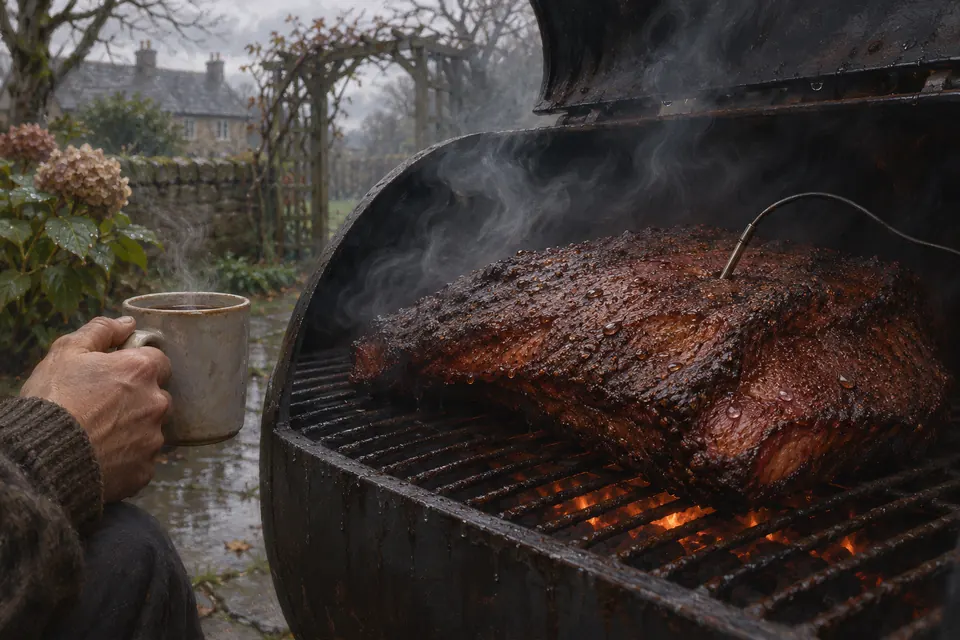
The stall explained
Why big cuts stop rising in temperature for hours mid-cook, the simple science behind it, and when to wait, wrap or turn the heat up.
Read the guide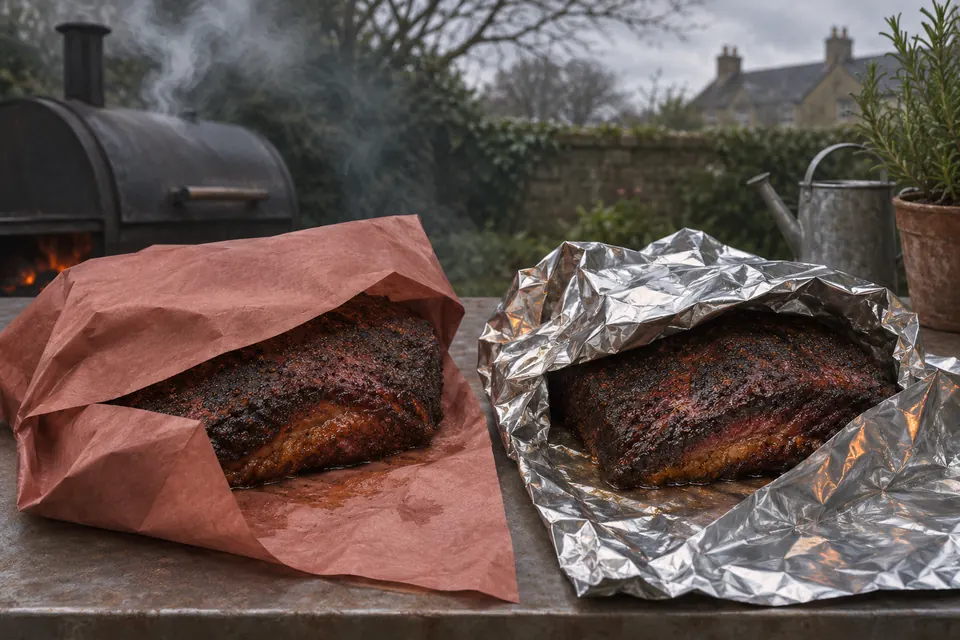 Technique
Foil vs butcher paper
When to wrap brisket, pork shoulder and ribs, how foil and butcher paper differ, and when it's better not to wrap at all.
Read the guide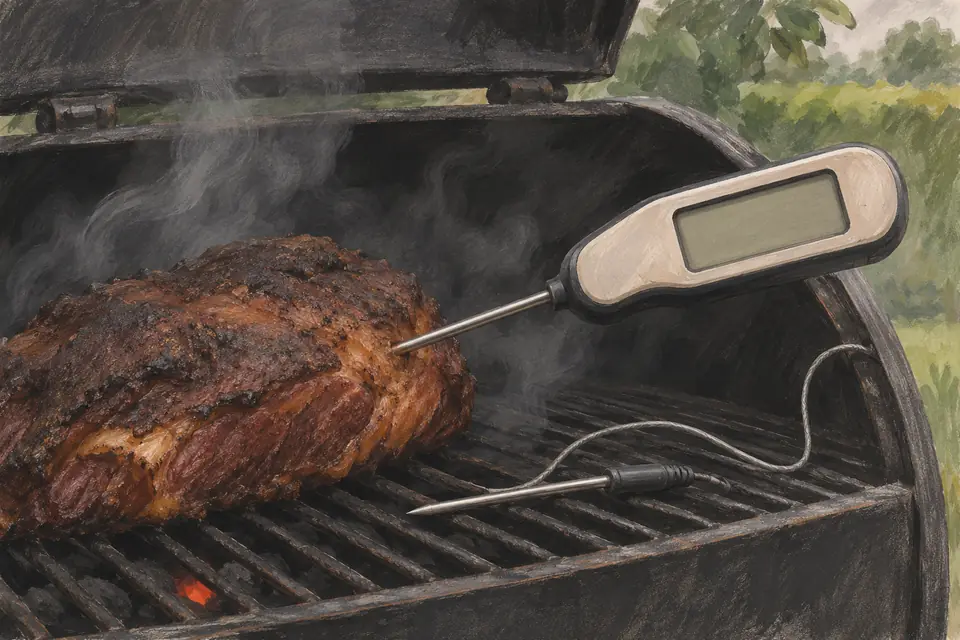 Weather and kit
BBQ meat thermometers
Instant-read, leave-in and wireless probes compared: how each works, which published specs matter, and how to check and care for one.
Read the guide