On this page · 7 sections
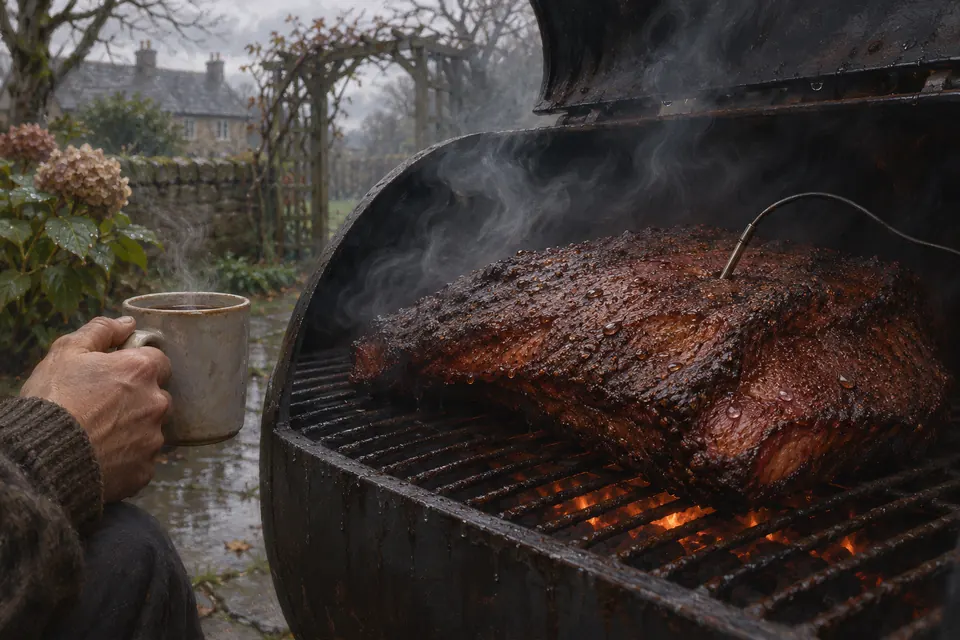
It's two in the afternoon. The pork shoulder went on at seven, the probe read 68°C at half twelve, and it still reads 68°C. You've checked the fire, tapped the thermometer and started quietly working out whether the chippy does deliveries. Nothing has gone wrong. This is the stall, and almost every big low-and-slow cook goes through it.
What the stall actually is
A big piece of meat is mostly water. As it heats up, moisture works its way to the surface and evaporates. Evaporation takes heat with it, which is why you feel cold getting out of the sea, and why a wet shirt on the line dries faster on a breezy day than a still one.
For the first few hours the smoker puts heat in far faster than evaporation can take it away, so the internal temperature climbs steadily. Then, somewhere around 65–75°C internal, the two roughly balance. The meat is sweating off heat as fast as the smoker supplies it, and the probe goes flat. It isn't paused. Collagen is still breaking down and fat is still rendering, which is the whole point of cooking these cuts slowly. It just isn't getting any hotter.
Eventually the surface dries out enough that evaporation slows, the balance tips back, and the temperature starts rising again. That can take an hour on a modest joint or five hours or more on a whole brisket.
To see where the stall sits in the whole cook, from the first smoke to probe-tender, drag the probe:
Drag the probe, or use the arrow keys.
At the smoker
Read more →- 0–39°C · Fresh on the smoker The surface is cold and damp, which is when smoke sticks best. Most of the smoky flavour goes on in the first few hours, so keep the fire clean now.
- 40–59°C · Firming up Muscle proteins set and tighten, and the meat starts to push out juice. Lean, tender cuts such as steak or venison loin are often taken off around the top of this band or a little above, depending on how you like them.
- 60–74°C · The stall zone Big, fatty cuts often go flat somewhere in the 60s or low 70s °C. Moisture evaporating from the surface cools the meat about as fast as the smoker heats it. Collagen is starting to break down. How to deal with the stall.
- 75–87°C · Rendering Fat melts and connective tissue keeps turning to gelatine. A brisket or pork shoulder is cooked through here but still tough. It would slice, but it would not pull.
- 88–96°C · Probe-tender Most recipes finish pork shoulder and brisket somewhere around here. The real test is feel: the probe should slide in with almost no resistance, like going into soft butter. How to rest smoked meat.
- 97–100°C · Going too far Juice is running out faster than gelatine can hold it. Pulled meat turns dry and stringy, and slices crumble.
Which cuts stall
The stall shows up on large, dense, wet cuts cooked low: brisket, pork shoulder, beef short ribs, lamb shoulder and big rolled joints. Spare ribs stall too, but they're thin, so it's usually short and easy to miss. Chicken barely notices, partly because it's smaller and partly because most people cook it hotter.
The bigger and wetter the cut, the longer the stall tends to be. A 6 kg brisket will often stall for far longer than a 2.5 kg shoulder.
It's not your smoker's fault
The worst response to a stall is to open every vent and build the fire up to a roar. You'll get a temperature spike, possibly some bitter smoke, and very often a cook that overshoots later. Before you do anything, check two things:
- Is the smoker actually holding temperature? Look at a grate-level probe, not the lid dial. If the cooker has dropped from 120°C to 90°C because the fuel is running low, that's a fire problem, not a stall. Our guide to temperature control covers the fix.
- Is the meat probe reading true? A quick check in boiling water is a good habit before any long cook. If yours is way off, it may be time to look at a better thermometer.
If both are fine and the meat is sitting somewhere in the 60s or low 70s °C, you're in the stall.
Three ways out
You have three options, and none of them is wrong. They trade time against bark.
| Option | What you do | Time | Bark | Who it suits |
|---|---|---|---|---|
| Wait | Nothing. Keep the smoker steady and leave the lid shut | Longest, and unpredictable | Firmest and darkest | Early starters, anyone with a long rest planned |
| Wrap | Wrap tightly in foil or butcher paper, then back on | Usually much shorter | Softer, especially in foil | Anyone up against a serving time |
| Raise the heat | Nudge the smoker up to around 135–150°C | Somewhat shorter | Firm, a little darker | Fatty, forgiving cuts and confident fire managers |
Wait it out
Waiting gives you the crustiest, darkest bark, because the surface is allowed to dry and set completely. The cost is time, and the stall doesn't run on a timetable. If you started early and have a cool box ready for a long rest, waiting is the purist's choice and costs you nothing but patience.
Wrap it
Wrapping is the shortcut most cooks reach for. Seal the meat in foil or butcher paper and the moisture can't evaporate away, so evaporative cooling more or less stops and the temperature starts climbing again. In the American BBQ world this is called the Texas crutch, which sounds like a disapproving nickname and partly is.
Most people wrap once the bark has set and the colour looks right, often around the time the stall begins. Foil is faster and softens the bark more; butcher paper lets some steam out and keeps more crust. Our guide to wrapping in foil or butcher paper covers how to do it without tearing the meat to bits.
Turn the heat up
Raising the smoker by 15–30°C speeds up everything, including the stall. Pork shoulder takes this well because it's fatty and forgiving. Brisket flat is less tolerant: push too hard and the thin end dries out before the point is ready. If you go this route, raise the temperature gradually so you don't overshoot and fight it back down.
Plenty of cooks combine options: wait until the bark is where they want it, then wrap and nudge the heat up a little to make dinner.
Does humidity matter?
In theory, yes. Humid air in the cooking chamber slows evaporation, which can shorten the stall. That's one reason some smokers have a water pan. In practice the effect depends on the cooker and is hard to predict, and a damp British afternoon outside doesn't translate neatly into humid air inside a hot smoker. Treat it as a small nudge, not a fix.
Spritzing the meat with apple juice or water does the opposite in the short term: you're adding moisture to evaporate. It can help bark colour and stop edges drying, but don't expect it to get you through the stall faster.
Plan for it before you light the fire
The stall only ruins a cook when the schedule has no slack. Build it in from the start:
- Start earlier than you think you need to. For brisket and shoulder, an extra two hours is not excessive. The smoking time planner gives a start window from weight and cook rate; work from the slow end of it.
- Plan a long rest. Meat that finishes early can sit wrapped in a cool box for hours and still be hot enough to serve. Finishing early is never a problem. Finishing late always is. See resting smoked meat.
- Decide your wrap rule in advance. For example: "If it hasn't moved by 2pm, I wrap." It saves a lot of anxious lid-lifting.
Once you're through the stall, cook to tenderness rather than a single number. Most recipes put a finished pork shoulder somewhere around 90–95°C internal and brisket in a similar band, but the real test is a probe that slides in with almost no resistance. For timings on specific cuts, go to brisket smoking time or pulled pork smoking time and pencil in your start time tonight.
FAQs
How long does the stall last?
Anywhere from under an hour to five hours or more. It depends on the size and shape of the cut, how much fat and moisture it holds, and your smoker temperature. Big briskets stall longest.
Can the stall happen twice?
It can feel that way. Some cuts stall, creep up a few degrees, then sit still again, especially if you open the lid a lot or the smoker temperature dips. Keep the cooker steady and it usually resolves.
Is it safe for meat to sit in the stall for hours?
The meat is still cooking in a hot smoker the whole time, and long, slow cooks are normal for these cuts. What matters for safety is that the finished meat reaches a safe temperature and is kept hot until serving; check the FSA guidance linked above.
Should I wrap brisket or wait?
If you have time, waiting gives better bark. If you're cooking to a serving time, wrapping in butcher paper is a good middle ground: faster than waiting, with more crust left than foil.
My meat stalled at 60°C. Is that normal?
It's on the early side but not unusual, especially at lower smoker temperatures. Check the smoker is actually holding heat at the grate, then treat it like any other stall.
Keep going
 Technique
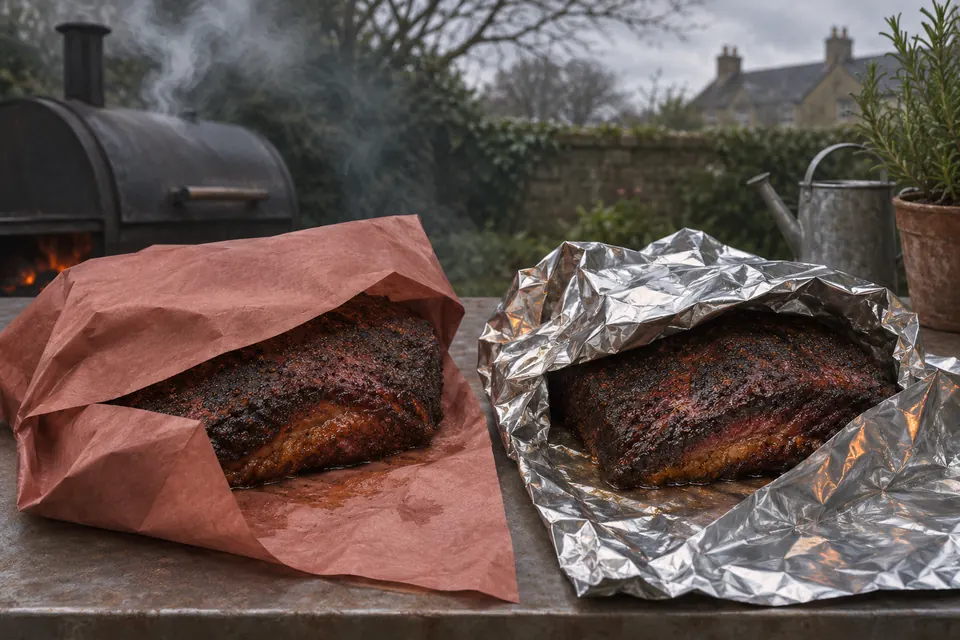
Foil vs butcher paper
When to wrap brisket, pork shoulder and ribs, how foil and butcher paper differ, and when it's better not to wrap at all.
Read the guide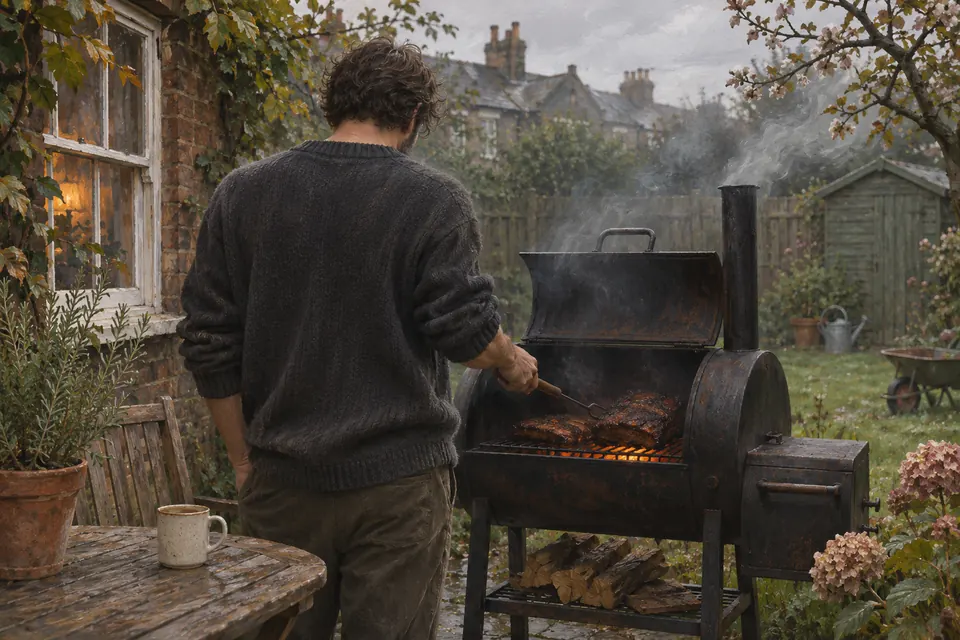 TechniqueCornerstone
How to use a smoker
Everything that happens in a first smoke, in order: lighting, holding temperature, adding wood, the stall, wrapping, resting and knowing when it's done.
Read the guide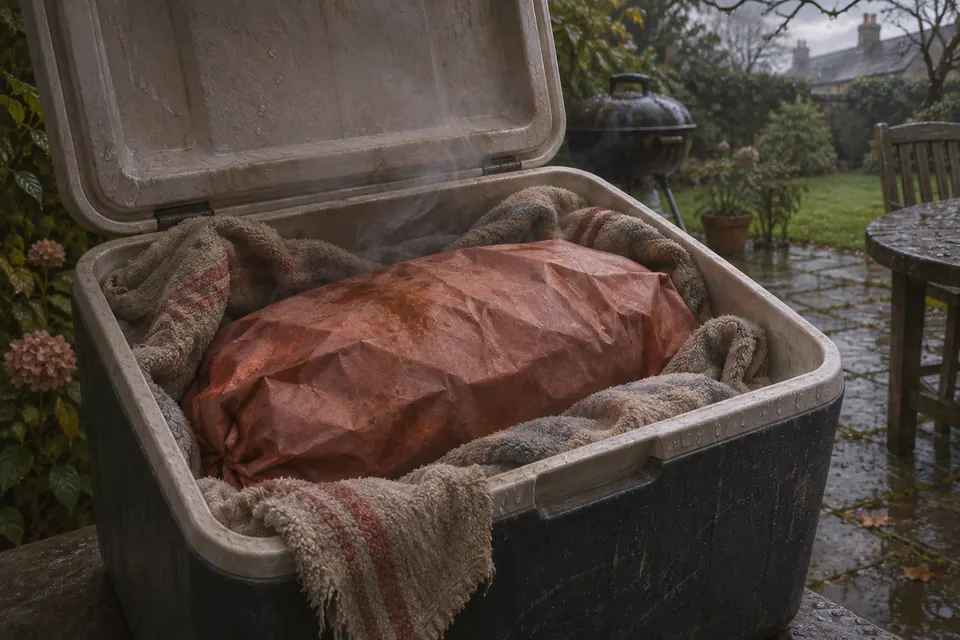 Technique
Resting smoked meat
How long to rest brisket, pork shoulder, ribs and chicken, how the cool box hold works, carryover cooking, and keeping hot food hot.
Read the guide