On this page · 6 sections
At a glance
- Ask for
- Whole brisket, unrolled, point and flat
- Smoker
- Around 110–120°C
- Time
- Roughly 2–3 h per kg, plus rest
- Done when
- Probe tender, roughly 90–96°C
- Rest
- 1–3 h wrapped in a cool box
Brisket takes as long as it takes, and the answer to "how long?" is a range with a wide middle. Plan for that range, start earlier than feels necessary, and a brisket that finishes early is a gift: it sits wrapped in a cool box getting better while you have a beer. A brisket that finishes late is the one people remember.
Whole brisket, flat or point: what your butcher sells
American recipes are written around the "packer", a whole untrimmed brisket with both muscles attached. In a British butcher, brisket usually means something else: a rolled, tied joint for pot roasting. That rolled joint is a perfectly good Sunday dinner, but it's trimmed of much of the fat and wrapped in string, and it smokes more like a big pot roast than barbecue brisket.
For smoking, ask for one of these, ideally a few days ahead:
- Whole brisket, unrolled and untrimmed. Both the flat and the point, with the fat cap on. Often somewhere around 5–7 kg, which feeds a crowd and fills most smokers.
- Brisket flat. The long, leaner muscle that slices into neat strips. Smaller, quicker and less forgiving, because there's less fat to protect it.
- Brisket point. The thicker, fattier end. Harder to slice tidily, much harder to dry out, and the bit that makes burnt ends.
If the butcher looks puzzled, our guide to UK vs US BBQ cuts has the translation table and a few lines that help at the counter. A first-time brisket cook could do worse than a point: it forgives the mistakes a flat punishes.
Time ranges and why they vary
The commonly quoted figure is around 2 to 3 hours per kg at a smoker temperature of roughly 110–120°C. Cook hotter, around 135–150°C, and times drop a fair bit. The planner on this page uses ranges like these because a single number would be a lie.
| Brisket | Rough weight | Cook at around 110–120°C | Plus rest |
|---|---|---|---|
| Flat only | 2–3 kg | 5–9 hours | 1–2 hours |
| Point only | 2–3 kg | 5–9 hours | 1–2 hours |
| Whole brisket | 5–7 kg | 10–18 hours | 2–3 hours |
These are planning figures, not promises. Why the spread?
- Thickness beats weight. A thick 4 kg brisket can take longer than a long, flat 5 kg one, because heat has further to travel to the middle.
- Smoker temperature. A smoker sitting at 110°C and one at 130°C will produce very different finish times from the same piece of meat.
- The stall. Covered below. It can add hours, or pass quickly.
- Weather. Wind, cold and rain all pull heat out of a smoker, so it burns more fuel to hold the same number, and a cold steel box recovers slower when you open the lid. On a blowy March day, expect the long end of the range. Our guide to smoking in the rain covers what to do about it.
- Fat and grade. Well-marbled beef tends to be more forgiving and sometimes quicker.
To plan a start time, put the weight and your recipe's cook rate into the smoking time planner, take the slow end of the range, then add a rest window. An overnight cook that finishes at 10am for a 4pm dinner is fine. One that finishes at 6pm for a 4pm dinner isn't.
Give yourself at least two hours of slack on a whole brisket. You can always hold it. You can't make it cook faster without paying for it in texture.
The stall
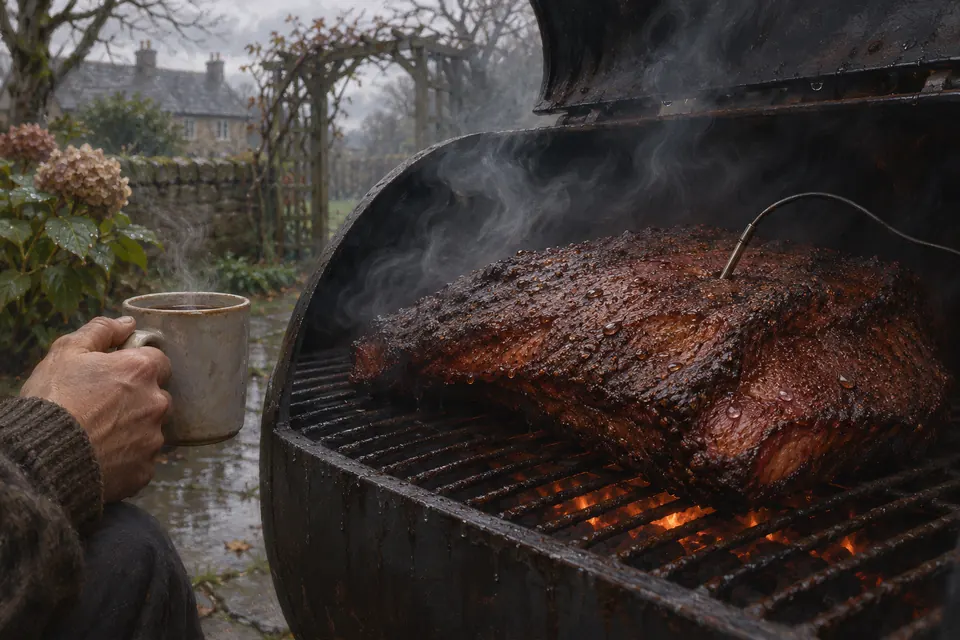
Somewhere around 65–75°C internal, brisket tends to stop rising. It might sit there for an hour. It might sit there for four. People new to brisket often assume the probe has broken or the fire has gone out, and they crank the vents open and end up with a 170°C smoker and a scorched bark.
What's happening is evaporative cooling: moisture moves to the surface and evaporates, cooling the meat about as fast as the smoker heats it. It ends when the surface dries enough. There's more in the full guide to the stall, but the practical choice is simple:
- Wait it out. Best bark, longest cook. Fine if you started early.
- Wrap it. Foil or butcher paper traps moisture and gets you moving again, usually much faster.
Wrapping and resting
Most cooks wrap once the bark is set and dark, which often coincides with the stall. You have three options:
- Butcher paper (unwaxed, food-safe) breathes a little, so it keeps more of the bark's crust while still speeding the cook. It's the popular middle ground.
- Foil seals completely. Fastest through the stall and very moist, but the bark softens, sometimes to the texture of a wet beer mat. Some people love it. It's also the safer bet in a cold, windy cook where you're fighting for every degree.
- Nothing. Firmest bark, longest cook, higher risk of a dry flat.
There's a fuller comparison in foil vs butcher paper. Whichever you choose, rest the brisket afterwards. Leave it wrapped, wrap it again in an old towel and put it in a dry cool box. Most cooks give a whole brisket at least an hour and often two or three; a well-wrapped one can stay hot for a few hours in a decent cool box. Resting lets the juices settle and the texture relax, and it's the buffer that makes timing easy. If the brisket finished early, it rests longer. Nobody at the table will know. See resting smoked meat for how to keep it hot enough for long enough.
Done is a temperature and a feel, not a time
Brisket is done when it's probe-tender: a probe or skewer slides into the thickest part of the flat with almost no resistance, like pushing into a jar of peanut butter. That usually happens somewhere in the 90s °C internal, roughly 90–96°C, but the number is a hint, not the answer. One brisket is ready at 91°C; another is still tight at 95°C. Probe in a few places, especially the flat, which is the part that dries out first.
A decent leave-in probe thermometer makes all of this far less stressful. Our guide to BBQ meat thermometers covers what to look for. Brisket cooked low and slow to tenderness goes well past the safe internal temperatures in the FSA guidance, so the safety concern is less about the finish and more about handling: keeping raw meat cold before the cook, holding cooked meat hot, and cooling and storing leftovers promptly. Check the FSA guidance for the figures on holding and leftovers.
Slice the flat across the grain, about pencil-thick, and only as much as you need. Brisket dries out quickly once sliced, so keep the rest whole and wrapped until second helpings.
For your first brisket, pick a date with a calm forecast, order the cut ahead, and run the numbers through the planner the night before so you know what time the fire needs lighting.
FAQs
How long does a 5 kg brisket take to smoke?
At around 110–120°C, a 5 kg whole brisket usually needs something like 10 to 15 hours, plus a rest of two hours or more. Thickness and weather can push it either way, so plan with a wide window and hold it if it finishes early.
Should I cook brisket fat side up or fat side down?
It depends on where your heat comes from. Most cooks face the fat towards the main heat source as a shield, which on many smokers means fat side down. On a smoker with gentle, even heat, fat side up is common. Neither choice will rescue a dry flat.
Can I smoke brisket the day before?
Yes. Many cooks finish the brisket, rest it, chill it and reheat it gently the next day, wrapped. Cool it quickly and reheat thoroughly; check the FSA guidance on cooling and reheating cooked meat.
Why is my brisket tough?
Usually it's undercooked rather than overcooked. If it isn't probe-tender, give it more time. A brisket that's dry and crumbly, on the other hand, has gone too far or was a very lean flat.
Is rolled brisket any good for smoking?
It works, but it's a different job. A rolled joint is trimmed and tied, so you get less bark and less fat rendering. It suits a slower braise or a smoke-then-braise approach better than a classic barbecue brisket. Our guide to smoking a rolled brisket joint walks through it.
Keep going
 TechniqueCornerstone
The stall explained
Why big cuts stop rising in temperature for hours mid-cook, the simple science behind it, and when to wait, wrap or turn the heat up.
Read the guide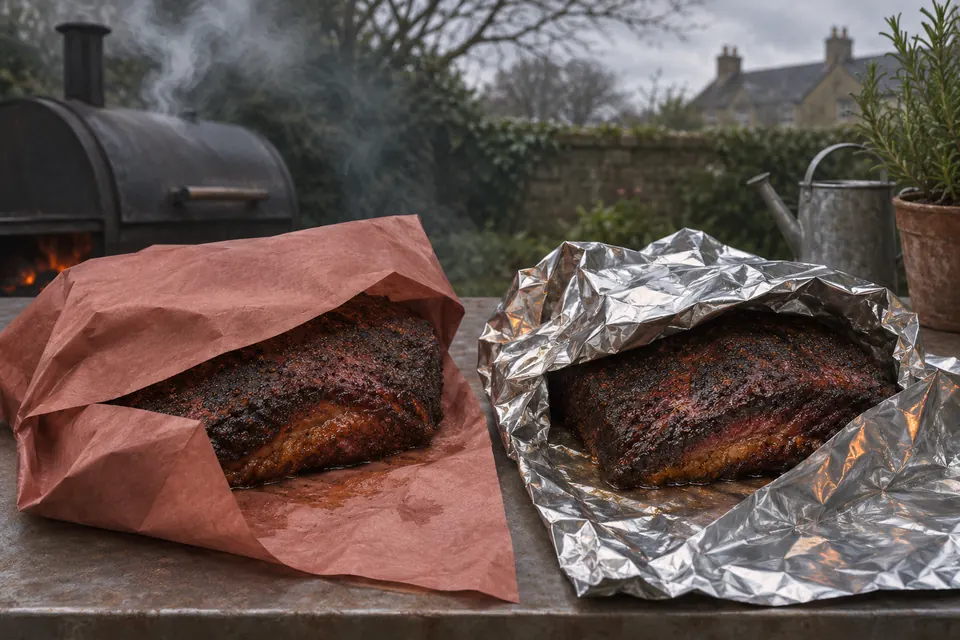 Technique
Foil vs butcher paper
When to wrap brisket, pork shoulder and ribs, how foil and butcher paper differ, and when it's better not to wrap at all.
Read the guide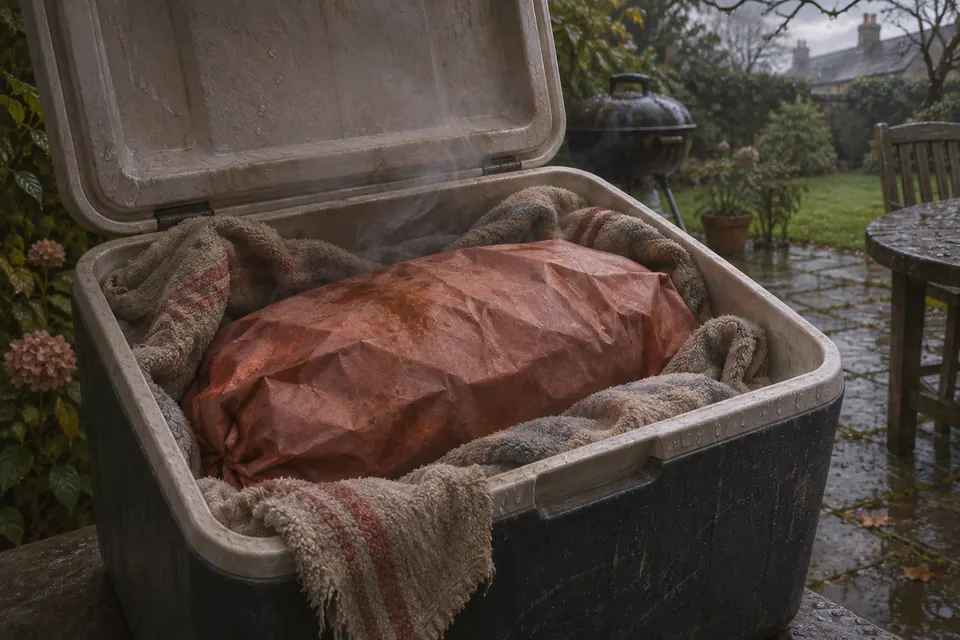 Technique
Resting smoked meat
How long to rest brisket, pork shoulder, ribs and chicken, how the cool box hold works, carryover cooking, and keeping hot food hot.
Read the guide