On this page · 9 sections
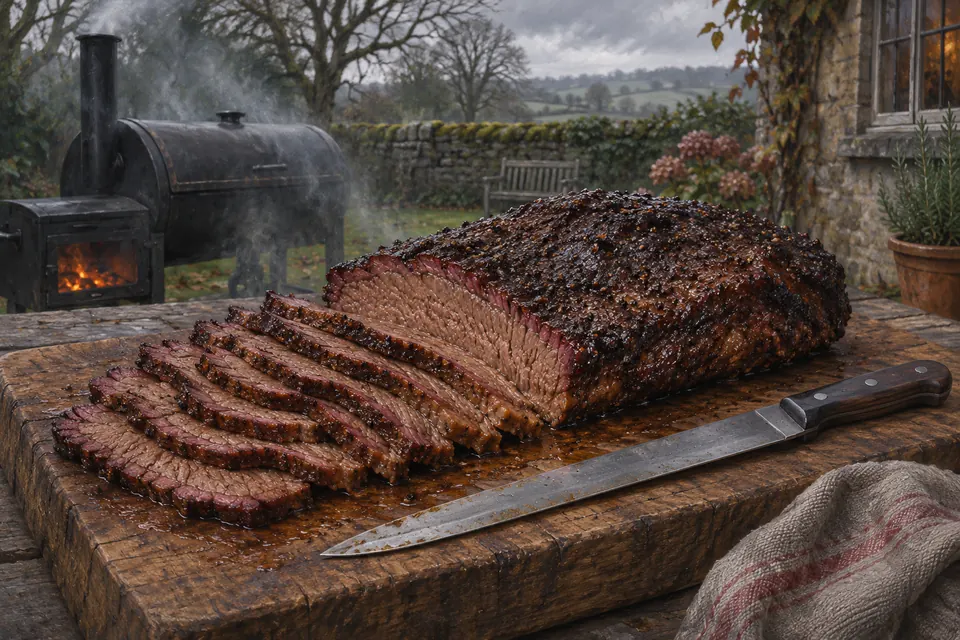
Trim cold, slice warm, and always look at the grain before the knife goes in. Those three habits fix most of the brisket problems people put down to the smoker. A brisket is two muscles stacked on top of each other with fat in between, and each muscle has its fibres running a different way, which is why it rewards a bit of thought at the chopping board.
What you've actually bought
In the UK, brisket comes in a few forms. Supermarkets and many butchers sell it rolled and netted, usually just the flat, sometimes with extra fat tied around it. That's built for pot roasting. For smoking, ask your butcher for a whole brisket (the American "packer"), with both the point and flat still attached and the fat cap left on. Most butchers can do this with a few days' notice. Our guide to UK vs US cuts has the words to use at the counter.
If you only have a rolled brisket, cut the netting off, unroll it and you'll find a flat with some loose fat. It can still be smoked; it will just cook faster and be less forgiving.
Trimming before the cook
Take the brisket straight from the fridge. Cold fat is firm and cuts cleanly, warm fat smears and slides around. A long, sharp boning or butcher's knife makes life much easier than a chef's knife, and a damp cloth under the board stops it skating about.
The fat cap
The fat cap is the thick layer on one side. You want to keep some, as it bastes the meat a little and protects the surface, but too much just insulates the meat and gets scraped off at the table anyway. Most cooks trim it down to a thin, even layer, often quoted as around 5–6 mm. The aim is evenness more than an exact number: thick patches cook slowly and thin patches dry out.
The hard fat
There's a big lump of hard, waxy fat where the point and flat join, and often more along the sides. Press it with a thumb. Soft, creamy fat will render during a long cook. Hard fat won't; it stays chewy and stops smoke and rub reaching the meat underneath. Cut most of it away, especially the large wedge on the meat side between the two muscles.
Shaping
Trim off thin, ragged edges, particularly on the thin end of the flat. They'll burn to jerky long before the thick end is done. Round off sharp corners too. A neatly shaped brisket cooks more evenly and looks better on the board.
Don't waste the trimmings
Fat trimmings can be rendered into beef dripping for roast potatoes. Meaty offcuts make excellent burger mince. Wrap and chill them straight away rather than leaving them on the side while you finish the brisket.
Point and flat: together or apart?
The flat is the long, lean, even muscle. The point sits on top at one end, thicker, fattier and more forgiving. They're joined by a seam of fat.
Most people cook them together as a whole brisket, then separate them after the rest. Some separate them before cooking, which lets each piece come off when it's ready; this suits smaller smokers and anyone planning to turn the point into burnt ends (the same idea as the pork belly version). Either works. Keeping them together is simpler for a first go. Our brisket smoking time guide covers the cook itself.
To separate, find the fat seam at the thick end. Run the knife along it, following the fat rather than cutting through meat, and lift the point away as you go. It comes apart more easily than you'd expect once you're in the seam. After cooking, it's easier still, as the rendered fat lets the two muscles almost fall apart.
Rest before you slice
Slicing straight off the smoker lets the juices run all over the board and the slices dry out quickly. Wrap the brisket, put it in a dry cool box and leave it for at least an hour, often longer. It gives you a buffer if the cook ran early, too. More in our guide to resting smoked meat.
Finding the grain
The grain is the direction the muscle fibres run. Cut along them and each slice is a bundle of long strings that you'll be chewing for a while. Cut across them and each slice is a stack of short fibres that come apart easily.
On a raw brisket the grain is easy to see. After a long cook, with bark on top, it's much harder. Two tips help:
- Cut a notch before cooking. Slice a small corner off the flat, across the grain, so you know which way to cut later.
- Look at the end, not the top. Slice off the thin end and look at the cut face. If you see long lines, you're going along the grain. If you see a dotted, short-fibred surface, you're across it.
Which way the grain turns
This is where most people go wrong. The grain in the flat runs roughly lengthways, so you slice the flat across its width, starting at the thin end.
The grain in the point runs at a different angle, often close to a right angle to the flat. So once you've separated them, turn the point round before slicing. If you kept slicing the whole brisket in one direction, the point slices would come out along the grain and stringy.
| Flat | Point | |
|---|---|---|
| Fat content | Lean | Well marbled |
| Grain direction | Roughly lengthways | Turned, often near a right angle to the flat |
| Typical slice | Around pencil thickness | A little thicker, or cubed |
| Forgiveness | Dries out if overcooked | Stays juicy |
| Good for | Neat slices, sandwiches | Thick slices, burnt ends, chopped beef |
How thick to slice
Thin slices of the flat, around pencil thickness, are the usual guide. If the brisket is slightly overcooked and falling apart, go a little thicker so slices hold together. If it's slightly undercooked and tight, go thinner so it's easier to chew. The point can take thicker slices, or be cubed for burnt ends or chopped for rolls.
A long slicing knife with a rounded tip, sometimes sold as a carving or brisket knife, makes this much easier. Saw gently with long strokes rather than pressing down, which squashes the slice and pushes out juice.
Kitchen safety
Long knives, greasy hands and a hot joint is a combination that sends people to A&E on bank holidays. Keep the board stable, keep fingers curled away from the blade, and wear a cut-resistant glove on the holding hand if you're not used to slicing. Use separate boards for raw and cooked meat, and chill leftovers promptly in line with the FSA guidance. Only slice what you'll serve; a whole unsliced piece stays moist far longer, and reheats better too, as our guide to leftovers and reheating explains.
If you're cooking this weekend, phone the butcher today and ask for a whole brisket with the fat on. Then you'll have the full thing to practise on, point and all.
FAQs
Should the fat cap face up or down in the smoker?
Both work, and cooks argue about it endlessly. The usual advice is fat side towards the main heat source, so it shields the meat. On many offsets and kettles that means fat down; on smokers with heat from above or a water pan, it matters less.
Can I trim brisket the night before?
Yes, and it's often easier. Trim it cold, apply the rub if you like, wrap it and return it to the fridge until you're ready to light the smoker.
Why is my brisket stringy even though I sliced it across the grain?
Either the point was sliced in the same direction as the flat, or the brisket needed more time to become tender. Check the cut face of a slice: long visible fibres mean the grain was wrong, short fibres that still feel tough mean the cook stopped too early.
Do I need a special brisket knife?
No, but a long, sharp slicing blade helps a lot. A short knife has to saw back and forth more, which tears the bark and squashes the meat.
Keep going
 CooksCornerstone
Brisket smoking time
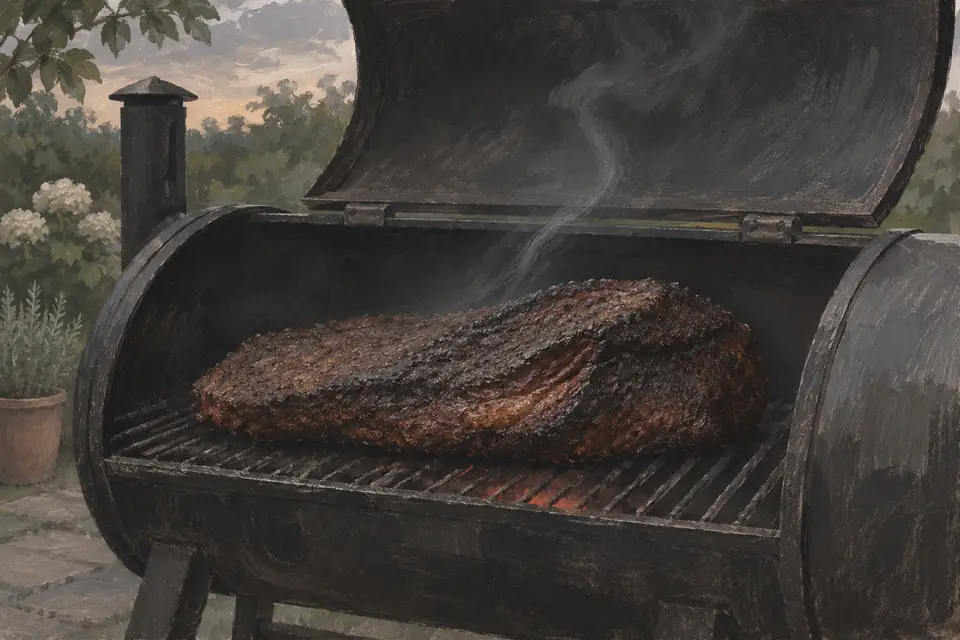
How long brisket takes on a smoker, per kg, with the stall, wrapping and resting built in, so you can work back from dinner time.
Read the guide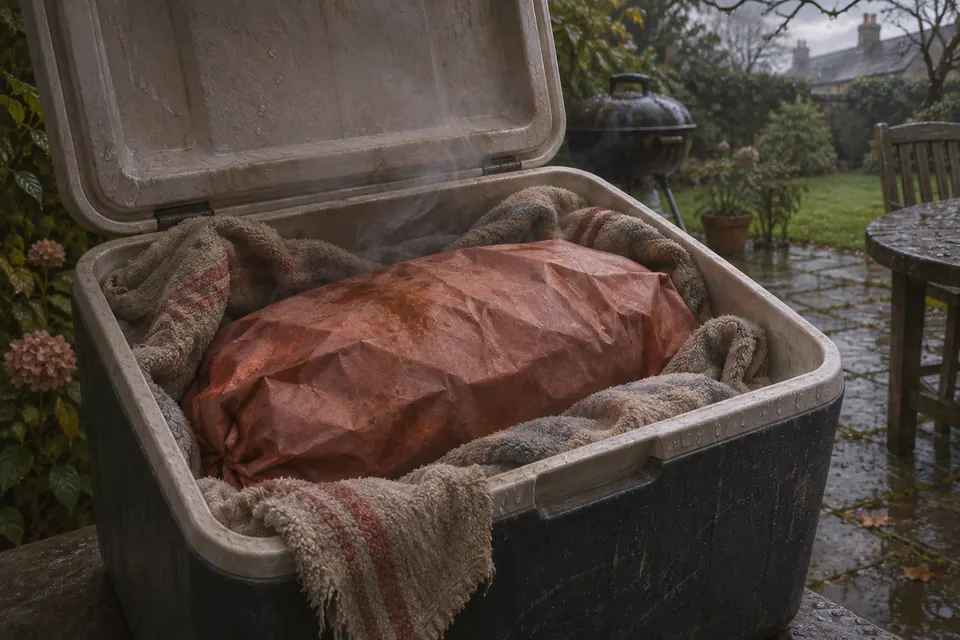 Technique
Resting smoked meat
How long to rest brisket, pork shoulder, ribs and chicken, how the cool box hold works, carryover cooking, and keeping hot food hot.
Read the guide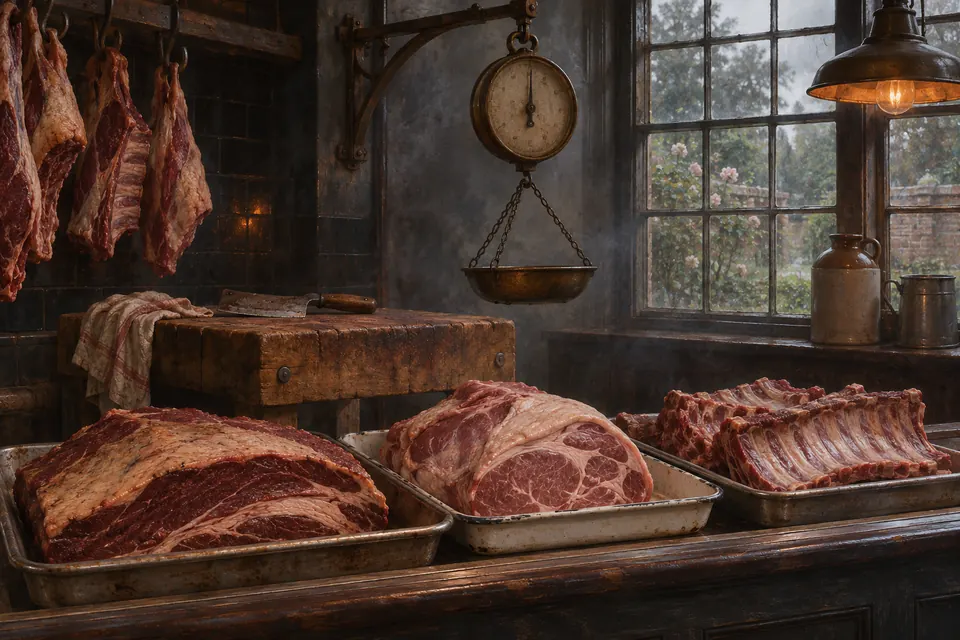 CooksCornerstone
UK vs US BBQ cuts
Translate American BBQ recipes into British butcher cuts: packer brisket, Boston butt, baby backs, short ribs and more, with a UK to US cut table.
Read the guide