On this page · 6 sections
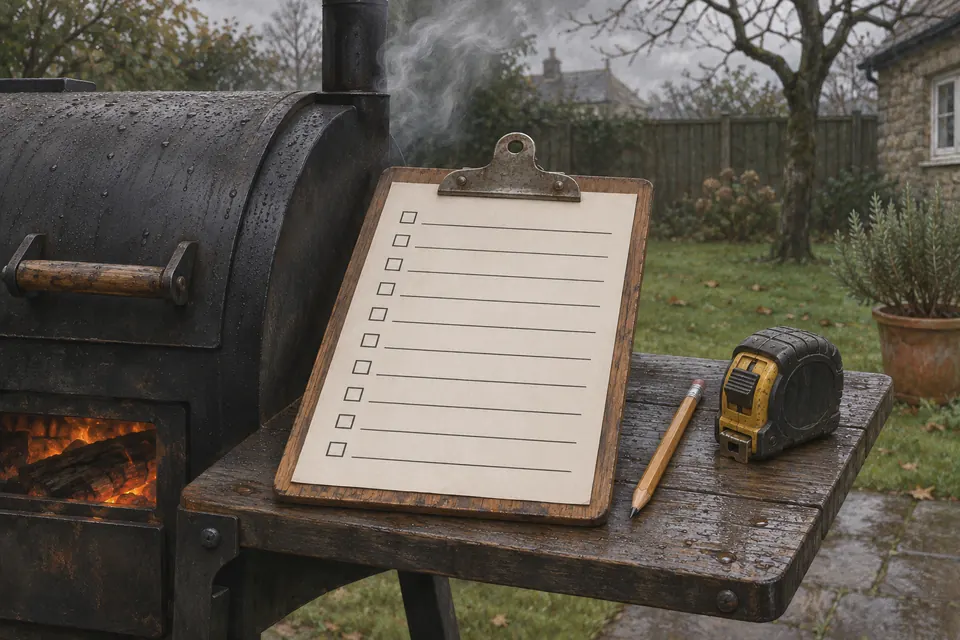
Print this page, or keep it open on your phone, and take it with you when you go to look at smokers. Spec sheets are written to sell, and showrooms are full of shiny lids that close beautifully until you've had them home for a winter. A list in your hand makes it much harder to be talked into the wrong one, including by yourself.
The checklist is in four parts: decide, read the spec, check it in person, then ask the seller. Tick things off as you go.
Part 1: decide before you browse
Most bad smoker purchases are the wrong type of smoker, not a bad example of the right type. Settle these first. If you're unsure, the which smoker should I buy picker asks seven questions and points you at a type.
- Fuel and effort. Do you want to tend a fire (charcoal, offset), set a dial and walk away (pellet, electric), or something in between (kamado, bullet)? Offset vs kamado vs pellet compares them.
- How many you usually cook for. A family of four and the occasional party needs far less space than you'd think.
- How often you'll use it. Once a summer doesn't justify the cost or space of a big offset.
- Where it will live. Measure the spot. Note how far it is from fences, sheds and the house, and whether there's an outdoor socket. Short on space? Read smokers for small gardens.
- Your budget band. Decide a ceiling before you start. Leave room for a thermometer, cover and fuel.
Part 2: what to check in the spec
| Spec item | What you want | Be wary of |
|---|---|---|
| Cooking area | Main grate area that fits your usual cuts flat | Totals that include warming racks and top shelves |
| Steel thickness | Stated, and on the thick side for the type | Thickness not listed at all |
| Materials and finish | Enamelled or stainless parts where heat and damp hit hardest | Thin painted steel on the firebox |
| Vents | Intake and exhaust, both adjustable | One small vent, or vents that can't close fully |
| Fuel capacity / burn time | Room for a long cook without refuelling | Burn-time claims with no conditions given |
| Thermometer | A lid dial is fine as a rough guide | Being sold the dial as precise |
| Ash and grease | Removable ash pan, drip tray or grease bucket | Ash that can only be scooped out by hand |
| Power (pellet, electric) | Clear power requirements | Assuming an extension lead across the lawn will do |
| Warranty | What's covered and for how long, especially burn-through and rust | Short or vague warranty, rust excluded |
| Spares | UK availability of grates, gaskets, probes and controllers | No obvious way to order spare parts |
Notes on the trickier items
Cooking area. A brisket needs flat space, and whole racks of ribs are long. Compare the main grate, not the total. If the main grate's dimensions are listed, picture your usual joint on it.
Steel thickness. Thicker steel holds heat steadier and resists wind and rain, which matters more in Britain than in a lot of the places these smokers are designed. It also lasts longer. If a manufacturer doesn't list it, that's often a sign it's thin.
Burn time. Claims are usually measured in ideal conditions. A British November with a stiff breeze will eat into that, and winter smoking generally uses more fuel than the box suggests.
Thermometer. Lid thermometers measure the air in the dome, which can be a good way off what's happening at the grate. Plan to use a separate probe thermometer whatever the smoker comes with.
Type-specific extras
- Offset: firebox door that seals, a baffle or tuning plates for even heat, a chimney you can adjust. See offset smokers explained.
- Kamado: a strong hinge with a lid-assist spring, a good gasket, a solid stand. They're very heavy. See kamado smokers explained.
- Pellet: controller that holds temperature in a narrow band, hopper size, ease of emptying the hopper, grease management. See pellet grills explained.
- Electric: chip tray you can refill without opening the main door, outdoor-rated plug and cable.
Part 3: what to check in person
If you can see the smoker in a showroom, or the same model at a friend's, these checks take ten minutes and tell you more than any spec sheet.
- Lid and door fit. Close the lid and look along the seam. Can you see daylight? Is the gap even all the way round? Big gaps mean smoke and heat leaking out, and harder temperature control.
- The wobble test. Push it gently from the side. A smoker that rocks on its legs in a showroom will be worse on an uneven patio.
- Vents. Open and close every vent. They should move smoothly, close fully and stay where you put them.
- Welds and edges. Look at the joints. Neat, continuous welds are a good sign. Sharp edges and rough spots are a sign of corners cut elsewhere too.
- Handles. Are they far enough from the body to stay cool? Wood or insulated handles help.
- Grates. Lift them out. Are they sturdy, and easy to clean?
- Height and reach. Can you reach the back of the grate without leaning over the fire? Can you get to the fuel without taking the food off?
- Wheels and weight. If it needs to be moved for winter, check the wheels are large enough for a lawn or gravel, not just a showroom floor.
- Kamado only: lift the lid. It should feel balanced, not like a deadlift. Check for cracks in the ceramic and that the gasket sits flat.
Bring a torch. Shine it inside with the lid closed and look for light escaping round the edges. It's the quickest seal test there is and the shop staff will think you know exactly what you're doing.
Part 4: questions to ask the seller
- Where are spare parts available from in the UK, and how long are they supported?
- What exactly does the warranty cover, and does rust count?
- Does it arrive assembled? If not, how long does assembly realistically take?
- Will it be delivered to the garden, or left at the kerb? Kamados in particular are not a one-person carry.
- Is there anything that needs replacing regularly (gaskets, igniters, probes)?
Walk away if
- The lid or door leaks badly when closed.
- The body flexes when you press it.
- Nobody can tell you how to get spare parts.
- The warranty excludes almost everything that wears out.
After you buy
Once it's home, run it empty for an hour or so to burn off manufacturing oils, and get to know how it holds temperature before cooking anything expensive. Our guide to how to use a smoker walks through a first cook, and the smoker kit list covers the bits worth buying alongside it. If you haven't settled on a type yet, start with the picker, then come back here with a shortlist.
FAQs
What size smoker do I need?
For most households, a main grate big enough to fit your largest usual joint flat, plus a little room either side. Bigger smokers burn more fuel and take longer to heat, so don't oversize for one party a year.
Is thicker steel always better?
Generally, for heat retention and lifespan, yes. It also makes the smoker heavier and slower to heat up, which matters if you want to move it often.
Should I buy a smoker online without seeing it?
You can, but read the spec carefully, check the returns policy and UK spare parts, and look for clear photos of welds, vents and lid fit. Seeing the same model in person first is ideal.
Do I need a separate thermometer?
Yes. Lid thermometers are a rough guide at best. A probe thermometer for the meat and grate tells you what's actually going on.
Keep going
 Tool
Which smoker should I buy?
Answer seven questions about power, effort, fuel, space and budget to get a smoker type with the reasons behind it.
Open the tool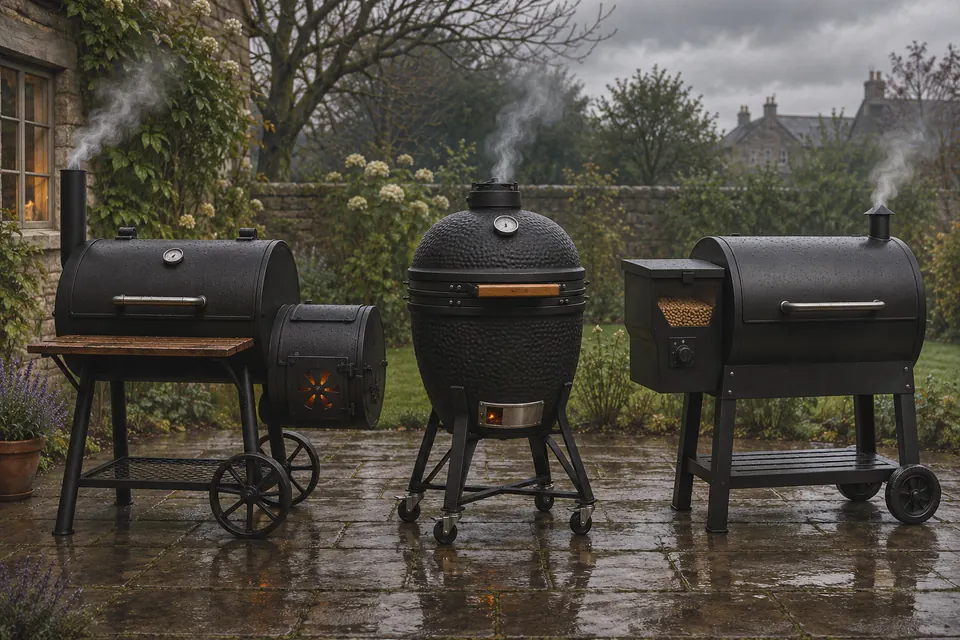 CompareCornerstone
Offset vs kamado vs pellet
The three big smoker types compared on effort, fuel, power needs and how they cope with British weather.
Read the guide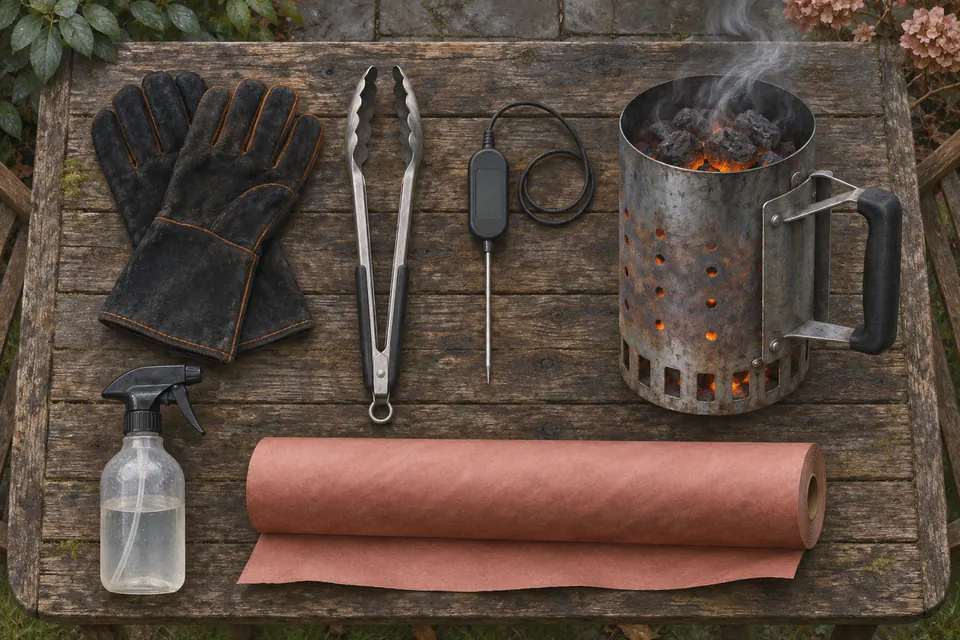 Weather and kit
Smoker kit list
The smoking kit that matters, the extras that make life easier and the gadgets you can skip, for anyone getting started with a smoker in the UK.
Read the guide