On this page · 6 sections
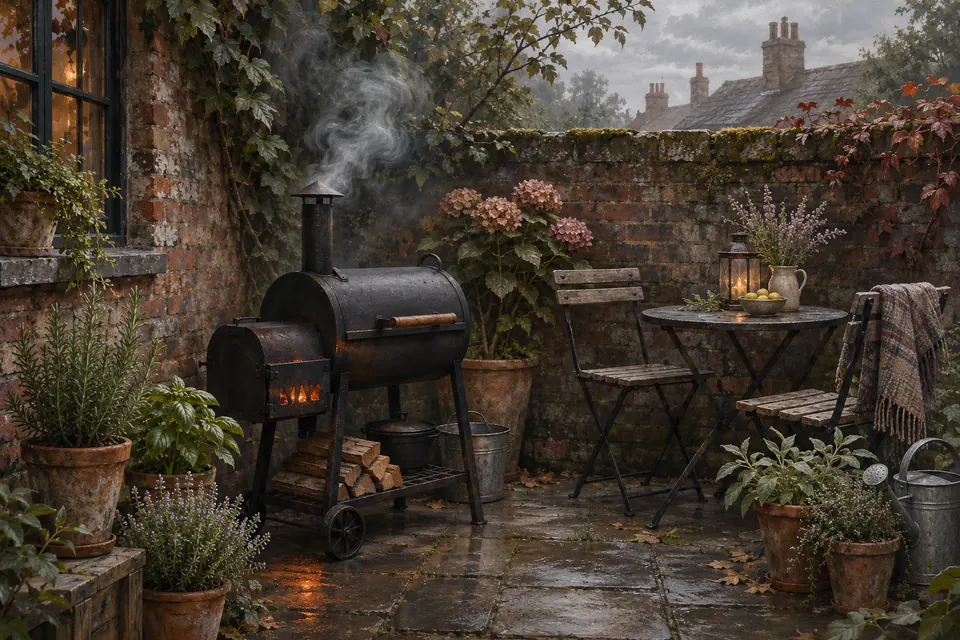
From next door, your smoker is a plume of woodsmoke drifting over their freshly hung washing at eight on a Saturday morning, and it's still going at teatime. In a big garden that's a faint smell on the breeze. In a terrace with a two-metre gap between back doors, it's a diplomatic incident. Small-space smoking is very doable, but it starts with thinking about where the smoke goes and what's within a few metres of the fire.
Which smokers suit a small space
The size of the smoker matters, but so does how much smoke it makes and how much attention it needs. The main types compare like this for tight spaces.
| Type | Footprint | Visible smoke | Needs power | Small-space verdict |
|---|---|---|---|---|
| Kettle BBQ (set up for smoking) | Small | Moderate | No | Often the answer; you may already own one |
| Small bullet smoker | Small | Moderate | No | Good, tall rather than wide |
| Compact kamado | Small to medium | Low to moderate | No | Very efficient, but heavy and hard to move |
| Electric smoker | Small | Low | Yes | Easiest on neighbours; less bark and smoke flavour |
| Small pellet grill | Medium | Low | Yes | Clean smoke, but needs a socket and space for the hopper |
| Offset smoker | Large | High | No | Usually the wrong choice for a small garden |
Before buying anything, see whether the kettle you already have will do. A kettle set up for indirect cooking smokes perfectly well for most cooks; our guide to smoking on a kettle BBQ shows how. If you do want a dedicated smoker, bullet smokers are compact and cheap to run, kamados are efficient and hold heat well in cold weather, and electric smokers are the friendliest to the neighbours.
Offsets are the exception. They're big, they need room around the firebox, and running on wood splits they produce a lot of smoke. Lovely in a field. Not ideal three metres from someone's kitchen window.
Where to put it
Every smoker comes with a manual that gives minimum clearance distances from walls, fences and anything that can burn. Read it and stick to it; distances vary by type, and they matter. Beyond that, a few general principles:
- A level, solid, non-flammable surface. Paving slabs or concrete are ideal. On a lawn, put down a couple of slabs. On timber decking, use a heat-resistant protective mat at the very least, and check the manual, because some manufacturers advise against decking entirely.
- Clear space overhead. Keep away from overhanging branches, gazebos, parasols, awnings and the eaves of the house.
- Away from things that burn or melt. Wooden fences, sheds, plastic water butts, garden furniture, plastic cladding and uPVC window frames are all at risk from radiant heat and stray embers.
- Away from doors, windows and vents. Smoke and fumes drift indoors through open windows, air bricks and extractor vents, yours and the neighbours'.
- Somewhere you can see it. A smoker tucked behind the shed is one you'll forget to check.
Never use a charcoal smoker or BBQ inside a garage, shed, conservatory, tent or any enclosed or partly enclosed space, even with the door open and even in heavy rain. Burning charcoal produces carbon monoxide, which you can't see or smell. See smoking in the rain for safer options.
Keep a bucket of sand, a fire blanket or a suitable extinguisher nearby, and keep children and pets well away from the hot smoker.
Balconies, flats and leases
This is where it gets serious. Many leases and tenancy agreements prohibit barbecues of any kind on balconies, and some building insurance policies do too. Fire and rescue services generally advise against charcoal barbecues on balconies, because a fire there can spread up the outside of a building very quickly.
Before you buy anything for a balcony or a shared space:
- Read your lease or tenancy agreement. Look for clauses on barbecues, open flames or nuisance.
- Ask the managing agent, freeholder or landlord. Get any permission in writing.
- Check your contents and buildings insurance.
- Check any shared garden rules if you're in a block with communal space.
If an electric smoker is permitted, it's the obvious candidate: no open flame, and much less smoke. Even then, mind the cable, keep it dry and use an outdoor-rated socket with an RCD. If nothing is allowed, a friend's garden or a park that permits barbecues is a better bet than a wrangle with the managing agent.
Keeping the neighbours on side
Smoke is the main source of friction. A long cook is many hours of it, and persistent smoke that affects neighbours can, in some cases, end up as a nuisance complaint to the local council. Most of the time a bit of thought avoids it.
- Run a clean fire. Thin, faint, bluish smoke barely registers. Thick white smoke from a choked fire or damp wood is what drifts into kitchens. Our temperature control guide explains how to keep it clean.
- Check the wind. If it's blowing straight at next door's open windows, move the smoker a few metres or wait for it to turn.
- Pick your day. Avoid the first sunny drying day of the week, and early mornings at weekends.
- Use dry, untreated wood. Seasoned oak, beech or fruit wood, never painted, treated or old fence timber. See smoking wood.
- Tell them. A quick word over the fence the day before goes a long way. Offering a plate of pulled pork goes further.
The most effective neighbour-relations tool in BBQ is a foil tray of leftovers delivered next door at 7pm.
Living with a smoker in a small space
Storage matters when there's no spare corner. A breathable cover keeps the smoker tidy and dry; wheels help if you need to move it for the summer table. Smaller cuts suit smaller cookers anyway: pork shoulder, ribs, chicken and salmon all fit a compact smoker easily. If you're ready to shop, take our smoker buying checklist with you, and measure the spot, including the clearance distances, before you look at a single model.
FAQs
Can I use a smoker on a balcony?
Often not. Many leases and tenancy agreements ban barbecues on balconies, and fire services advise against charcoal there. Check your lease and ask your landlord or managing agent before buying anything.
Which smoker makes the least smoke?
Electric smokers and pellet grills generally produce the least visible smoke. A well-run charcoal smoker with a clean fire is also fairly discreet; it's a smouldering fire or wet wood that produces the thick clouds.
How far should a smoker be from a fence?
Follow the clearance distances in the manufacturer's manual, which vary by model. As a principle, give it plenty of room from fences, sheds and anything else that can burn, and nothing overhead.
Can I put a smoker on decking?
Only with care. Use a heat-resistant mat, check the manual, and keep the area under and around the smoker clear. Some manufacturers advise against using their smokers on wooden decking at all.
Keep going
 Choosing a smokerCornerstone
Smoker buying checklist
A printable-style checklist for buying a smoker in the UK: what to check on the spec sheet, what to check in the showroom, and the red flags to walk away from.
Read the guide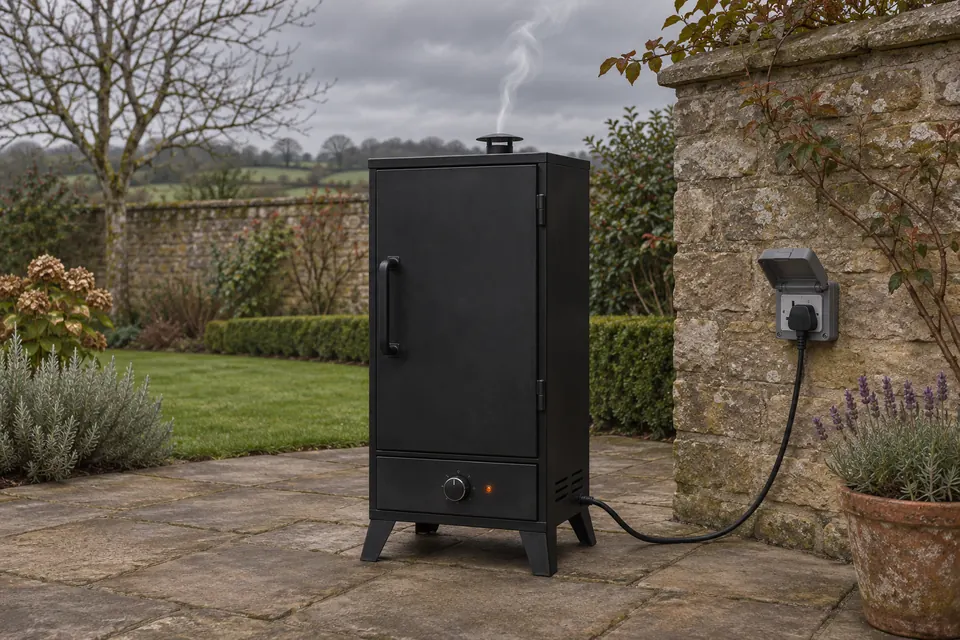 Choosing a smoker
Electric smokers
Who electric smokers suit, what to check in the spec, and safe outdoor power in a British garden.
Read the guide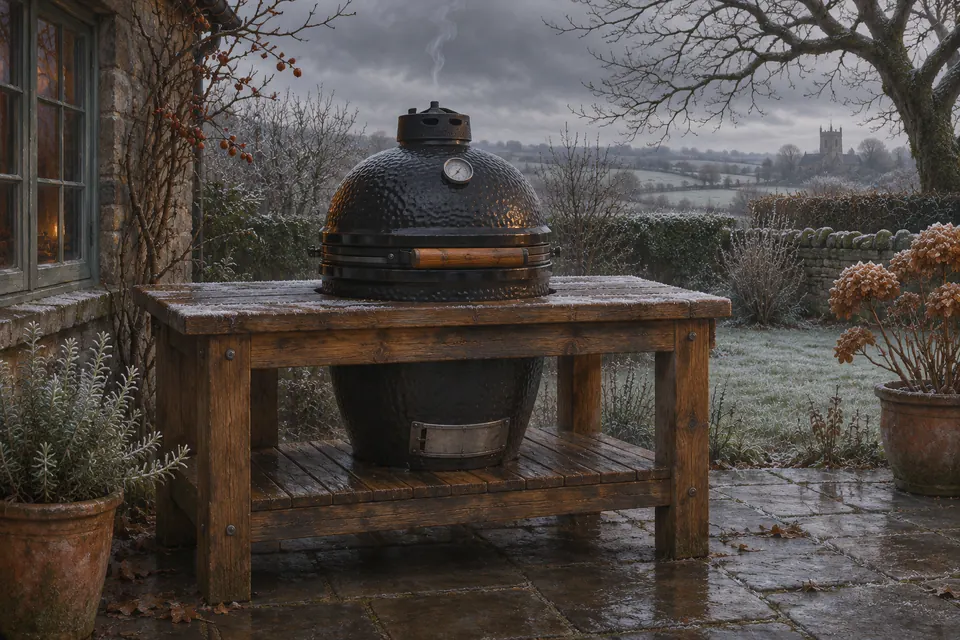 Choosing a smoker
Kamado smokers explained
How a kamado holds steady heat, setting one up for low and slow, what to check in the spec, and living with a heavy ceramic egg in a British garden.
Read the guide