On this page · 7 sections
American barbecue writing is brilliant, and almost none of it is written for a British kitchen. The temperatures are in Fahrenheit, the meat is in pounds, salt comes by the cup and the cuts have names that get a blank look at the butcher's counter. A "pork butt" isn't from the back end of the pig, and a "packer brisket" is something you'll usually need to order.
The translator handles the arithmetic and the vocabulary in one go. Paste in a line, read the UK version, and check the list underneath to see exactly what changed and why.
What it converts
| In the US recipe | You get | Rounded to |
|---|---|---|
| Smoker and oven temperatures (°F) | °C | The nearest 5°C, which is as fine as most smokers hold anyway |
| Meat temperatures (°F, under 215°F) | °C | The nearest degree |
| Pounds (lb) and ounces (oz) | kg and g | 0.1 kg, or the nearest 5 g |
| Cups, pints, quarts, gallons, fl oz | ml and litres | The nearest 5 ml |
| Inches | cm | The nearest half centimetre |
| US cuts and ingredients | UK names |
Spoons are left alone. A US tablespoon and teaspoon are close enough to UK ones for any barbecue recipe.
Watch the pints and gallons
This one catches people out. A US pint is about 473 ml, while a British pint is 568 ml. A US gallon is about 3.8 litres; an imperial gallon is about 4.5 litres. A turkey brine written for "2 gallons of water" made with British gallons is noticeably weaker than the recipe intended. If you're brining, the brine calculator is the safer route: it works out salt in grams from the meat and water you actually have.
Weigh the salt, don't convert the cup
The translator will turn "1 cup kosher salt" into millilitres, but treat that as a warning, not an instruction. American kosher salt is coarse and light, so a cupful weighs far less than a cup of fine table salt. Swapping one for the other by volume can make a brine or rub much saltier than intended. Where a recipe gives salt by volume, use the brine calculator or the percentages in our rub ratios guide and weigh it.
Watch the chili powder
American rubs often call for a few tablespoons of "chili powder". In the US that usually means a mild blend of ground chilli with cumin, oregano and garlic. In the UK, chilli powder is mostly ground chilli and much hotter. A straight swap can make a rub fiercely hot. Use a mild chilli seasoning, a smoked paprika base with a little cumin and oregano, or a small amount of UK chilli powder to taste. The translator flags it every time.
US cut names at the butcher's
The cut names are where most of the confusion lives. The short list the translator knows:
| US recipe says | Ask a UK butcher for |
|---|---|
| Packer brisket | A whole brisket, point and flat together |
| Pork butt or Boston butt | Pork shoulder, the blade end |
| Picnic shoulder | Pork shoulder, the hand end |
| Baby back ribs | Pork loin ribs, also called back ribs |
| St. Louis ribs | Spare ribs, trimmed square |
| Beef plate ribs | Short ribs from the plate, often sold as Jacob's ladder |
| Chuck roast | Chuck, or a braising joint |
| Tri-tip | Bottom sirloin, cut to order if the butcher will |
For the full picture, with a map of where each cut sits on the animal, see UK vs US BBQ cuts.
What it doesn't do
It doesn't change cooking times, because time doesn't need converting. It won't tell you whether a recipe is safe: a converted US "done" temperature is still a US recommendation. For when meat is safe to eat, follow the FSA guidance in the safety box and our BBQ temperature chart. It also only knows the phrases listed above. If it misses something, the glossary probably has it.
FAQs
What is 225°F in Celsius?
About 107°C, which most British recipes and smokers round to 105–110°C. That's the classic low-and-slow temperature. 250°F is about 121°C and 275°F is about 135°C.
What is a pork butt in the UK?
The upper part of the pork shoulder, sometimes sold as the blade end or shoulder joint. It has nothing to do with the back end of the pig. It's the cut for pulled pork.
Is a US cup the same as a UK cup?
Not quite. A US cup is about 240 ml. Old British recipes sometimes used a 284 ml cup, and Australian recipes use 250 ml. For barbecue, the only time it really matters is salt and sugar, and those are better weighed.
Why does it round smoker temperatures to 5°C?
Because no home smoker holds a temperature closer than that. Telling you to run a smoker at 107°C suggests a precision that isn't there. 105°C or 110°C is what you'll actually aim for.
Keep going
 CooksCornerstone
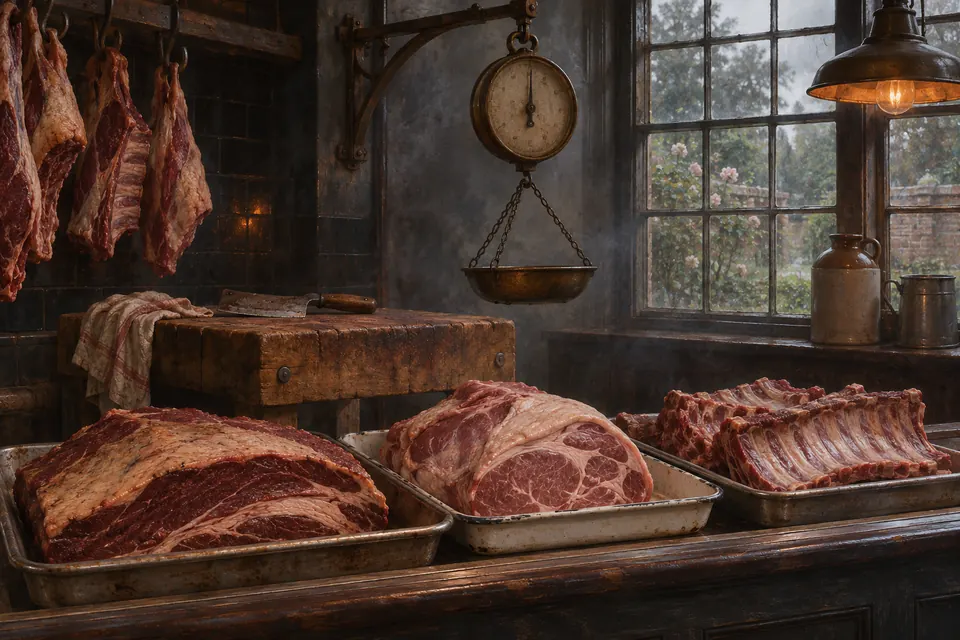
UK vs US BBQ cuts
Translate American BBQ recipes into British butcher cuts: packer brisket, Boston butt, baby backs, short ribs and more, with a UK to US cut table.
Read the guide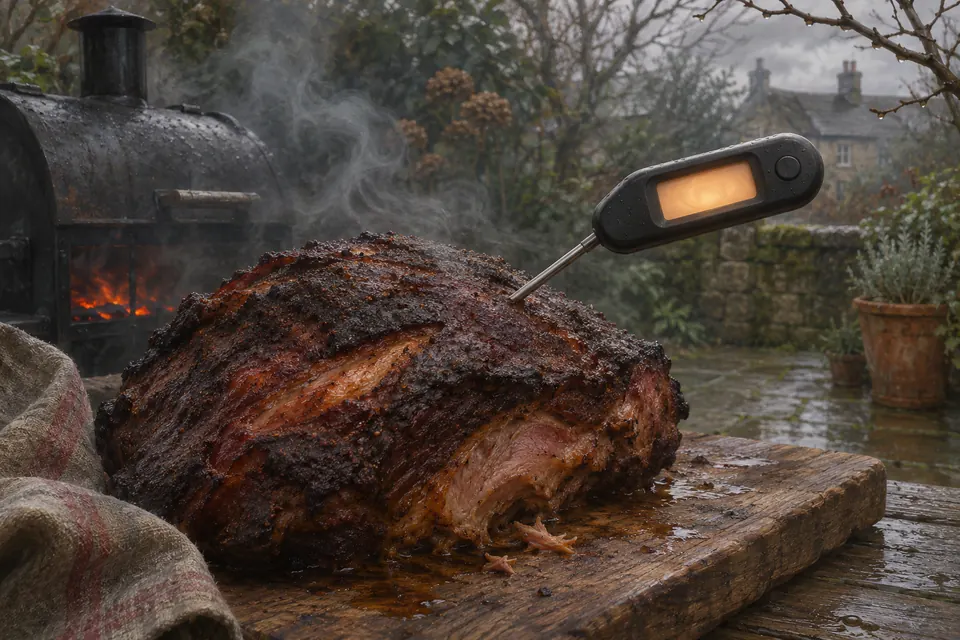 TechniqueCornerstone
BBQ temperature chart
Smoker temperatures by style and a cut-by-cut chart of what done means, from brisket to salmon, plus how to probe and check your thermometer.
Read the guide