On this page · 8 sections
At a glance
- Ask for
- Steak around 4 cm thick, or a whole rump cap
- Smoker
- Around 110–135°C, then very hot to sear
- Time
- Around 45 min–1.5 h low, plus the sear
- Wood
- One small chunk of oak or beech
- Done when
- Safe temperature per FSA guidance
- Rest
- A few minutes at most
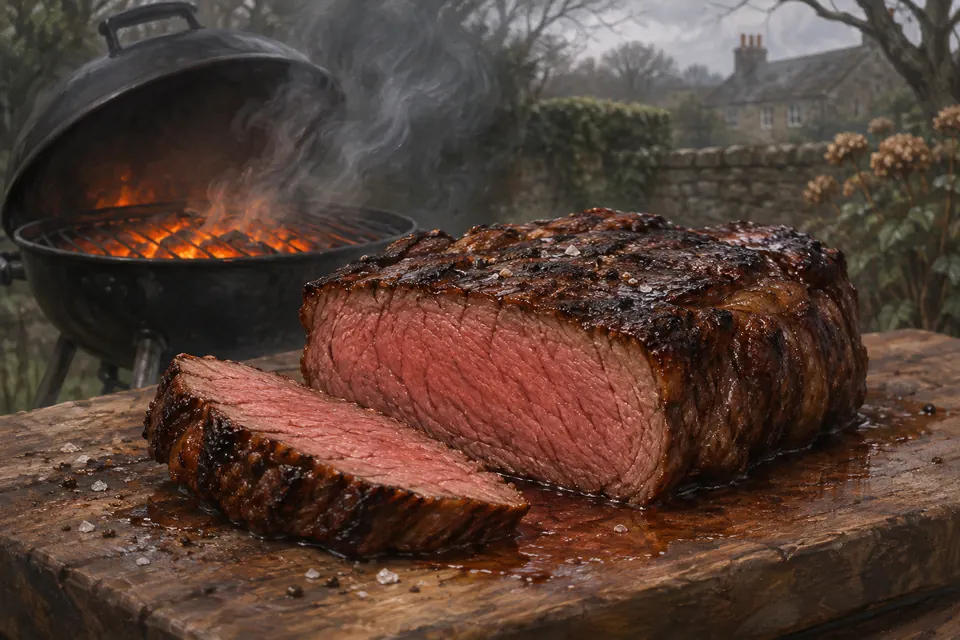
The usual way to ruin a thick steak is to sear it hard, then leave it over the heat until the middle catches up. By the time the centre is pink, there's a thick grey band all round the edge and the outside has gone from crust to charcoal. Reverse searing flips the order. The steak cooks gently in the smoker first, so it's evenly done from edge to edge, and the sear comes at the very end, when all it needs to do is build a crust.
Why thickness matters
This method is for thick steaks only. Around 4 cm is the usual minimum, and thicker is easier. A thin supermarket sirloin will be cooked through within minutes in a low smoker, and by the time it's seared it'll be well done. For thin steaks, a hot grill and nothing else is the right call.
Good candidates from a UK butcher:
| Cut | Why it suits a reverse sear |
|---|---|
| Thick-cut rib-eye or bone-in rib | Plenty of fat to render in the low phase |
| Thick sirloin or porterhouse | Even shape cooks evenly |
| Rump cap (picanha) | Whole joint with a fat cap, cooks like a mini roast |
| Thick fillet | Lean, so watch it closely and don't overcook |
Ask the butcher to cut steaks to order at the thickness you want; they'll happily do it and it's the one variable that matters most. A whole rump cap is a good choice for four to six people and much cheaper than the same weight of rib-eye. See UK vs US BBQ cuts if a recipe names a cut your butcher doesn't recognise.
Prep: salt early
Salt the steak generously the day before, or at least a couple of hours ahead, and leave it uncovered on a rack in the fridge. This dry brine seasons the meat through and dries the surface, which gives a much better crust. Pepper can go on just before cooking. Skip complicated rubs; sugar burns at searing heat.
For a rump cap, score the fat in a shallow criss-cross, not into the meat, and salt the lot.
The low phase
Get the smoker steady at around 110–135°C. Add one small chunk of oak or beech. Steak doesn't need much smoke, and a big lump of wood will make it taste of ashtray rather than beef.
Put a leave-in probe into the centre of the thickest steak, from the side, and close the lid. A good probe thermometer is not optional here: the whole method depends on knowing the internal temperature. Thick steaks take somewhere around 45 minutes to an hour and a half; a rump cap takes longer.
Doneness by probe
Decide how you want it done, then take the steak out of the low phase a little short of that, because the sear adds heat. Most recipes pull it around 5–8°C below the final target. Common cookery-guide figures are roughly:
| Doneness | What it looks like | Typical target after searing |
|---|---|---|
| Rare | Deep red, cool-ish centre | Around 50°C |
| Medium-rare | Pink-red, warm through | Around 55°C |
| Medium | Pink centre, firmer | Around 60°C |
| Well done | Little or no pink | Higher; check the FSA guidance |
These are eating preferences, not safety figures. Whole steaks and joints of beef are generally treated differently from minced or rolled meat, but the FSA guidance is the place to check what's safe for your cut, and for anyone pregnant, very young, elderly or unwell. Anything rolled, tenderised or injected should be cooked through.
Probe from the side, into the dead centre. Going in from the top makes it very easy to read the temperature near the surface and pull the steak too early.
The sear
Now get something very hot. A full chimney of lit charcoal, a cast-iron pan on the hob, or the hottest part of the grill all work. Sear for around a minute a side, plus the edges and the fat cap, until there's a deep brown crust. Don't walk away. This is the only fast part of the cook and the easiest time to overshoot.
Resting
Reverse-seared steak needs much less rest than a conventionally seared one, because the inside cooked gently and there isn't a big temperature difference to even out. A few minutes on a warm board while you sort the plates is plenty. A rump cap can sit a little longer. Slice across the grain, and for rump cap, cut it into steaks along the grain first and then slice those across. More on why resting works the way it does in resting smoked meat.
Kettle and kamado set-ups
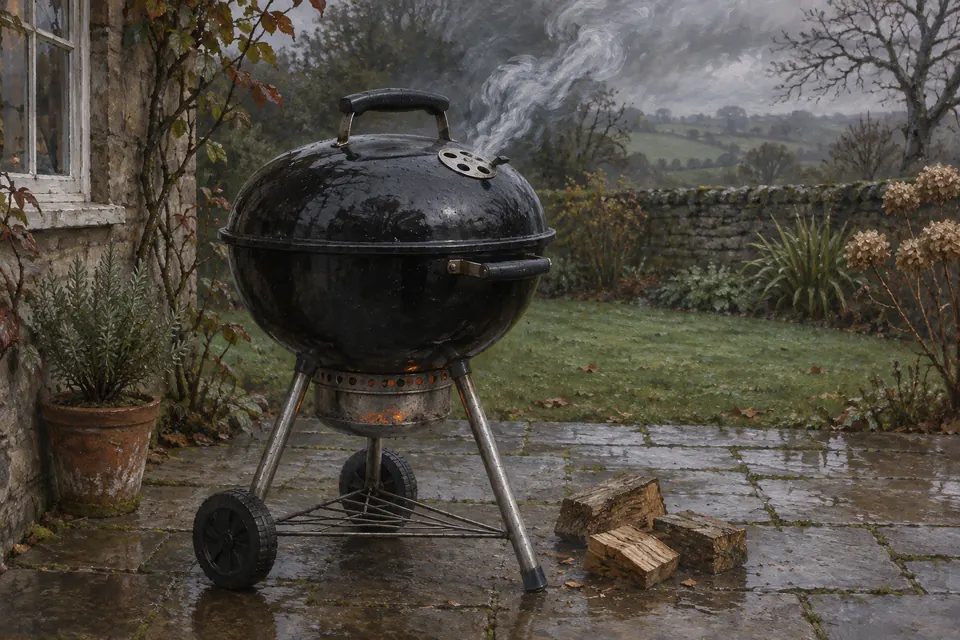
Kettle. Bank lit coals on one side, steak on the other with the lid on and the vents mostly closed for the low phase. When it's ready, take the steak off, open all the vents, add a fresh chimney of lit coals and sear directly over the fire. Our guide to smoking on a kettle BBQ covers the two-zone set-up in detail.
Kamado. Run the low phase with the heat deflector in. Then lift the steak off, take the deflector out (with heatproof gloves, it'll be hot), open the vents wide and let the fire roar for a few minutes before searing. Burp the lid before opening it fully, as a kamado can flash back when air rushes in. See kamado smokers explained.
Pellet grills can do the low phase well but most struggle to sear hard. Finish in a cast-iron pan on the hob, or on a very hot charcoal grill.
Your next step: ring the butcher, ask for steaks cut to around 4 cm, and salt them the night before.
FAQs
Is reverse searing worth it for normal steaks?
Not really. Below around 3 cm, a hot grill does a better job in less time. Save this method for thick steaks and joints.
Can I reverse sear without a smoker?
Yes. A low oven does the first phase, and a hot pan does the sear. You lose the smoke but keep the even cooking.
Why is my crust weak?
Usually the surface was wet or the sear wasn't hot enough. Salt ahead and dry the surface, pat it with kitchen paper before searing, and get the heat as high as it will go.
Should I wrap the steak at any point?
No. Wrapping steams the surface and works against the crust. That's a technique for long cooks like brisket, not steak.
Keep going
 Technique
Smoking on a kettle BBQ
Turn the kettle BBQ you already own into a smoker with a two-zone or snake setup, water pan and wood chunks, and know when it's time to upgrade.
Read the guide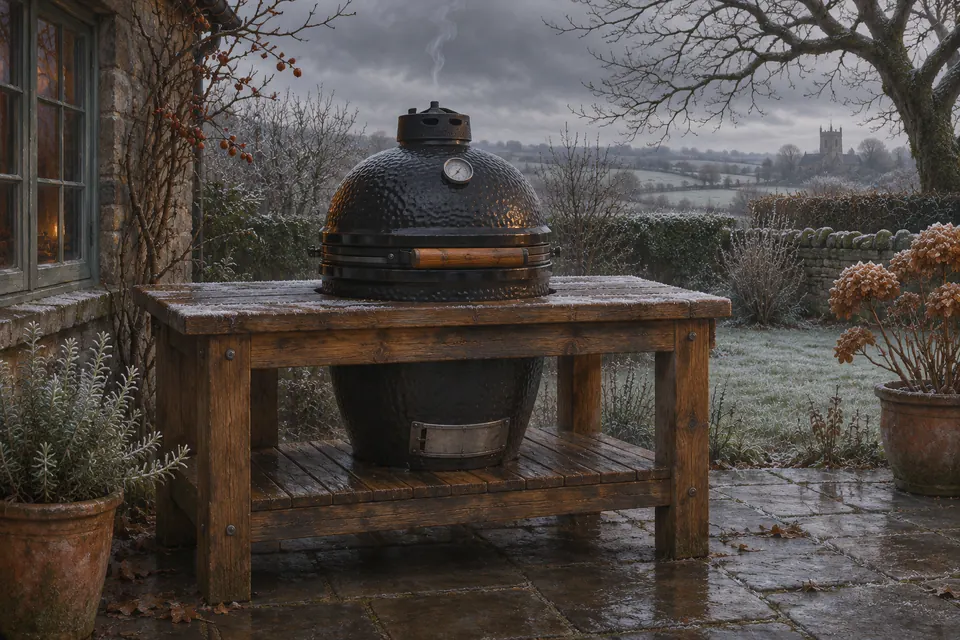 Choosing a smoker
Kamado smokers explained
How a kamado holds steady heat, setting one up for low and slow, what to check in the spec, and living with a heavy ceramic egg in a British garden.
Read the guide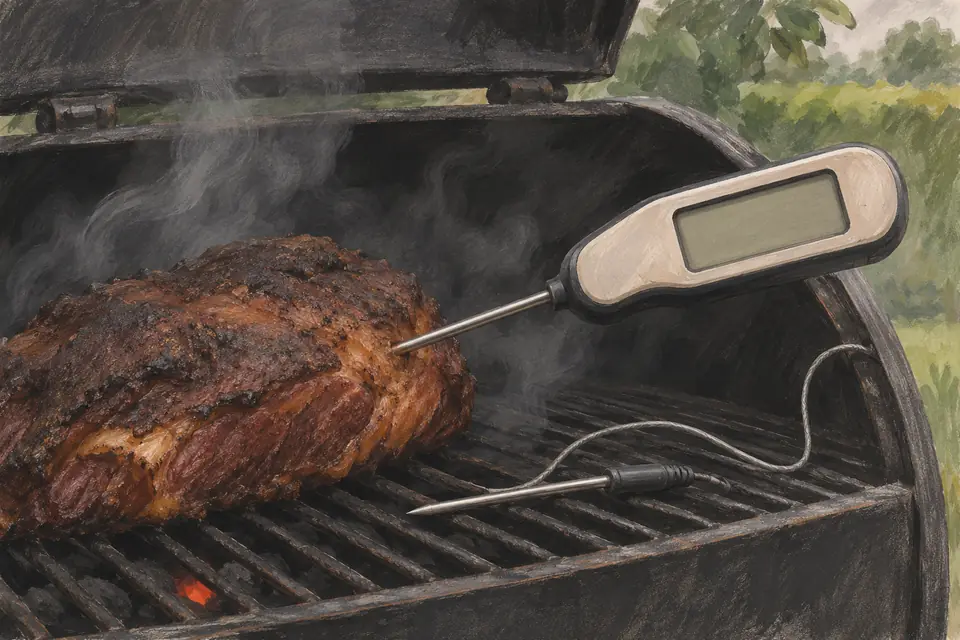 Weather and kit
BBQ meat thermometers
Instant-read, leave-in and wireless probes compared: how each works, which published specs matter, and how to check and care for one.
Read the guide