On this page · 6 sections
At a glance
- Ask for
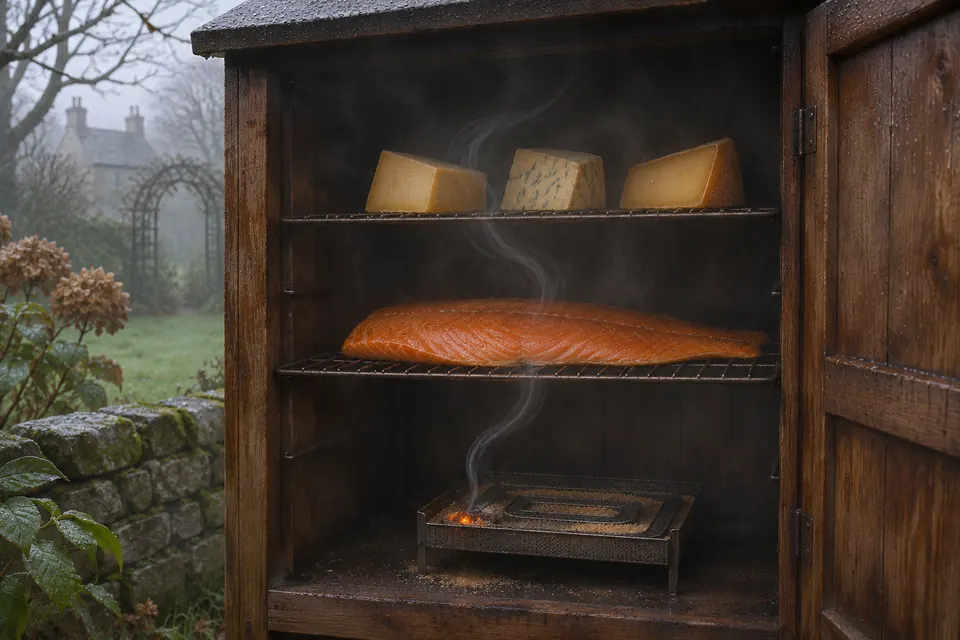
- Firm cheese, e.g. mature Cheddar, to start
- Smoker
- Kept cool, close to the outside air
- Time
- Cheese around 2–4 h to start
- Wood
- Fine oak or beech dust; apple or cherry milder
- Rest
- Cheese: wrapped in the fridge, ideally 1–2 weeks
Cold smoking is the one technique on this site where the smoke does all the work and the heat does none. The food sits in a cool chamber, takes on flavour from a smouldering trickle of sawdust and comes out exactly as raw as it went in. With cheese, that's the point. With fish or meat, it means the usual safety net of cooking isn't there, so every other step has to be right.
None of that should put you off. It just means starting in the right place and being realistic about what to try at home.
Hot smoking vs cold smoking
Hot smoking is what most of this site is about: food cooks in smoky heat until it's safe and tender. Pulled pork, brisket and hot-smoked salmon are all hot smoked. Cooking does the safety work.
Cold smoking keeps the temperature low enough that the food doesn't cook. Smoked cheese, smoked butter, smoked salt and traditional smoked salmon are cold smoked. The smoke adds flavour and colour, and a little preservation on the surface, but it doesn't make raw food safe.
If you want smoked fish without the risks of cold smoking, hot-smoked salmon is the easy answer: cured briefly, then smoked and cooked through.
Cold smoke generators
The usual home setup is a small metal maze or spiral that holds fine sawdust or dust-sized wood. You light one end with a tealight, it smoulders slowly along the maze, and it can produce gentle smoke for many hours from a single fill. Some people use pellets in a tube instead, which smoulder in a similar way.
The generator sits inside a smoker, a kettle BBQ with no charcoal, or a purpose-made cold smoking cabinet. The key is that nothing else in the chamber is burning, so the temperature stays close to the air outside. Check the maker's guidance for the generator you buy, including what fuel it's designed for and where it should sit.
Fuel choice matters more than with hot smoking, because the food sits in the smoke for hours. Use fine, dry dust from untreated hardwood: oak and beech are classic for cheese and fish, while apple and cherry are milder. Our guide to smoking wood in the UK covers which woods to avoid.
Even with no fire in the chamber, a cold smoke generator is smouldering wood. It produces carbon monoxide, so it belongs outdoors, on a non-combustible surface, away from fences, sheds and anything that can catch. Never run one in a garage, shed or indoors.
Which months suit it in the UK
Cold smoking works when the air is cool and the chamber stays cool. That's why the traditional season in Britain is late autumn, winter and early spring. A cool, still, dry day is ideal.
Warm summer days are the wrong time. A metal smoker in sunshine heats up quickly, and so does the food inside it. Cheese starts to sweat and melt, and for fish and meat, warmth is exactly what you're trying to avoid. A thermometer in the chamber will tell you what's happening; if the inside is creeping up, stop. Check the FSA guidance for the temperatures that matter for storing chilled food.
Humidity matters too. Damp, foggy days slow the smoke and can leave a bitter, sooty film on the food. Rain and frost aren't always a problem if the chamber is sheltered and dry inside, but they can make the generator hard to keep lit. Our guide to smoking in winter covers the cold side of things.
Food safety
This is the part that matters most, so it's kept simple.
- Cold smoking does not cook or kill bacteria. Treat cold-smoked food as raw unless it's going to be cooked afterwards.
- Start with low-risk foods. Hard cheese, nuts, salt, garlic, butter and chillies are the forgiving end.
- Raw fish and meat need curing first. Traditional cold-smoked salmon and bacon are cured with salt (and sometimes sugar) before smoking, which draws out moisture and slows bacterial growth. This needs a reliable, published recipe followed exactly. Our brine calculator helps with salt quantities, but it isn't a substitute for a full curing recipe.
- Keep everything cold. Food should go from the fridge to the smoker and back with as little time warm as possible, on cold days only.
- Some people should avoid cold-smoked fish. The FSA guidance has advice for pregnant people and other vulnerable groups on cold-smoked fish, because of the risk of listeria. Read it before serving cold-smoked fish to anyone in those groups.
- If in doubt, cook it. Cold-smoked bacon, for example, is meant to be cooked before eating.
The FSA guidance is the place to check temperatures, storage times and advice for vulnerable groups. If you can't follow a cure and keep the food cold throughout, stick to cheese, or hot smoke instead.
Keep a cold smoking notebook: date, outdoor temperature, chamber temperature, wood, hours and how it tasted a week later. It makes the next batch much better and much safer.
Cheese first
Cheese is the ideal first cold smoke. It's lower risk, it's cheap enough to experiment with and the results are good.
- Choose a firm cheese. Cheddar, Red Leicester, Double Gloucester and other hard cheeses all work. Soft and fresh cheeses are fussier.
- Cut it into blocks a few centimetres thick, so the smoke reaches more surface.
- Let it come out of the fridge briefly so it doesn't sweat, but keep it cool.
- Smoke on a cool, dry day, starting with a couple of hours. Many cooks go for somewhere around two to four hours; light woods like apple suit a shorter smoke.
- Wrap and rest it in the fridge. Smoked cheese tastes harsh and ashy straight out of the smoker. Wrapped in baking paper and rested for several days, ideally a week or two, the smoke mellows and spreads through the block.
Once you've got a few batches of cheese right, try smoked butter or smoked sea salt, both of which make good presents.
Pick a cold, still day this winter, buy a block of mature Cheddar and a bag of oak dust, and set the generator up outside on a non-combustible surface.
FAQs
Is cold smoking safe?
It can be, for the right foods and with care. Cheese, nuts and salt are low risk. Raw fish and meat carry real risks because nothing is cooked, so they need careful curing, constant cold and close attention to the FSA guidance.
Can I cold smoke in summer in the UK?
It's not a good idea. Warm days heat the chamber and the food. Most cooks keep cold smoking for the cooler months and pick cool, dry days.
Do I need a special smoker for cold smoking?
No. A cold smoke generator can sit in most smokers or a kettle BBQ with no charcoal lit. The chamber just needs to hold smoke and stay cool.
Can I cold smoke salmon at home?
People do, but it's the riskier end of cold smoking. It needs a full salt cure first, cold conditions throughout and care with who eats it. Hot-smoked salmon is the simpler and safer place to start.
Keep going
 Cooks
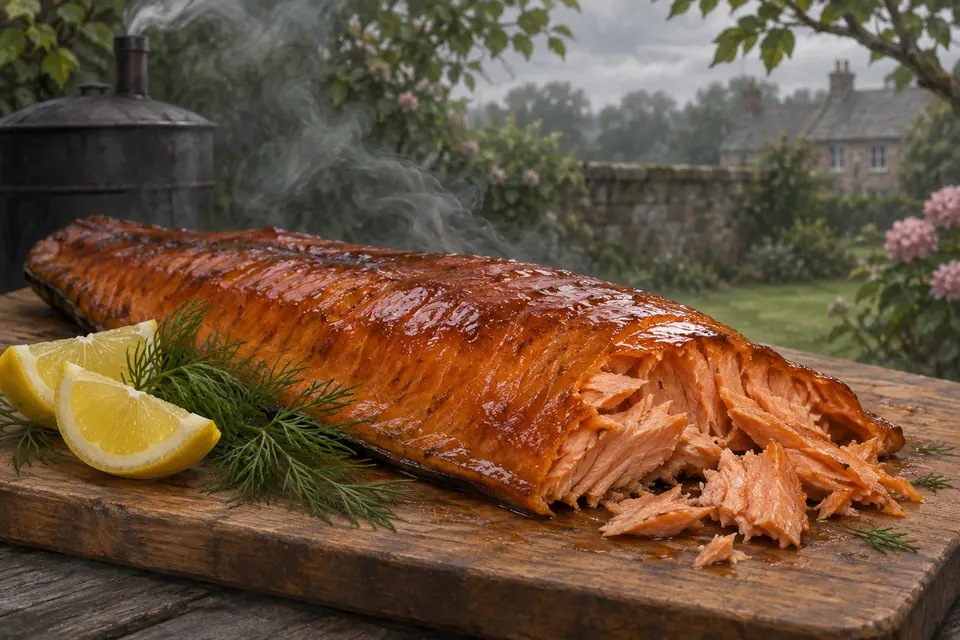
Hot-smoked salmon
How to hot smoke salmon at home: how it differs from cold-smoked, dry cure or brine, forming a pellicle, and the gentle heat that keeps it moist.
Read the guide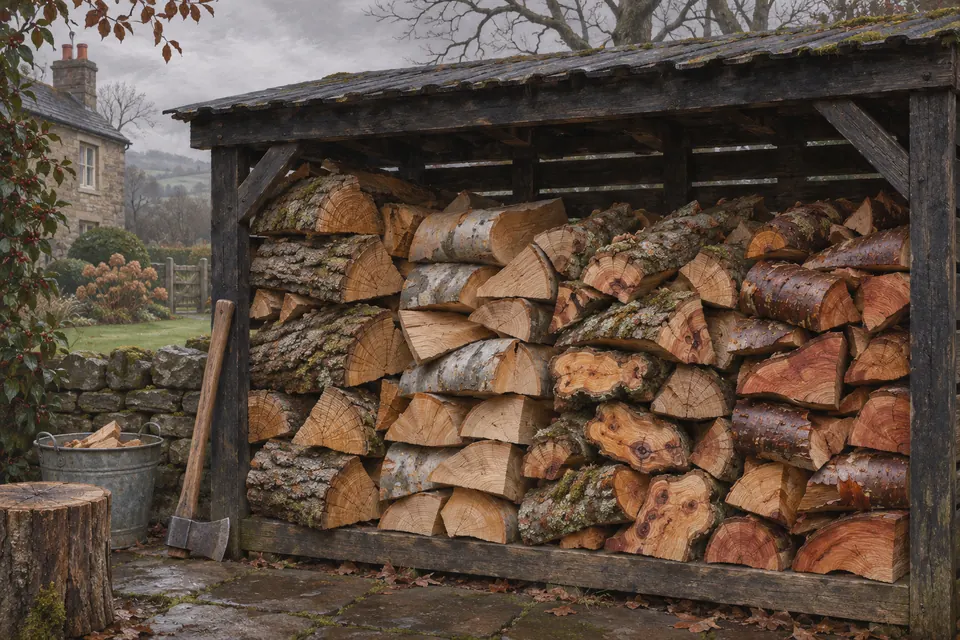 Fuel and woodCornerstone
Smoking wood in the UK
Which British woods suit which meats, chunks vs chips vs splits vs pellets, how dry the wood should be, what never to burn and how to store it.
Read the guide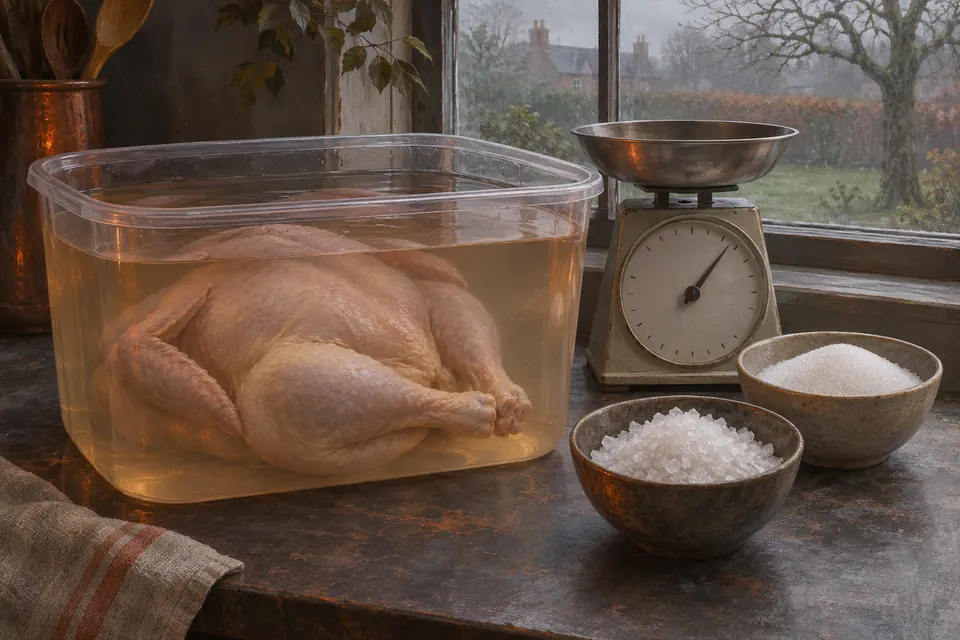 Tool
Brine calculator
Grams of salt and sugar for a wet, equilibrium or dry brine, from the weight of your meat and the strength your recipe asks for.
Open the tool