On this page · 9 sections
At a glance
- Ask for
- Skin-on side or thick centre-cut fillet, pin-boned
- Smoker
- Around 80–110°C
- Time
- Around 1–2 h, after the cure and pellicle
- Wood
- Oak; alder or beech for a lighter smoke
- Done when
- Opaque, flakes; safe temperature per FSA guidance
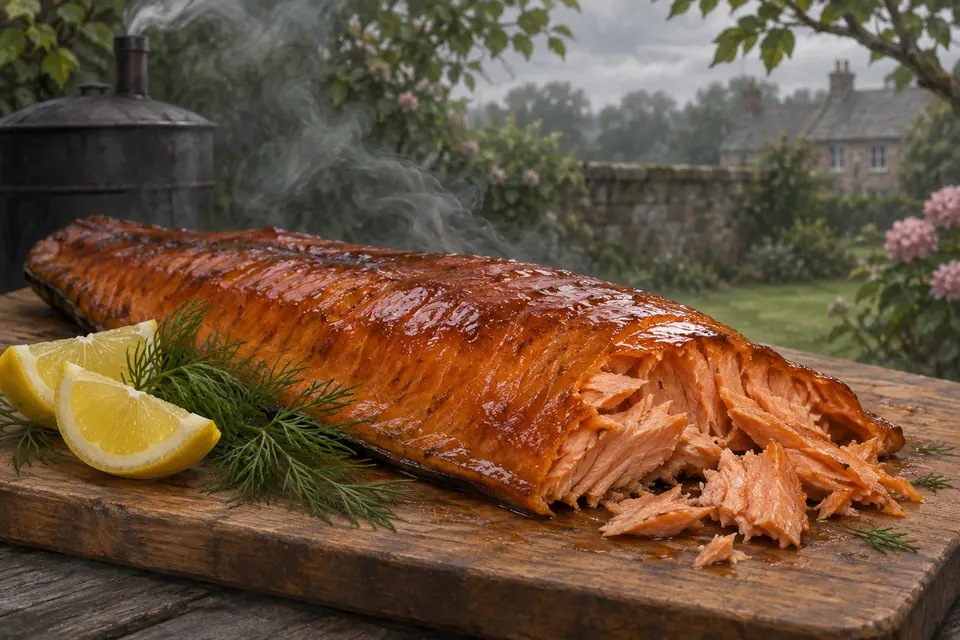
Hot-smoked and cold-smoked salmon are different foods that happen to share a fish. The thin, glossy slices in a supermarket pack are cold-smoked: cured, smoked at a temperature too low to cook it, and still technically raw. Hot-smoked salmon is cooked in the smoke. It's opaque, flakes into chunks and tastes like a smoky roast fillet. The second one is the one to start with at home, because it's simpler and much more forgiving.
Hot smoked vs cold smoked
| Hot-smoked salmon | Cold-smoked salmon | |
|---|---|---|
| Texture | Flaky, firm, cooked | Silky, sliceable, raw-textured |
| Smoke temperature | Roughly 80–110°C | Kept cool, usually below around 30°C |
| Cooked? | Yes | No: the cure and smoke preserve it |
| Time | A few hours including the cure | Days, with long curing and smoking |
| Kit | Any smoker that holds low heat | A cold smoke generator and a cool day |
| Risk to manage | Cooking through properly | Curing correctly and controlling bacteria |
Cold smoking fish at home is possible but it's a different discipline, with longer cures and real food safety questions, because nothing is cooked. Our cold smoking guide covers it. This page sticks to hot smoking.
Buying the salmon
A whole side or a thick centre-cut fillet works best, skin on. The skin holds the fillet together on the grate and you can slide the flesh off it afterwards. Thin tail pieces dry out before the thick end is cooked, so either fold the tail under or cut it off and cook it as a cook's treat.
Ask the fishmonger to pin-bone it. If they haven't, run your fingers along the flesh and pull out any bones with tweezers. It's tedious but quicker than picking them out of your teeth at dinner.
Cure it first: dry cure or brine
The cure seasons the fish, firms the flesh and pulls out some water so the salmon holds together in the smoker. Skip it and you get a soft, bland fillet that falls apart.
Dry cure. The classic approach is a mix of salt and sugar, often equal parts by weight or a bit heavier on the sugar. Scatter it over the flesh side in an even layer, put the fish in a dish skin side down, cover it and refrigerate. Thin fillets need around an hour; a thick side might need three or four. Dill, black pepper, lemon zest or a little juniper can go in the mix.
Wet brine. Dissolve salt and sugar in cold water and submerge the fish. It's gentler and more even than a dry cure, and harder to overdo, but it takes longer: several hours rather than one or two.
The brine calculator works out salt and sugar weights for either method from the weight of your fish and the strength you want, so you're not guessing with a measuring jug.
Whichever you pick, rinse the fish under cold water afterwards and pat it dry. Taste a tiny corner if you're unsure: it should be pleasantly seasoned, not like a mouthful of sea.
The pellicle: don't skip this
After rinsing, put the salmon on a rack, skin side down, and leave it uncovered in the fridge. Within a few hours the surface goes slightly tacky and glossy. That's the pellicle, a thin layer of proteins that smoke sticks to and that stops the fish drying out in the smoker. Overnight is fine if you're planning ahead.
If you put the salmon in wet, the smoke condenses on it unevenly and the colour comes out patchy. It's the fish equivalent of painting a damp wall.
A desk fan blowing across the fish in a cool room speeds the pellicle up. Keep it out of reach of the cat.
Smoker set-up
Hot-smoked salmon wants gentle heat: somewhere around 80–110°C at the grate is the usual range. Hotter than that and the fish cooks quickly, tightens up and pushes out white beads of albumin onto the surface. They're harmless but not pretty. Lower and slower gives you a moister fillet and more smoke.
That temperature is lower than most charcoal smokers like to sit, so it takes a small fire and the vents mostly closed. Our smoker temperature control guide has the details. Pellet grills and electric smokers are good at this kind of low, steady heat, and fish is one of the best reasons to own one.
Lightly oil the grate, or sit the salmon on a piece of baking parchment with holes poked in it, so the skin doesn't weld itself to the bars.
Which wood for salmon
Oak is the traditional British smoke for salmon and hard to beat. Alder is the classic in other fish-smoking countries and gives a lighter, sweeter result. Beech is mild and clean. Apple and cherry work but are less usual. Go easy: fish takes on smoke fast, and one or two small chunks or a handful of chips is plenty. Our smoking wood guide has more on what each British wood tastes like.
How long, and when is it done?
A fillet usually takes around one to two hours depending on thickness and temperature. The salmon is ready when it turns opaque all the way through and flakes when you press the thickest part. Use a probe thermometer in the thickest part and check it against the FSA guidance for cooking fish. If you need a better thermometer, our BBQ meat thermometers guide explains what to look for.
A glaze of honey or maple syrup brushed on in the last 20 minutes gives a sticky, dark finish. Don't put it on earlier or it will catch.
Serving and storing
Hot-smoked salmon is good warm off the smoker, and arguably better cold the next day, flaked into salads, scrambled eggs, pasta or a pâté with cream cheese and horseradish. Cool it quickly, cover it and keep it in the fridge. Follow the usual food storage advice and eat it within a couple of days.
Plan a cure tonight and a smoke tomorrow: weigh the fish, run the numbers through the brine calculator and get the cure on.
FAQs
Is hot-smoked salmon cooked?
Yes. Unlike cold-smoked salmon, it's cooked in the smoke and should be opaque and flaky all the way through. Check the thickest part with a probe against the FSA guidance.
Can I hot smoke salmon without curing it?
You can, but it will be blander, softer and more likely to fall apart, and the smoke won't take as evenly. Even a short cure makes a big difference.
What are the white bits on my smoked salmon?
That's albumin, a protein pushed out of the flesh when fish cooks too hot or too fast. It's harmless. A lower smoker temperature and a good pellicle reduce it.
Can I smoke frozen salmon?
Defrost it fully in the fridge first, then cure, dry and smoke as normal. Frozen and defrosted salmon works well, and freezing first is common practice for fish that will be cold-smoked.
Keep going
 Cooks
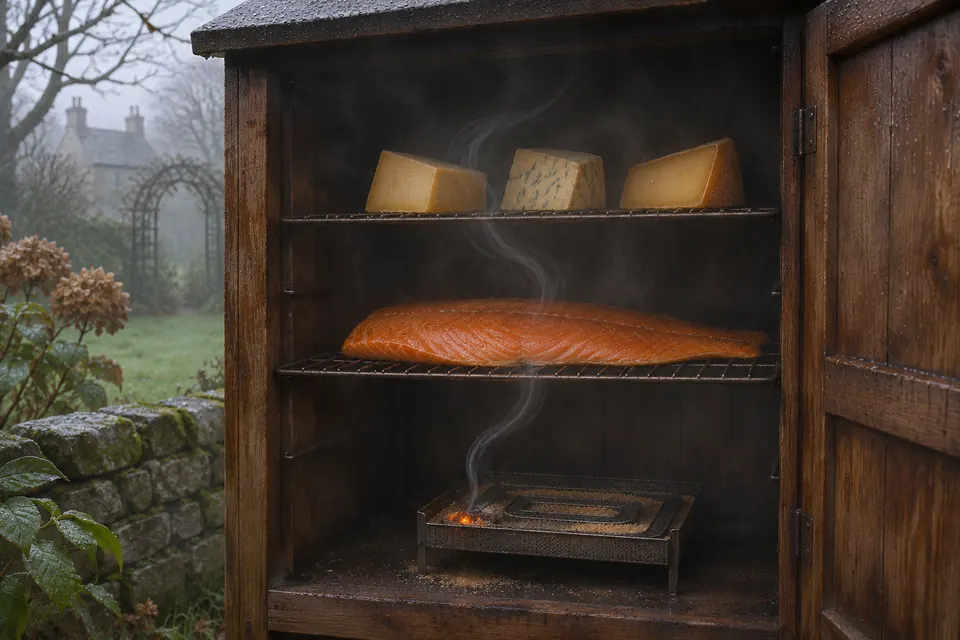
Cold smoking at home
How cold smoking works, smoke generators, the best months in the UK, and the food-safety rules that matter. Start with cheese; treat fish and meat with care.
Read the guide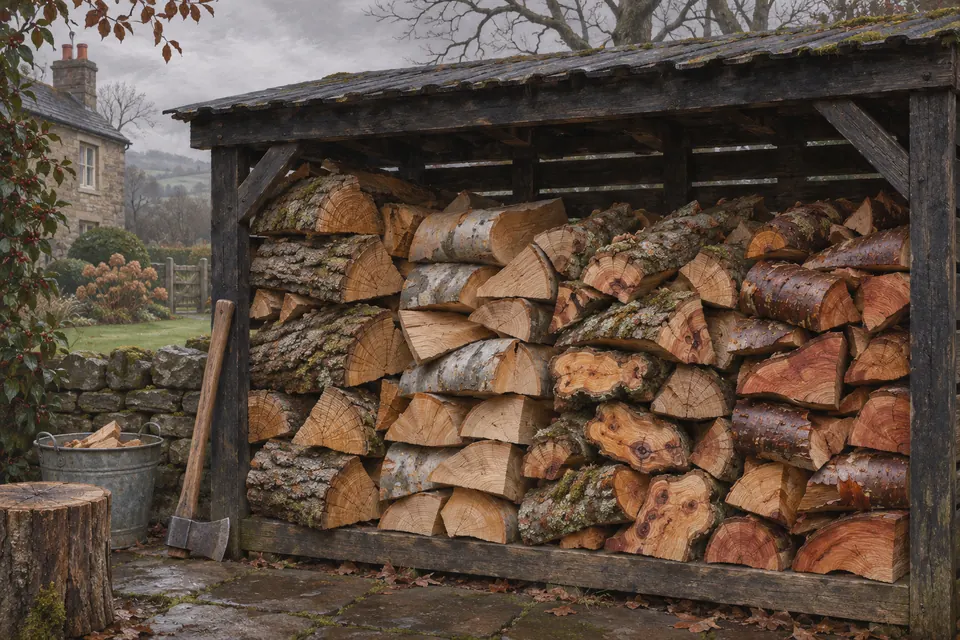 Fuel and woodCornerstone
Smoking wood in the UK
Which British woods suit which meats, chunks vs chips vs splits vs pellets, how dry the wood should be, what never to burn and how to store it.
Read the guide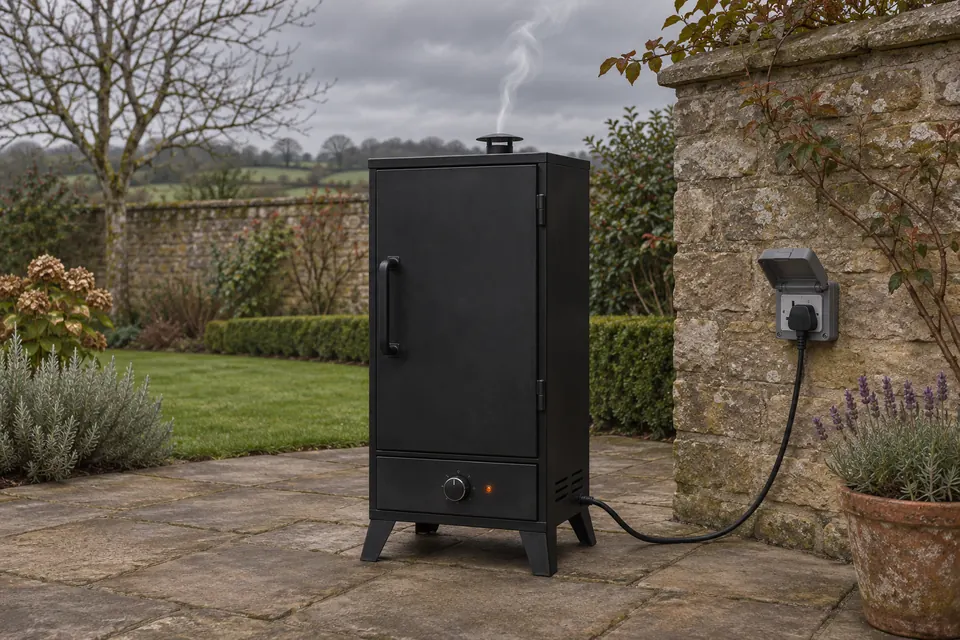 Choosing a smoker
Electric smokers
Who electric smokers suit, what to check in the spec, and safe outdoor power in a British garden.
Read the guide