On this page · 9 sections
At a glance
- Ask for
- Whole duck, or duck legs
- Smoker
- Around 135–160°C, then crisp at 200–220°C
- Time
- Whole around 2.5–3.5 h; legs around 2–2.5 h
- Wood
- Cherry, or apple
- Done when
- Safe temperature per FSA guidance
- Rest
- 15–20 minutes, not wrapped
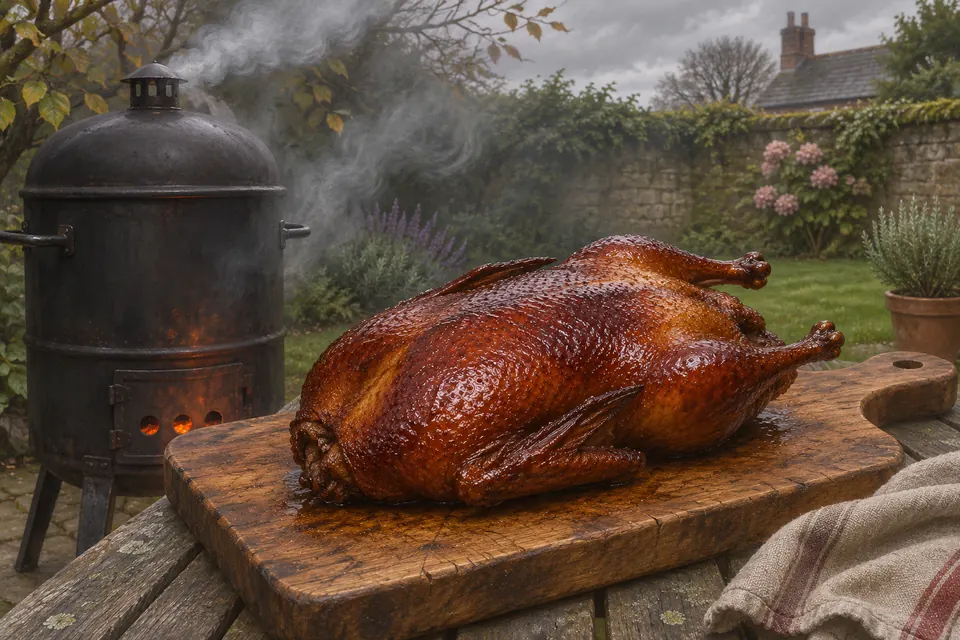
A duck is mostly a layer of fat wearing a thin coat of skin, with not much meat underneath. That one fact explains everything about smoking it. Get the fat to melt out and the skin to dry and crisp, and you get rich, smoky meat with something like crackling on top. Leave the fat where it is and you get a greasy, rubbery bird that nobody fights over. Every step below is about getting that fat out.
Whole duck or legs?
Both work, and they suit different occasions.
| Whole duck | Duck legs | |
|---|---|---|
| Where to buy | Most UK supermarkets, often frozen; butchers to order | Packs in most supermarkets; butchers |
| Feeds | Two to three people as a main, more as part of a spread | One leg per person |
| Cook time | Roughly 2.5–3.5 hours | Roughly 2–2.5 hours |
| Difficulty | Moderate: the breast and legs cook at different rates | Easy and forgiving |
| Result | A centrepiece to carve | Tender, almost confit-like meat |
If it's your first time smoking duck, start with legs. They're cheap, they're hard to overcook, and the long cook suits them perfectly. A whole duck looks great on the table but has less meat on it than a chicken of similar weight, so don't count on it feeding a crowd. The BBQ meat calculator helps you work out how many you'll need.
Thawing a supermarket duck
Many UK supermarket ducks are sold frozen. Thaw it in the fridge, on a tray to catch the drips, and allow plenty of time: a whole duck can take up to two days. Don't try to speed it up on the worktop. Check the giblet bag in the cavity and take it out (the neck and giblets make good stock for gravy).
Dry brine overnight
A dry brine does two jobs here: it seasons the meat, and it dries out the skin so it crisps later. Pat the duck dry with kitchen paper, then rub salt all over the skin and inside the cavity. A rough starting point is around 1% of the bird's weight in salt. The brine calculator works out the exact grams for your duck, and you can add a little sugar or five-spice if you like.
Put the duck on a rack over a tray and leave it uncovered in the fridge overnight, or up to 24 hours. The skin will look dry and slightly tight. That's what you want.
Prick the skin, not the meat
Before it goes in the smoker, prick the skin all over with a sharp skewer or the tip of a knife, especially on the breast and around the thighs where the fat is thickest. Hold the skewer at a shallow angle so you go through the skin and into the fat but not into the meat. Those little holes let the rendered fat run out during the cook. On duck legs, a few pricks are enough.
Smoke it a little hotter
Duck doesn't want the 110–120°C you'd use for brisket. At that temperature the fat renders too slowly and the skin stays soft. Most cooks aim for somewhere around 135–160°C.
Fruitwoods suit duck well. Cherry is the classic, and apple works too. Oak is fine but can be strong on a small bird. A couple of chunks is plenty. Our smoking wood guide has more on British woods.
Put the duck breast side up on the grate, with a foil tray underneath. You'll be surprised how much fat comes out. Without a tray, it ends up in the bottom of your smoker or, on a charcoal unit, on the coals, which means flare-ups and acrid smoke. Leave-in probe into the thickest part of the thigh, away from the bone, and close the lid.
Strain the fat from the drip tray through a sieve into a clean jar. Duck fat makes superb roast potatoes, which is reason enough to smoke a duck in the first place.
Crisp the skin
After a couple of hours, most of the fat should have rendered and the skin should be golden and smoky but probably not yet crisp. Now turn up the heat.
The easiest route is often the kitchen oven, preheated to somewhere around 200–220°C, for 10–20 minutes. Watch it closely, because the sugar in any rub can burn quickly. On a kamado or kettle, you can open the vents and let the temperature rise instead. A pellet grill can usually be turned up to finish the job too.
Duck legs can be crisped the same way, or skin side down in a hot, dry pan for a few minutes.
When is it done?
Whole duck and duck legs both need cooking through. Check the thickest part of the thigh with a probe thermometer and follow the FSA guidance in the safety box at the top of this page. Duck legs taste best when cooked well beyond that point, so the connective tissue breaks down and the meat comes away from the bone easily.
Rest the duck for 15–20 minutes before carving. Unlike a brisket, it doesn't want wrapping, which would steam the skin you've just crisped.
What to serve with it
Smoked duck works in pancakes with cucumber and spring onion, sliced over a salad with orange or plums, or as the centrepiece of a Sunday lunch with those duck-fat potatoes. Leftover meat is very good shredded into fried rice. For a bigger bird on the same principles, see our guide to smoked turkey for Christmas, or try a smoked whole chicken as a cheaper practice run.
Your first step is to take the duck out of the freezer and put it in the fridge, at least two days before you want to cook it.
FAQs
Can I smoke a duck breast?
Yes, but it's a different cook. Breasts are quick, and many cooks smoke them briefly and then sear them hard skin side down. Check the FSA guidance on duck before serving it pink.
Why is my smoked duck skin rubbery?
Usually the smoker was too cool, the skin was too wet, or both. Dry brine overnight uncovered, cook a little hotter than usual and finish with a short blast of high heat.
Do I need to spatchcock a duck to smoke it?
You don't have to, but it helps. Spatchcocking flattens the bird so it cooks more evenly and more of the skin gets direct heat, which makes crisping easier.
Which wood suits smoked duck?
Cherry and apple are the usual choices: gentle, slightly sweet and a good match for rich meat. Use a small amount, as duck takes on smoke quickly.
Keep going
 Cooks
Smoked whole chicken
How to smoke a whole chicken in the UK: spatchcocking, dry brining, the higher temperature that stops rubbery skin, and checking it's safely cooked.
Read the guide Cooks
Smoked Christmas turkey
How to smoke a turkey for Christmas in the UK: crown vs whole bird, brining, cooking in cold weather, and freeing up the oven for everything else.
Read the guide Cooks
Smoked pheasant
How to smoke pheasant, partridge and wood pigeon: brining, barding with bacon, the right temperature for lean birds, and what to do with the tough legs.
Read the guide