On this page · 7 sections
At a glance
- Ask for
- Whole gutted fish or butterflied fillets
- Smoker
- Around 80–110°C
- Time
- Around 45 min–2.5 h, after brine and pellicle
- Wood
- Alder, beech or oak, used lightly
- Done when
- Safe temperature per FSA guidance
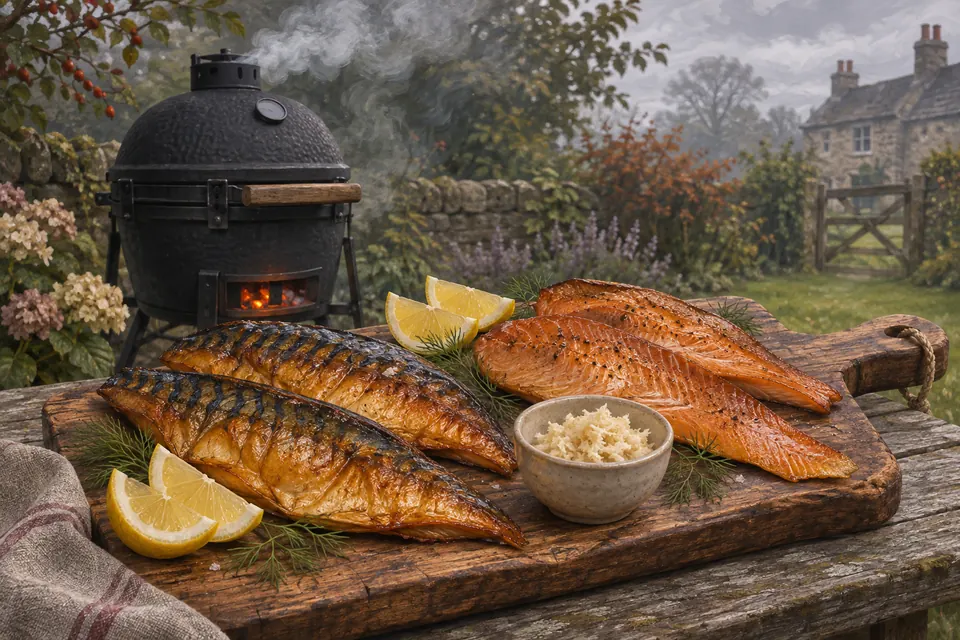
Mackerel is the fish to start with. It's cheap, it's British, it's full of oil so it's very hard to dry out, and it takes smoke faster than almost anything else you can put on a grate. Rainbow trout is its milder, slightly posher cousin and follows exactly the same method. Between them they make one of the quickest cooks a smoker can do: a morning's prep and about an hour on the heat.
Mackerel or trout, whole or fillets
Both fish are oily, which is what makes them suit hot smoking. The fat keeps the flesh moist and carries the smoke flavour. The difference is mostly taste: mackerel is rich and strong, trout is gentler and a good choice for people who claim not to like "fishy" fish.
| Whole fish | Fillets | |
|---|---|---|
| Prep | Gutted, head on or off, cavity rinsed | Butterflied or single fillets, skin on |
| Brine time | Longer, roughly 1–3 hours | Short, roughly 30–60 minutes |
| Smoke time | Around 1.5–2.5 hours | Around 45 minutes to 1.5 hours |
| Looks | Very handsome on a board | Easier to serve and flake |
| Pin bones | You'll be picking them out at the table | Easier to remove before smoking |
Ask the fishmonger to gut whole fish or fillet them for you. Mackerel in particular goes off quickly, so buy it bright-eyed and stiff and cook it the same or next day. A limp mackerel with cloudy eyes is not going to be rescued by smoke.
The quick brine
A brine seasons the flesh, firms it up a little and helps the surface dry into a pellicle. For oily fish it doesn't need to be long or strong. A common starting point is a brine of roughly 5–8% salt by weight of water, with a little brown sugar if you like a sweeter edge. The brine calculator turns that into grams for whatever volume of water you need.
Submerge the fish fully, keep it in the fridge, and time it. Fillets need around half an hour to an hour; whole fish a bit longer depending on size. Over-brined mackerel is very salty mackerel, and it's easier to add salt at the table than take it away. Rinse the fish under cold water when the time's up and pat it completely dry with kitchen paper.
If you'd rather dry cure, the method in our hot-smoked salmon guide works for trout fillets too, with shorter times for the thinner fish.
Form a pellicle
This step is what separates good smoked fish from slightly soggy steamed fish. Lay the rinsed, dried fish on a rack over a tray, skin side down, and leave it uncovered in the fridge for an hour or two. A fan blowing gently over it speeds things up. You're done when the surface feels tacky and slightly glossy, a bit like the sticky side of tape.
The pellicle gives smoke something to cling to and helps stop the flesh weeping white albumin during the cook. Skip it and the fish will still be edible, just paler and wetter.
Oil the grate, or lay the fish on a piece of baking paper with holes poked through it. Mackerel skin sticks like glue to a dry grate and you'll leave half the fish behind.
Woods: go mild
Fish takes smoke quickly, so use less wood than you would for pork. Alder is the traditional fish-smoking wood in Britain and northern Europe, giving a light, slightly sweet smoke. Beech is a close second and easy to find. Oak works well with mackerel, which can stand up to it, but use a single small chunk. Fruit woods such as apple are fine with trout. Avoid stronger hardwoods used in American recipes; they overpower delicate fish. Our smoking wood guide covers what's available in the UK.
Smoking and knowing when it's done
Get the smoker steady at a gentle temperature before the fish goes on; most recipes for hot-smoked oily fish aim for around 80–110°C. Start at the lower end for the first half hour to let the smoke take, then let it rise. On a kettle, set up for indirect heat with a small fire on one side and the fish well away from it.
Put the fish on skin side down and leave the lid shut. A probe thermometer in the thickest part tells you what's happening without letting the heat out. The fish is ready when the flesh is opaque all the way through, flakes easily at the thickest point and has reached a safe temperature: check the FSA guidance for fish rather than going on looks alone. Fillets can be ready in under an hour, so start checking early.
Let it cool on the rack before moving it. Hot smoked fish is fragile, and a fillet lifted too soon breaks into three pieces.
Serving: pâté, horseradish and the rest
Warm from the smoker, flaked onto buttered brown bread with a squeeze of lemon, is hard to beat. Beyond that:
- Smoked mackerel pâté. Flake the cooled fish, take out the skin and bones, and mash it with cream cheese or crème fraîche, lemon juice, black pepper and a little horseradish. It keeps a few days in the fridge and is the reason many people buy a smoker in the first place.
- With horseradish. A spoonful of creamed horseradish alongside smoked trout or mackerel, with new potatoes and a beetroot salad, is a very British plate.
- Breakfast. Flaked into scrambled eggs, or kedgeree-style with rice.
- Salads. Trout flaked over watercress with a sharp dressing cuts through the oil.
Cooled smoked fish should go in the fridge promptly and be eaten within a few days. Hot smoking cooks the fish; it doesn't preserve it like the old cold-smoked kippers did. That's a different process, covered in cold smoking at home, and it carries more food safety risk.
Your next step: work out the brine for the weight of water you'll need with the brine calculator, then buy the fish the morning you plan to cook.
FAQs
Can I use frozen mackerel or trout?
Yes. Defrost it fully in the fridge, then pat it very dry before brining. Frozen fish can be a little softer, so keep the brine short.
Do I need to brine the fish at all?
You can just salt it lightly, but the brine seasons the flesh evenly and helps the pellicle form. For a cook this quick, the half hour is worth it.
Why is there white stuff on my fish?
That's albumin, a protein pushed out when the fish cooks too hot or too fast. It's harmless. A good pellicle and a gentler temperature keep it to a minimum.
Can I smoke mackerel on a gas BBQ?
Yes, with a smoker box over one burner and the fish over the unlit side. It's one of the cooks gas handles well because it's short. See smoking on a gas BBQ.
Keep going
 Cooks
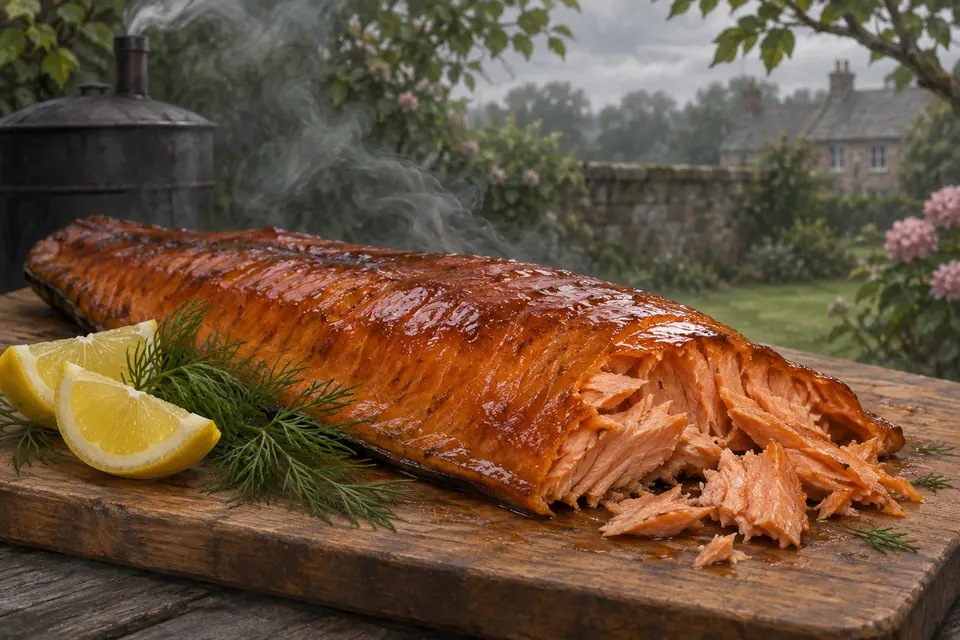
Hot-smoked salmon
How to hot smoke salmon at home: how it differs from cold-smoked, dry cure or brine, forming a pellicle, and the gentle heat that keeps it moist.
Read the guide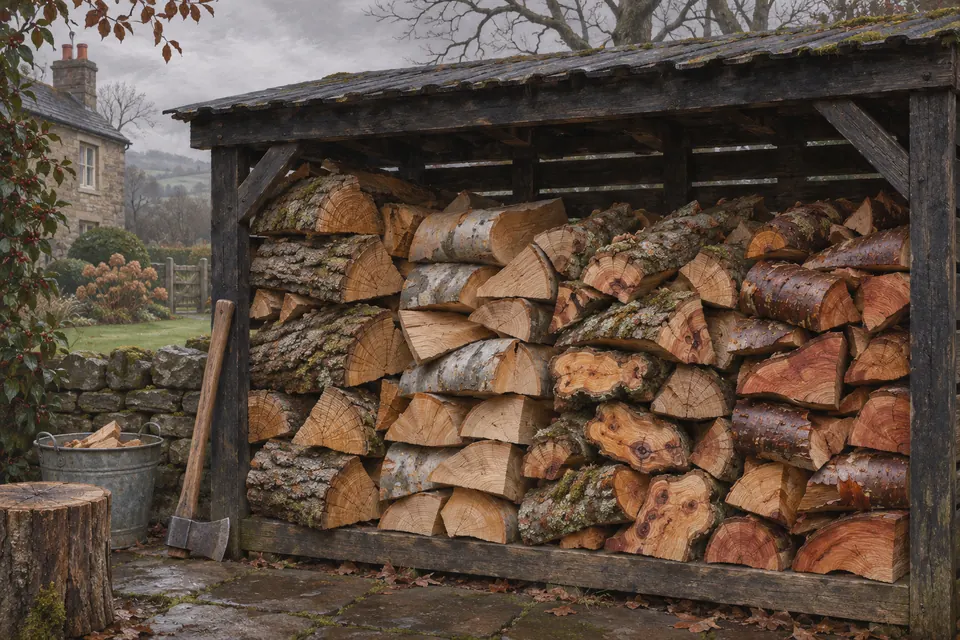 Fuel and woodCornerstone
Smoking wood in the UK
Which British woods suit which meats, chunks vs chips vs splits vs pellets, how dry the wood should be, what never to burn and how to store it.
Read the guide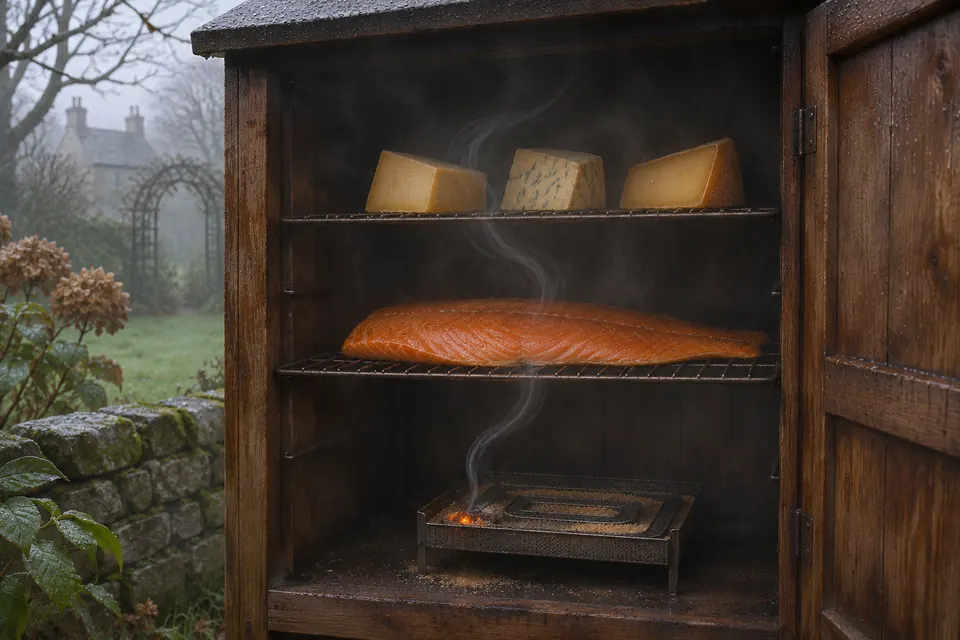 Cooks
Cold smoking at home
How cold smoking works, smoke generators, the best months in the UK, and the food-safety rules that matter. Start with cheese; treat fish and meat with care.
Read the guide