On this page · 8 sections
At a glance
- Ask for
- Whole piece of chuck or feather blade, not diced
- Smoker
- Around 120–135°C
- Time
- Roughly 1.5–2 h per kg, plus rest
- Wood
- Oak, or beech
- Done when
- Probe tender, around 93–96°C
- Rest
- 1 h, up to 2–3 h, wrapped in a cool box
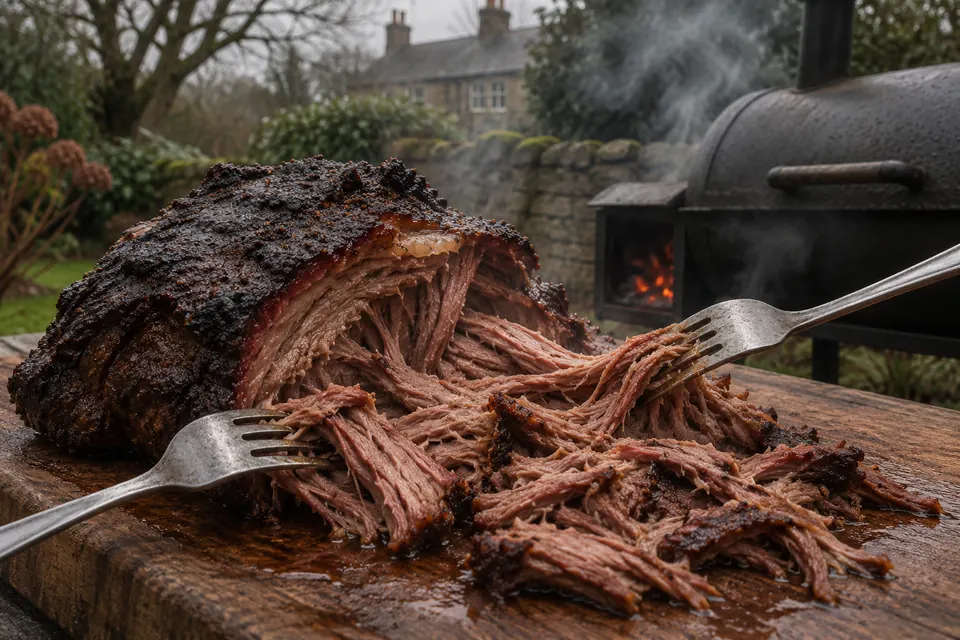
Brisket is the wrong cut for pulled beef. It can be done, and plenty of recipes use it, but a whole brisket is expensive, hard to buy in one piece in the UK, and its lean flat end is better sliced than shredded. For a big tray of soft, juicy, smoky beef for buns, the shoulder end of the animal does a better job for less money. That means chuck, or feather blade if your butcher has it.
Which cut to buy
Pulled beef needs a cut with plenty of fat running through it and lots of connective tissue. Long, slow cooking turns that collagen into gelatine, which is what makes the meat fall apart and feel juicy in the mouth. Lean cuts just dry out and go stringy.
| Cut | What it's like | Pull or slice? | Notes |
|---|---|---|---|
| Chuck | Well marbled shoulder muscle, lots of connective tissue | Pull | The usual choice. Ask for a whole piece, not diced |
| Feather blade | Marbled, with a seam of gristle down the middle | Pull | Superb flavour; the gristle softens with time |
| Brisket point | Fatty end of the brisket | Either | Often hard to buy on its own |
| Brisket flat | Leaner end of the brisket | Slice | Dries out if pulled |
| Shin | Very lean, very gelatinous | Pull | Better braised than smoked dry |
In most UK butchers, chuck is sold diced as stewing or braising steak, and the whole muscle goes into the mincer or the casserole pile. So you'll need to ask. "A whole piece of chuck, about 2 to 3 kilos, not diced, for slow cooking" is clear enough, and a decent butcher will know what you mean. If they talk about "chuck and blade", that's fine too. Our guide to UK vs US BBQ cuts helps when an American recipe asks for a "chuck roll" or a "clod".
Feather blade is the one to grab if it's on display. It's the cut many restaurants use for slow-cooked beef, and it pulls beautifully.
How much to buy
Beef shrinks a lot on a long cook. It loses water and rendered fat, and you'll trim off some gristle when you pull it. A rough rule is that you'll end up with around half to three-fifths of the raw weight as pulled meat. So a 3 kg piece of chuck feeds fewer people than you'd think, especially if they're hungry and it's the main event. The BBQ meat calculator works it out by number of guests and portion size.
Prepare and season
Trim off any big hard lumps of fat on the outside and any silvery membrane, but leave the marbling inside alone. If the piece is uneven, you can tie it with butcher's string into a rough log shape so it cooks more evenly.
Season it the night before. Beef suits a simple rub: coarse salt and coarse black pepper in roughly equal amounts by volume, with some garlic granules if you like. Sugar burns and isn't needed here. Wrap it and leave it in the fridge overnight. See our rub ratios guide for more starting points.
Smoke it
Get the smoker steady around 120–135°C before the beef goes on. Oak is the classic wood for beef in the UK, and beech works too. Two or three chunks at the start is plenty. Put the beef on the grate away from direct heat, insert a leave-in probe into the thickest part and close the lid.
Then leave it. Beef chuck is forgiving, but every lid lift adds time. Check the fire every hour or so and make small vent changes only.
The stall, and wrapping
Somewhere in the middle of the cook, usually with the internal temperature in the 60s or low 70s °C, the probe will stop rising. That's the stall, and on a chunk of chuck it can last a couple of hours.
Once the bark looks dark and set, wrap the beef tightly in foil or butcher paper. Foil gets you through faster and keeps more juice, which suits pulled beef because you want those juices to stir back in. Paper keeps a firmer bark. Our guide to wrapping in foil vs butcher paper covers the trade-off. Put it back in the smoker, probe still in.
When is it done?
Pulled beef is done when it's tender all the way through, not when it hits a number. For most cuts that's somewhere around 93–96°C internal, but use the probe as a feel test: it should slide in everywhere like it's going into soft butter. If any part still feels firm, give it more time. Undercooked chuck is chewy and won't pull, and that's the most common way this cook goes wrong.
As for timing, a rough rule is one and a half to two hours per kg at these temperatures, but a single piece can beat that or blow straight past it. Start earlier than you think you need to.
Rest and pull
Leave it wrapped, wrap that in an old towel and put it in a dry cool box for at least an hour, and up to two or three. That gives the juices time to settle and the meat time to relax.
Then unwrap it over a tray to catch every drop of liquid. Pull it with two forks or your (gloved) hands, picking out any gristle or hard fat as you go. Pour the juices back over the meat and toss it through. Season to taste: it often wants a little more salt at this point.
Serve in buns with pickles and something sharp like a vinegar slaw to cut through the richness. If you want a sauce, offer it on the side.
Your next job is ringing the butcher. Ask for a whole piece of chuck or feather blade a few days ahead, because a whole muscle is far easier to get on order than on spec on a Saturday morning.
FAQs
Is chuck better than brisket for pulled beef?
For pulling, generally yes. Chuck has more marbling and connective tissue, it's cheaper, and it's easier to buy in a sensible size. Brisket is better kept for slicing.
Can I make pulled beef on a kettle BBQ?
Yes. Set up for low indirect heat with the snake method and a 2 kg piece will cook very happily. Our guide to smoking on a kettle BBQ covers the setup.
Why is my pulled beef tough and not pulling?
It almost certainly needs more time. Collagen only breaks down with long, slow cooking. Wrap it, put it back on and check again in an hour.
Can I freeze pulled beef?
Yes. Cool it quickly, portion it with some of its juices in freezer bags and freeze. Our guide to reheating smoked meat covers getting it back to the table safely.
Keep going
 CooksCornerstone
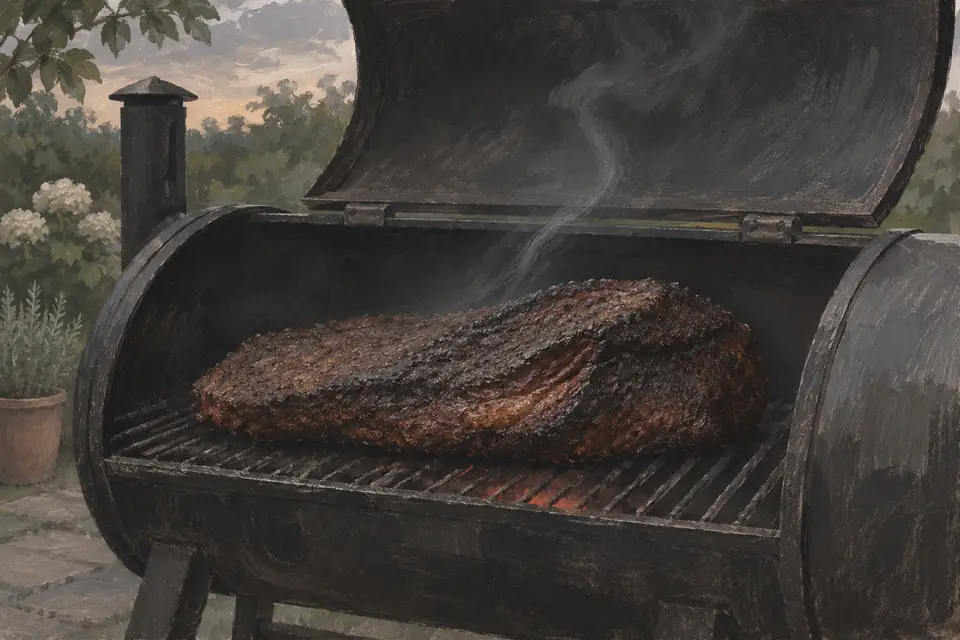
Brisket smoking time
How long brisket takes on a smoker, per kg, with the stall, wrapping and resting built in, so you can work back from dinner time.
Read the guide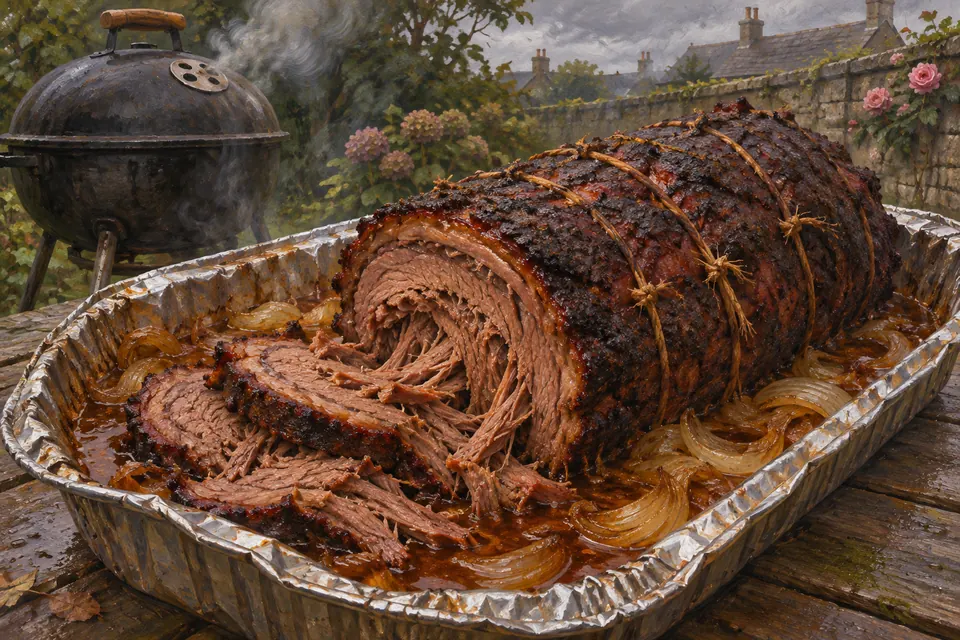 Cooks
Rolled brisket joint
How to smoke the tied, rolled brisket joint sold in UK supermarkets: smoke it, then braise it in a covered tray until it's tender enough to slice thick or pull.
Read the guide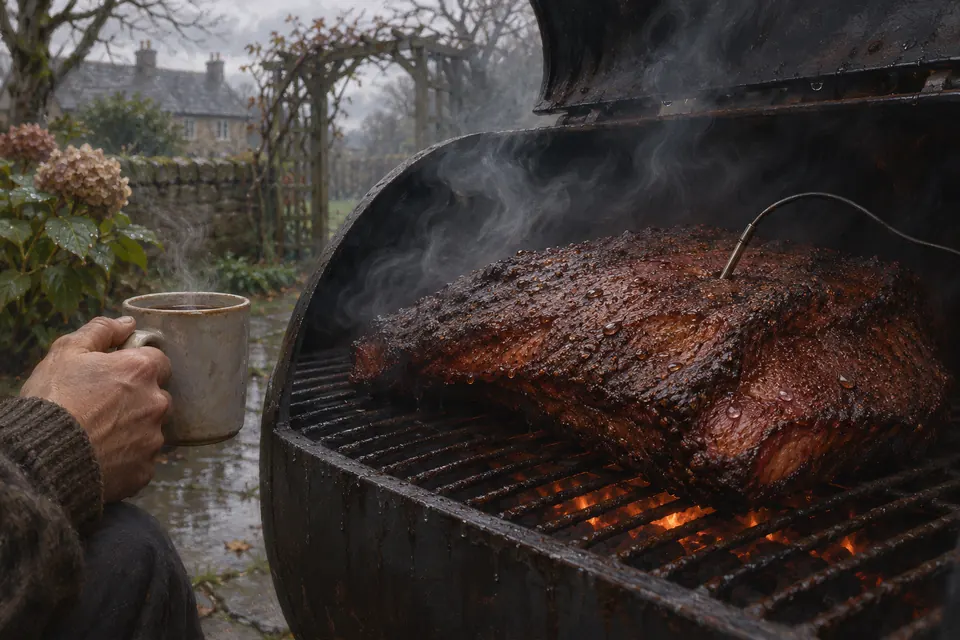 TechniqueCornerstone
The stall explained
Why big cuts stop rising in temperature for hours mid-cook, the simple science behind it, and when to wait, wrap or turn the heat up.
Read the guide