On this page · 7 sections
At a glance
- Ask for
- Raw gammon joint, ideally unsmoked
- Smoker
- Around 110–135°C; 150–175°C to glaze
- Time
- Around 3–5 h for 2 kg, plus 30–45 min glaze
- Wood
- Apple or cherry; beech for a milder smoke
- Done when
- Safe temperature per FSA guidance
Gammon is already cured, which means half the work of a smoked ham was done before you got it home. Unlike a fresh pork shoulder, there's no brining, no curing calendar and no worrying whether the salt has reached the middle. You're cooking, smoking and glazing, and the result is a ham that makes the shop-bought kind look a bit sad.
Gammon vs ham: what you're actually buying
The words get used loosely, but in British butcher's terms:
- Gammon is the hind leg of the pig, cured (and sometimes also smoked) but raw. It needs cooking.
- Ham is usually what gammon becomes once it's cooked. A "cooked ham" joint is ready to eat cold.
| Raw gammon joint | Cooked ham joint | |
|---|---|---|
| Needs cooking? | Yes, all the way through | No, already cooked |
| Smoker job | Cook, smoke and glaze | Warm through, smoke lightly, glaze |
| Time | Several hours | Shorter, just enough to heat and glaze |
| Labelled as | Gammon, gammon joint, uncooked | Cooked ham, ready to eat |
You'll also see smoked and unsmoked gammon. Smoked gammon has already been smoked by the curer; unsmoked (sometimes called green) hasn't. For the smoker, unsmoked is the better buy: you add your own smoke and avoid it tasting like a bonfire. Smoked gammon still works, just use less wood.
Read the label or ask the butcher. Most of this page assumes a raw gammon joint, because that's where the smoker earns its keep.
Soak it, or not
Some gammon is cured with a lot of salt and benefits from soaking in cold water before cooking, often overnight with a water change or two. Many modern cures are milder and don't need it. The butcher will know, or the label will say. If in doubt, cut a thin slice off the end, fry it and taste it. If it makes you reach for a glass of water, soak the joint.
Two ways to cook it
Smoke it all the way. The joint goes into the smoker raw and cooks slowly until done. The most smoke flavour, and the simplest method.
Simmer first, smoke to finish. A very British approach: simmer the gammon in water or cider for a while on the hob, then move it to the smoker to finish, take on smoke and glaze. It's quicker in the smoker, keeps the meat very moist and means the joint is partly cooked before it goes outside, which helps on a cold day. The trade-off is less smoke flavour.
Both are good. If your oven and hob are already full of turkey leftovers and bubble and squeak, the all-smoker route keeps the kitchen clear.
Smoking the gammon
Score the fat in a diamond pattern but don't remove the rind until later, it protects the meat. (Some cooks cut it off at the start; either works.) Put a probe into the thickest part, away from any bone.
Set the smoker somewhere around 110–135°C. Fruit woods suit gammon: apple and cherry are the usual favourites, and cherry gives it a lovely colour. Beech is a good mild option. Oak works but is stronger, so use less if the gammon was already smoked. Our smoking wood guide has more on what each British wood brings.
A joint of around 2kg typically takes somewhere around three to five hours, depending on the shape and the starting temperature. The smoking time planner helps you work out a start time from when you want to eat, with a buffer.
A raw gammon joint must be cooked through. Check the FSA guidance for the safe internal temperature for pork and make sure the thickest part reaches it before you glaze. A good instant-read probe takes the guesswork out; see our BBQ meat thermometers guide.
The glaze
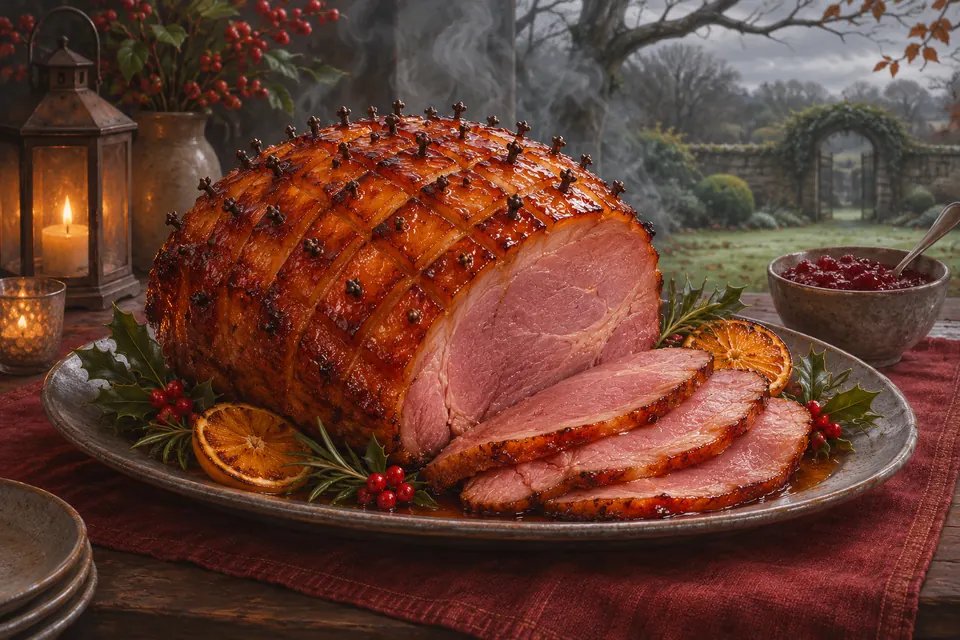
Glazing is the fun part. When the gammon is nearly done, take it out, cut away the rind (leaving a layer of fat), score the fat in diamonds again if it's lost its pattern and stud each diamond with a clove if you like the traditional look.
A few glazes that work well with smoke:
- Honey and mustard: runny honey, wholegrain mustard and a pinch of black pepper.
- Marmalade: thick-cut marmalade warmed with a splash of orange juice. Very Christmassy.
- Treacle and ginger: black treacle, brown sugar and ground ginger. Dark and sticky.
- Cider and brown sugar: reduced cider with brown sugar and a little cider vinegar.
Brush it on generously, then raise the smoker to around 150–175°C and give it the last 30 to 45 minutes, brushing again once or twice. Sugar burns quickly at higher heat, so keep an eye on it. Our guide to smoker temperature control covers bringing a charcoal smoker up for the finish.
Make double the glaze. Half goes on the ham, half goes in a jug at the table, and someone will always want more.
The Boxing Day angle
Smoked gammon is the natural Boxing Day cook. Christmas Day is about the turkey and the oven is booked solid; on the 26th, everyone's grazing, there's time to stand by the smoker, and a ham can be served hot, warm or cold with almost anything. It feeds a crowd, it makes the best sandwiches of the year and it keeps well in the fridge for leftovers.
Some people smoke the gammon on Christmas Eve, chill it and serve it cold on the day, which frees up even more space. If you're also doing the bird outdoors, our smoked turkey for Christmas guide covers the main event.
A December cook will need more fuel and patience than a summer one, so read our tips on smoking in winter and keep the smoker in the open air, never in a garage or shed to escape the cold.
Order your gammon when you order the turkey, ask the butcher whether it needs soaking, and pick your glaze.
FAQs
Do I need to brine gammon before smoking?
No. Gammon is already cured. If anything, it may need soaking to remove some salt, depending on the cure. Ask your butcher or check the label.
Can I smoke a cooked ham joint?
Yes. A ready-to-eat ham just needs warming through, a little smoke and a glaze, so it's much quicker than raw gammon. Follow the pack's heating advice.
How long does it take to smoke a gammon joint?
A raw joint of around 2kg usually takes somewhere around three to five hours at about 110–135°C, plus 30 to 45 minutes hotter to set the glaze. Check it reaches a safe temperature before glazing.
Should I buy smoked or unsmoked gammon to smoke?
Unsmoked is the better choice because you control the smoke. Smoked gammon works too, but use less wood or it can taste very strong.
Keep going
 Cooks
Smoked Christmas turkey
How to smoke a turkey for Christmas in the UK: crown vs whole bird, brining, cooking in cold weather, and freeing up the oven for everything else.
Read the guide Weather and kit
Smoking in winter
How to keep a smoker running through a British winter: cold and wind, extra fuel, insulation blankets, dark evenings, and why it never goes in the garage.
Read the guide Fuel and woodCornerstone
Smoking wood in the UK
Which British woods suit which meats, chunks vs chips vs splits vs pellets, how dry the wood should be, what never to burn and how to store it.
Read the guide